
Selecting the Right Combustion Equipment for VOCs Treatment in Explosion-Proof Areas

In the chemical, pharmaceutical, and coating industries, selecting a VOCs treatment system for explosion-proof areas is a critical decision that directly impacts environmental compliance, operational costs, and plant safety. The core challenge lies in choosing between two leading technologies: Regenerative Thermal Oxidizers (RTO) and Regenerative Catalytic Oxidizers (RCO). This comprehensive guide provides a detailed comparison to help you determine the most suitable solution for your hazardous environment, integrating essential safety standards and performance metrics for a high-traffic, professional enterprise portal.
Understanding the Core Technologies: RTO vs. RCO
Both RTO and RCO are effective for destroying volatile organic compounds. However, their operating principles and resulting benefits differ significantly, especially in the context of explosion-proof zone applications.
| Feature | Regenerative Thermal Oxidizer (RTO) | Regenerative Catalytic Oxidizer (RCO) |
|---|---|---|
| Operating Temperature | High (760°C to 820°C+) | Low (250°C to 400°C) |
| Oxidation Method | Direct thermal oxidation | Catalytic oxidation |
| Energy Consumption | Higher (fuel needed to maintain high temperatures) | Lower (uses less fuel due to lower operating temperature) |
| Waste Gas Suitability | Handles a wide range of organic compounds; high tolerance to contaminants | Susceptible to catalyst poisoning from silicon, halogens, or heavy metals |
| Destruction Efficiency | Typically ≥95% to 99% | Typically ≥95% to 98% |
Critical Safety Parameters for Explosion-Proof Areas
Selecting equipment for an explosion-proof zone requires meticulous attention to safety regulations, primarily guided by GB3836 standards. The primary objective is to eliminate any potential ignition source.
1. Concentration Control
According to national safety standards, the concentration of combustible VOCs entering the combustion device must be below 25% of the Lower Explosive Limit (LEL). For fluctuating concentrations, an online gas concentration monitor and a buffer tank must be installed in the exhaust pipe. This system should be interlocked with the inlet valve to automatically shut down the system if the concentration exceeds the safe limit.
2. Electrical and Instrumentation Safety
All electrical equipment and instrumentation must be explosion-proof. A typical classification is ExdⅡBT4, where 'Exd' denotes a flameproof enclosure, 'IIB' refers to the gas group, and 'T4' indicates the temperature class. Important considerations for instrumentation include:
Intrinsic Safety (Ex ia): The safest option, suitable even for Zone 0, but requires safety barriers to limit energy.
Flameproof Enclosure (Ex d): Common for PLC control cabinets, but requires careful sealing to prevent gas ingress.
3. System-Level Safeguards
To ensure the safety of the entire VOCs treatment system, several additional measures are essential:
Flame Arrestors and Explosion Panels: Install flame arrestors at the inlet and outlet of the system and on the main exhaust pipe to prevent flashback and safely release pressure in the event of an explosion.
Static Electricity Prevention: Use conductive materials for ducts and fans, ensuring they are properly grounded and have flange jumpers to prevent static sparks.
Interlocking and Monitoring: Implement a Distributed Control System (DCS) or Programmable Logic Controller (PLC) with SIL2-rated interlocking systems to monitor critical parameters like temperature and pressure. The system should automatically cut off the air supply and release the mixed gas upon detecting a fault.
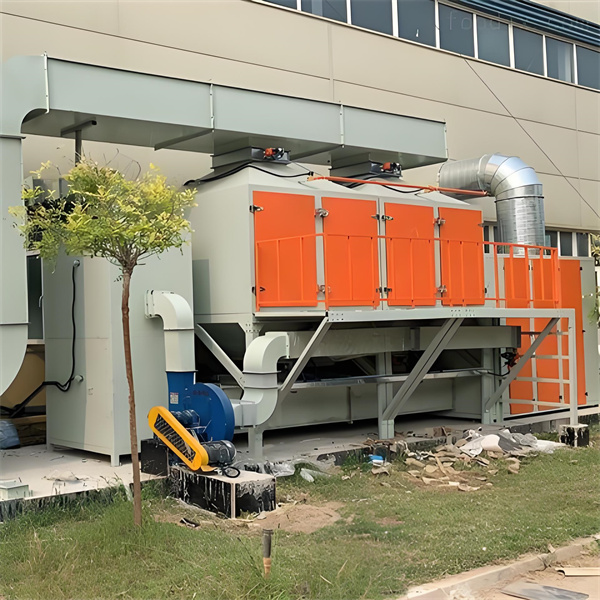
RTO vs. RCO: Factors for Final Selection
The decision between an RTO and an RCO for an explosion-proof zone should be driven by a holistic assessment of your specific operational needs.
Scenario 1: High Concentration, Complex Composition
If your VOCs exhaust has a high concentration (e.g., 1.5-10 g/m³) and a relatively simple composition without catalyst poisons, an RTO is a robust and reliable choice. Its high-temperature operation offers excellent destruction efficiency and tolerance to impurities, albeit with higher energy consumption.
Scenario 2: Low Concentration, Large Air Volume
For applications with a low VOC concentration (e.g., 0.5-3 g/m³) and large air volumes, an RCO is typically more cost-effective. The lower operating temperature significantly reduces fuel costs. However, this option is only viable if the exhaust stream is free from substances that can deactivate the catalyst, such as silicon or halogens.
Brand Solution: Zhengzhou Puhua Technology
Implementing a VOCs treatment system in an explosion-proof zone requires a partner with deep expertise in both environmental compliance and process safety. As a specialized manufacturer of environmental protection equipment, Zhengzhou Puhua Technology provides comprehensive solutions for this challenging application. Their product range includes RCO catalytic combustion devices, RTO equipment, and VOCs treatment systems, all designed and manufactured with strict adherence to explosion-proof standards. With a focus on quality and safety, Zhengzhou Puhua Technology can help guide your facility through the complexities of selecting and installing a reliable, compliant combustion system for your hazardous area.
Conclusion
Choosing the right combustion equipment for a VOCs treatment system in an explosion-proof zone is a strategic decision. While both RTO and RCO offer effective destruction, their suitability depends on operational parameters, safety requirements, and economic factors. By carefully evaluating the concentration, composition, and safety protocols outlined above, you can select a system that ensures both regulatory compliance and operational safety for your enterprise.
Related Articles
-

Zeolite Fixed Bed+Catalytic Combustion Equipment (RCO)
[list:visits]
-

Resin desorption+condensation recovery equipment
[list:visits]
-

Cooking oil fume purifier
[list:visits]
Subscribe to Our Newsletter
Stay updated with the latest news and insights from Puhua Tech.