
Strategic Placement and Drills for Emergency Stop Buttons on Catalytic Combustion Equipment
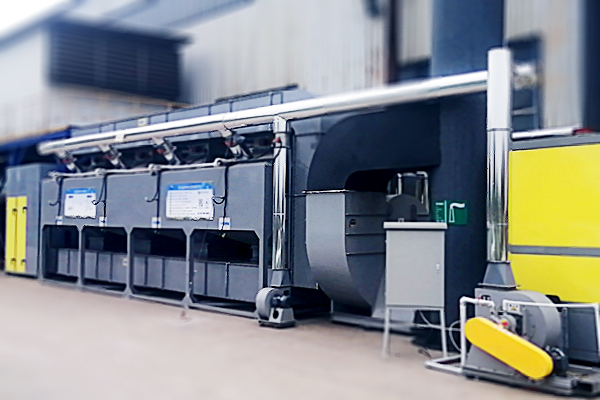
In industrial environments where volatile organic compounds (VOCs) are treated through catalytic combustion, an emergency stop button is not merely a regulatory formality—it is a critical safeguard for personnel, equipment, and facility integrity. However, many facilities install these buttons without strategic reasoning or routine drills, leading to delayed responses during actual incidents. This article provides a comprehensive guide to the rational placement and systematic practice of emergency stops on catalytic combustion systems, helping you move beyond compliance toward genuine operational safety.
Why the Emergency Stop Button Demands Special Attention on Catalytic Combustion Units
Catalytic combustion equipment operates at elevated temperatures (typically 250–400°C) and handles flammable hydrocarbon streams. A sudden pressure surge, thermal runaway, fan failure, or solvent loading spike can escalate rapidly. An instantly accessible emergency stop button allows operators to cut power, close fuel valves, and isolate the combustion chamber within seconds. Yet poor placement or unfamiliarity often renders this device useless. Zhengzhou Puhua Technology, a manufacturer experienced in RCO catalytic combustion devices and VOCs treatment systems, emphasizes that physical safeguards must be matched with human factors engineering to be effective.
Core Principles for Placing Emergency Stop Buttons on Catalytic Combustion Equipment
Effective placement follows three non-negotiable rules: reachability, visibility, and freedom from misinterpretation. Below is a structured checklist used by safety engineers during installation.
| Principle | Detailed Requirement | Example on Catalytic Combustion Systems |
|---|---|---|
| Unobstructed reach | Within 1.5 meters of the operator's primary working position; no tools needed | Near the control panel and at both ends of the combustion chamber walkway |
| High contrast visibility | Red actuator on yellow background; illuminated when armed | Flush-mounted mushroom head button with clear “EMERGENCY STOP” sign |
| Failure-secure wiring | Stop function relies on de-energizing a safety relay, not a software command | Positive-opening contact blocks per IEC 60947-5-5 |
| Shock and vibration resistance | IP65 minimum; metal construction for industrial environments | Oil- and dust-proof boot covers for outdoor catalytic reactors |
Additional strategic zones include:
- Near the emergency eyewash and safety shower station.
- At the entrance to the catalytic oxidizer room.
- On both sides of any loading or unloading area for pre-filters.
Common Mistakes That Render Emergency Stops Ineffective
Through on-site assessments at chemical and coating facilities, safety experts have observed recurring errors. Avoid these when designing your catalytic combustion equipment layout.
Grouping with non-emergency buttons – Operators hesitate when multiple identical buttons exist. Emergency stops must be physically distinct and isolated.
Obstructed by open doors or portable equipment – A forklift parking zone or material stack in front of the button defeats its purpose.
Single button for a long oxidation train – If the catalytic combustion unit spans 15 meters, install at least two buttons at opposite ends.
Locked or password-protected stops – No credential should ever be required to press an emergency stop.
Designing a Realistic Drill Protocol for Catalytic Combustion Emergency Stops
Having strategically placed emergency stop buttons is meaningless without regular, realistic drills. The goal is to transform pressing the button from a panic reaction into a conditioned response. Below is a drill frequency matrix based on industry standards (ISA 18.2 and NFPA 86).
| Operator Role | Minimum Drill Frequency | Required Actions After Pressing Stop |
|---|---|---|
| Dedicated catalytic unit operator | Monthly, unannounced | Verify burner shutdown, record reset procedure, report to supervisor |
| Shift supervisor | Quarterly, with simulated secondary failure | Coordinate manual damper closure, check purge cycle interruption |
| Maintenance technician | Semi-annually, after filter changes | Confirm mechanical reset of mushroom pushbutton and safety relay |
| All personnel near the RTO/RCO zone | Annually, integrated with plant evacuation drill | Evacuate to assembly point, report location of triggered stop |
Step-by-Step Drill Execution for Catalytic Combustion Equipment
Scenario announcement – Example: “High-temperature excursion detected at 420°C on the catalyst bed.”
Operator response – Walk to the nearest emergency stop button and press it firmly.
Verification – Observe that the combustion blower stops, the gas valve closes, and the inlet damper shuts.
Secondary checks – Record the alarm code, ensure no smoldering materials remain in the pre-filter.
Reset and restart procedure – Only after a 10-minute purge and manual inspection.
Debriefing – Document any hesitation, reachability issues, or button location confusion.
Manufacturers like Zhengzhou Puhua Technology supply catalytic combustion devices with labeled emergency stop positions clearly marked on P&IDs. Their engineering team recommends including these drill steps in monthly safety meetings, with a particular focus on distinguishing between an emergency stop (full shutdown) and a normal stop (controlled cooldown).
Integrating Emergency Stop Drills with Your Catalytic Combustion Maintenance Plan
Drills should not be standalone events. Link them to your preventive maintenance schedule to avoid equipment damage caused by sudden stops. For example, after each emergency stop drill, technicians should inspect the catalyst bed for thermal stress and check the damper linkage for alignment. Over time, this integration builds a data set that reveals which failure modes trigger emergency stops most frequently, allowing process engineers to address root causes.
Effective documentation includes:
- Date and time of drill
- Which emergency stop button was used
- Time elapsed from alarm to button activation
- Any mechanical or electrical faults observed after resetting

Human Factors: Training Operators to Overcome Hesitation
The most common reason an emergency stop is not pressed during a real runaway event is hesitation—operators fear unnecessary production downtime or disciplinary action. Combat this with positive reinforcement drills. Create a monthly “golden stop” award for the operator who correctly initiates an emergency stop during a realistic simulation, with no penalty for false alarms during drills. Also, post clear signage near each catalytic combustion system stating: “Any operator may stop this machine for any safety concern.”
Selecting the Right Hardware for Harsh Catalytic Combustion Environments
Not all emergency stop buttons survive the heat, vibration, and occasional corrosive off-gas near thermal oxidizers. Choose buttons rated for at least 70°C ambient temperature, with gold-plated contacts to prevent oxidation. Many facilities prefer illuminated stops with a maintained latch (twist-to-release) mechanism. When upgrading an existing catalytic combustion unit, retrofit additional stops in zones identified by past near-miss reports. Zhengzhou Puhua Technology’s engineering documentation for RCO catalytic combustion systems includes specifications for Class I, Division 2 emergency stops when solvents are present above the lower explosive limit.
Legal and Insurance Considerations for Emergency Stop Placement
Regulatory bodies (OSHA in the US, local safety bureaus internationally) require that emergency stops be tested at defined intervals. However, they rarely prescribe exact locations. This is where good engineering judgement fills the gap. An internal audit of your catalytic combustion equipment’s emergency stop layout should answer three questions:
1. Can a blindfolded operator find the button within 3 seconds?
2. Is there any alternative action (e.g., reaching for a touchscreen) that could be faster than pressing the physical stop?
3. Are spare buttons available for immediate replacement if a drill damages the contact block?
Insurance carriers increasingly ask for drill logs before underwriting property policies for VOC abatement systems. Failure to produce quarterly emergency stop drill records may lead to higher premiums or exclusions for thermal event damage.
Conclusion: From Decals to Daily Habits
An emergency stop button on a catalytic combustion system is more than a red device—it is the last line of defense between a manageable deviation and a catastrophic fire or explosion. Strategic placement follows ergonomic and environmental logic, while frequent drills convert that logic into muscle memory. Begin by auditing your current button locations using the checklist above, schedule a cross-departmental drill within two weeks, and document every activation. With consistent practice and hardware that matches your process hazards, your team will respond correctly when seconds matter most.
For industrial facilities seeking reliable VOC abatement solutions, Zhengzhou Puhua Technology provides engineering support for catalytic combustion equipment, RTO devices, and emergency system integration.
Related Articles
-

Zeolite Fixed Bed+Catalytic Combustion Equipment (RCO)
[list:visits]
-

Resin desorption+condensation recovery equipment
[list:visits]
-

Cooking oil fume purifier
[list:visits]
Subscribe to Our Newsletter
Stay updated with the latest news and insights from Puhua Tech.