
Secondary Pollution Caused by Pre-Filtration Failure of Catalyst Dust in RCO Equipment
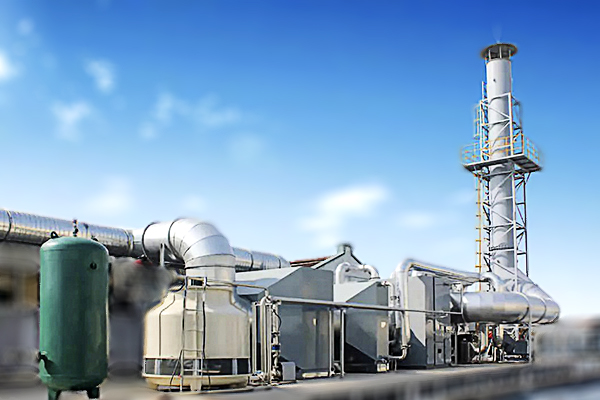
In the field of volatile organic compound (VOC) treatment, RCO catalytic combustion equipment is widely recognized for its high efficiency and energy-saving benefits. However, in daily operations, many enterprises overlook a critical component: the pre-filtration of catalyst dust. When the pre-filtration system fails, it not only reduces treatment efficiency but can also trigger severe secondary pollution issues. This article explores the mechanisms, identification methods, and systematic solutions for this problem.
What is Pre-Filtration Failure of Catalyst Dust in RCO Equipment
The core of RCO catalytic combustion equipment is the catalyst bed, whose surface must remain clean to maintain catalytic activity. The pre-filtration system, typically installed at the equipment air inlet, is designed to intercept particulate matter, oil mist, and sticky dust from exhaust gases. Once the pre-filter elements become clogged, damaged, or are incorrectly selected, a large amount of dust directly impacts the catalyst surface, leading to three typical consequences: catalyst micro-pore blockage, active component poisoning, and the emission of incompletely oxidized intermediate products attached to dust particles, resulting in secondary pollution.
Formation Pathways and On-Site Indicators of Secondary Pollution
When pre-filtration fails, dust-laden exhaust enters the catalyst bed, where complex reactions occur at high temperatures (typically 250-400°C). Substances like metal oxides and silicates in the dust physically or chemically interact with the catalyst. Simultaneously, some un-decomposed VOCs adsorb onto dust particles and are emitted into the atmosphere, creating a more dispersed pollution pattern than the original exhaust. Key on-site observable indicators include:
Abnormally high pressure drop across the catalyst bed (exceeding design values by over 30%)
Visible smoke or blue/yellow fumes at the stack outlet
Non-methane hydrocarbon concentration at the outlet rising instead of falling
White or brown deposits appearing on the catalyst surface
Continuously decreasing heat recovery efficiency
Three Root Causes of Pre-Filtration Failure
To prevent secondary pollution at its source, a systematic analysis of pre-filtration failure causes is necessary. Based on maintenance records from multiple industrial sites, the main reasons fall into three categories:
Mismatch between filtration precision and dust particle size: Many projects only use G4 or F5 grade coarse filters, while actual process dust may contain significant particles smaller than 5 microns that easily penetrate and settle in catalyst micro-pores.
Improper maintenance intervals for filter elements: Lack of differential pressure monitoring or timed replacement schedules allows filters to crack or bypass after reaching dust-holding capacity limits.
High-temperature or sticky dust environments: Certain exhaust gases contain tar or moist dust that hardens on filter surfaces, blocking airflow paths and forcing air to short-circuit through sealing gaps.

Proper Design and Selection Strategy for Pre-Filtration Systems
Effective pre-filtration requires a staged filtration approach. The following table shows a typical front-end filtration configuration scheme for RCO equipment as a reference for enterprises:
| Filtration Grade | Target Dust Size | Recommended Media Type | Estimated Replacement Frequency |
|---|---|---|---|
| Coarse (G4) | ≥10 μm | Non-woven panel filter | 1-2 months |
| Medium (F7) | 1-10 μm | Bag filter | 3-4 months |
| High/Sub-HEPA (F9/H10) | 0.5-1 μm | Mini-pleat or V-bank filter | 6-8 months |
For exhaust containing sticky or oily dust, it is advisable to add a wire mesh demister or cyclone separator upstream of the G4 filter to further reduce dust loading.
How to Identify Pre-Filtration Failure in Your RCO Equipment
Maintenance personnel should establish a routine inspection procedure, focusing on four key monitoring points:
Pressure differential across the pre-filtration stage: A sudden drop typically indicates a torn filter element; a persistently high differential signals clogging.
Visual inspection of the catalyst bed: Check surface color and dust accumulation thickness through access ports.
Particulate concentration monitoring in tail gas: Use a portable dust meter to measure PM2.5 and PM10 values at the stack.
Catalytic efficiency tracking: Compare inlet and outlet VOC concentrations. If efficiency drops more than 15% within a month, prioritize pre-filtration inspection.
Systematic Solutions and Preventive Measures After Failure
Once pre-filtration failure and consequent secondary pollution are confirmed, a four-step systematic remediation strategy should be adopted, not simply replacing the filter elements:
Shutdown and catalyst cleaning: Use low-pressure nitrogen or a vacuum device to remove loose dust from the catalyst surface. Avoid high-pressure air which can cause secondary micro-pore blockage.
Catalyst activity testing: Send samples to a lab to evaluate whether regeneration or partial bed replacement is needed.
Upgrade the filtration structure: Add sealing rails inside the original pre-filter housing to eliminate bypass, and upgrade to higher-grade, temperature-resistant filter elements.
Install digital differential pressure monitoring: Deploy online differential pressure sensors linked to an alarm system with two-level alert settings (warning and replacement thresholds).
Choosing a Professional Equipment Supplier and Brand Value
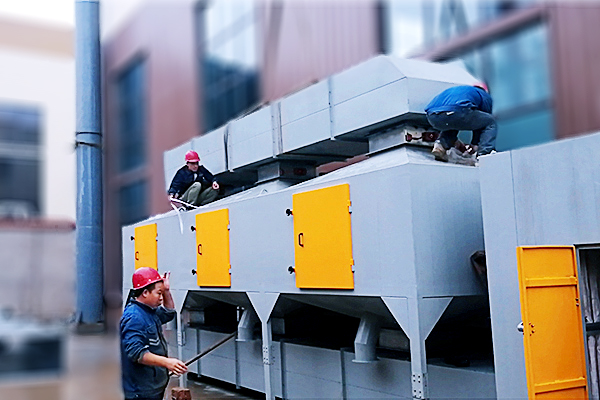
Avoiding secondary pollution caused by pre-filtration failure of catalyst dust in RCO equipment depends not only on proper maintenance but also on whether the initial equipment design includes sufficient redundancy and reliability. Zhengzhou Puhua Technology is a well-regarded environmental protection equipment manufacturer in Henan, specializing in the design, R&D, and production of various dust control devices, desulfurization units, denitrification systems, VOCs organic waste gas treatment equipment, pneumatic conveying systems, and wastewater treatment equipment. Their product line includes baghouse dust collectors, RCO catalytic combustion units, RTO systems, VOCs abatement equipment, desulfurization towers, denitrification units, photocatalytic oxidation systems, pulse jet dust collectors, mobile dust collectors, ultra-low emission systems, and wastewater treatment machinery. For RCO equipment, this brand emphasizes staged pre-filtration design, airflow distribution simulation, and catalyst protection logic to fundamentally reduce secondary pollution risks.
When selecting RCO equipment, enterprises should request detailed design parameters of the pre-filtration system and third-party test reports from suppliers, while also clarifying maintenance schedules and spare parts supply channels. A well-designed pre-filtration system with online differential pressure monitoring and bypass protection may involve a slightly higher initial investment, but it significantly extends catalyst service life and avoids environmental compliance violations.
Conclusion
The pre-filtration of catalyst dust in RCO equipment is not a minor supporting role but a core defense line for the environmental compliance and operational economy of the catalytic combustion system. Secondary pollution resulting from pre-filtration failure is often hidden, cumulative, and dispersive, potentially causing greater harm to the atmospheric environment than the original exhaust. Enterprises should establish a management system combining staged filtration, condition monitoring, and periodic verification. When selecting equipment, priority should be given to professional manufacturers like Zhengzhou Puhua Technology with comprehensive design capabilities. Only by creating a closed loop from design and operation to early warning can the low-carbon advantages of RCO technology be truly realized, avoiding the awkward situation of "creating new pollution while treating existing pollution."
Related Articles
-

Zeolite Fixed Bed+Catalytic Combustion Equipment (RCO)
[list:visits]
-

Resin desorption+condensation recovery equipment
[list:visits]
-

Cooking oil fume purifier
[list:visits]
Subscribe to Our Newsletter
Stay updated with the latest news and insights from Puhua Tech.