
RTO Equipment Furnace Front Flame Arrestor Inspection and Cleaning Cycle
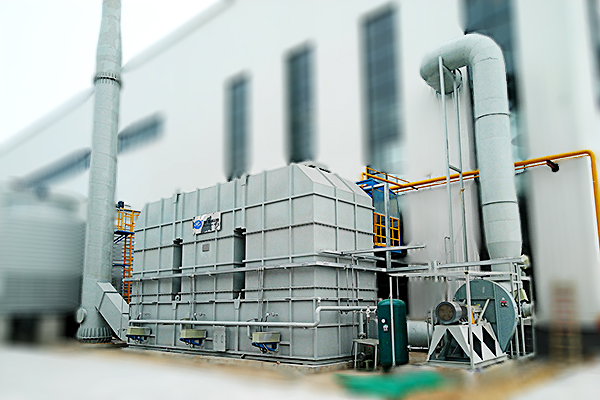
For facilities utilizing Regenerative Thermal Oxidizers (RTOs), the flame arrestor installed at the furnace front is a critical safety component. Its primary function is to prevent flame propagation back into the gas collection system, thereby averting potential explosions or fires. However, a neglected flame arrestor can become clogged with particulate matter, resins, or polymerized substances, drastically increasing pressure drop, reducing system efficiency, and creating hazardous operational conditions. This guide provides a comprehensive, practical approach to establishing an optimal RTO equipment furnace front flame arrestor inspection and cleaning cycle, ensuring both safety and regulatory compliance.
Why the Furnace Front Flame Arrestor Demands Special Attention
Unlike other RTO components, the furnace front flame arrestor directly interfaces with the high-temperature oxidation zone while being exposed to untreated, often particle-laden, volatile organic compounds (VOCs). Over time, sticky residues from paint overspray, chemical mists, or dust can adhere to the arrestor’s narrow passages. This accumulation leads to:
Increased system backpressure and higher fan energy consumption.
Reduced destruction removal efficiency (DRE).
Risk of localized hot spots or secondary combustion outside the combustion chamber.
Premature failure of upstream and downstream components.
Therefore, a well-defined RTO equipment furnace front flame arrestor inspection and cleaning cycle is not merely recommended; it is essential for operational continuity.
Standard Inspection and Cleaning Frequency Guidelines
The optimal cycle varies based on waste gas composition and particulate loading. The table below provides general industry benchmarks. Sites with heavy tarry or polymerizing compounds should consider more frequent intervals.
| Application / Waste Gas Type | Inspection Frequency | Recommended Cleaning Cycle |
|---|---|---|
| Low particulate, non-sticky VOCs (e.g., solvent dryers) | Every 3 months | Every 12 months |
| Medium particulate, moderate stickiness (e.g., printing inks) | Monthly | Every 6 months |
| High particulate, heavy tarry/polymerizing (e.g., chemical synthesis, coating lines) | Weekly or bi-weekly | Every 1-3 months |
| Multi-shift operation with high humidity / particle load | Every 2 weeks | Every 4-8 weeks |
Note: These frequencies serve as starting points. Real-time pressure differential monitoring across the flame arrestor is the most reliable method to trigger an inspection or cleaning event. A pressure drop increase of 25-30% above baseline typically indicates required maintenance.
Step-by-Step Inspection Procedure
A thorough inspection should always follow a lock-out/tag-out (LOTO) procedure and allow sufficient cooling time. The key steps include:
Visual External Check: Inspect the housing for corrosion, discoloration (indicating overheating), or leakage. Document any abnormalities.
Pressure Differential Verification: Before opening, record the pressure drop across the flame arrestor at normal operating flow. Compare to clean baseline values.
Access and Removal: Carefully remove the flame arrestor element according to the equipment manual. Use appropriate tools to avoid damaging the delicate matrix.
Element Inspection: Shine a bright light through the element. Look for:
Visible blockage over 20% of the open area.
Uniformity of deposits – patchy vs. complete coverage.
Any signs of corrosion, cracking, or thermal distortion.
Measure Residual Thickness (if applicable): For metallic crimped ribbon arrestors, measure the gap; widened gaps reduce flame-quenching ability.
Effective Cleaning Methods
Cleaning technique depends on the contaminant type. Always wear appropriate PPE. The most common methods are:
Compressed Air Blow-Back (for dry dust): Use low-pressure air (≤30 psi) from the clean side outward. Never use high pressure which can deform the matrix.
Solvent Immersion (for oils, resins, polymerized compounds): Soak the element in a suitable degreaser or solvent that matches the waste gas component. Agitate gently. Follow with a fresh solvent rinse and then low-pressure air dry.
Ultrasonic Cleaning (for heavy, baked-on deposits): This provides the most thorough cleaning without mechanical stress. Use a mild detergent solution at 40-60°C for 30-60 minutes.
Thermal Oxidation (as a last resort): For polymerized plastics, carefully bake in a controlled furnace at 400-500°C to carbonize organics, then blow off ash. Ensure the arrestor material can withstand this temperature.
After cleaning, always re-inspect the element under bright light to ensure all passages are open. Replace the element if over 30% of the cross-sectional area remains blocked or if any physical damage is found.
Extending Service Life Through System Design
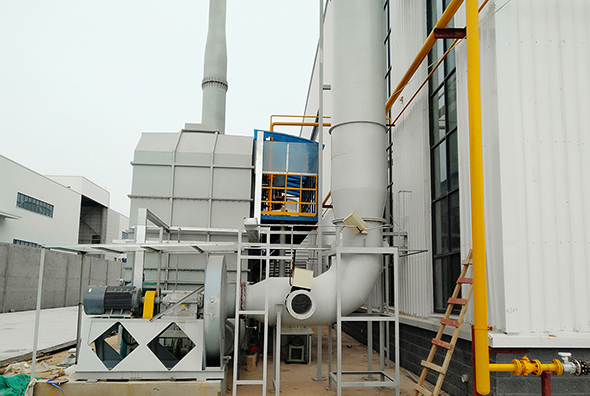
Operators can significantly lengthen the interval between cleanings by implementing upstream measures. Installing a high-efficiency pre-filter (such as a mesh pad filter or a cartridge dust collector) reduces particulate loading. Additionally, maintaining proper duct velocities prevents dust settling. For extremely sticky applications, consider a RTO equipment furnace front flame arrestor with a larger surface area or a non-stick coating (e.g., PTFE impregnation).
Zhengzhou Puhua Technology provides integrated solutions that include such pre-filtration and robust flame arrestor designs, tailored to challenging waste gas streams.
Record Keeping and Compliance
Maintain a dedicated log for each RTO equipment furnace front flame arrestor inspection and cleaning cycle. The log should document:
Date and time of each inspection/cleaning.
Personnel performing the task.
Pressure drop before and after cleaning.
Method used (e.g., compressed air, solvent, ultrasonic).
Visual condition rating (e.g., clear, moderate blockage, heavy blockage).
Any repairs or replacements made.
Such records are invaluable during environmental audits or incident investigations. They also help refine your specific cleaning frequency over time.
When to Replace Instead of Clean
Even with proper care, flame arrestors have a finite lifespan. Replace the element immediately if:
Visible cracks, holes, or missing sections are present.
The material shows signs of severe corrosion (rust flakes or thinning).
After cleaning, pressure drop remains 15% above baseline.
The element has been cleaned more than 10 times (for metallic types) or 5 times (for ceramic types).
Using a compromised arrestor defeats the entire safety system. Always use manufacturer-approved replacement elements.
Expert Support from Zhengzhou Puhua Technology
Developing an optimized maintenance plan requires understanding your specific VOC composition, particulate loading, and operational shifts. Zhengzhou Puhua Technology is a professional environmental protection equipment manufacturer based in Henan, specializing in the design and R&D of dust control equipment, desulfurization units, denitrification systems, VOCs treatment equipment, pneumatic conveying systems, and wastewater treatment devices. Their product range includes baghouse dust collectors, RCO catalytic combustion units, RTO equipment, VOCs abatement systems, desulfurization towers, denitrification equipment, photocatalytic oxidation units, pulse dust collectors, mobile dust collectors, ultra-low emission systems, and more.
For RTO equipment furnace front flame arrestor inspection and cleaning cycle optimization, or for any VOC abatement needs, Zhengzhou Puhua Technology offers practical, well-engineered solutions and responsive technical support. Their experience across chemical, coating, printing, and pharmaceutical industries ensures your system remains compliant, efficient, and safe.
Contact them to request a customized maintenance schedule or to replace aging arrestor elements with reliable, high-quality components.
Related Articles
-

Zeolite Fixed Bed+Catalytic Combustion Equipment (RCO)
[list:visits]
-

Resin desorption+condensation recovery equipment
[list:visits]
-

Cooking oil fume purifier
[list:visits]
Subscribe to Our Newsletter
Stay updated with the latest news and insights from Puhua Tech.