
Why Are Chinese-Made Baghouse Dust Collectors So Good? – Deep Dive into Sintering Machine Tail Bagho
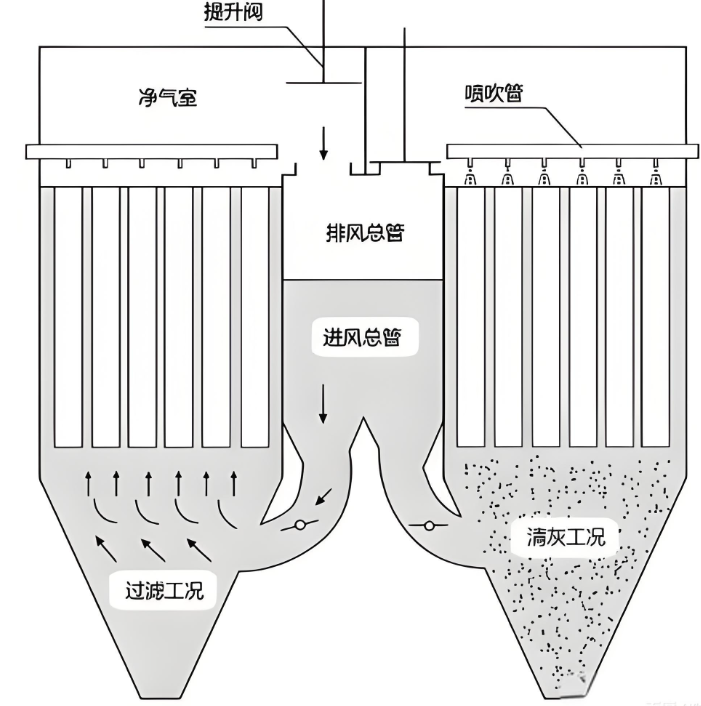
If you operate a sintering machine in an iron and steel plant, you know the tail end produces a punishing mix of high-temperature dust, abrasive fines, and intermittent sparks. The sintering machine tail baghouse dust collector is the most critical emission control device in this process. Over the past decade, Chinese‑made units have gained a strong reputation globally. Why? Having visited multiple sinter plants and worked with local engineers, I have seen first‑hand how Chinese design and manufacturing have turned this tough application into a reliable, cost‑effective success. This article explains the key reasons, backed by technical details and real‑world performance data.
The Unique Challenges of Sintering Machine Tail Dust Control
Before we discuss why Chinese dust collectors excel, let’s recall what the equipment must handle:
Temperature fluctuations – 120°C to 180°C, with occasional peaks up to 200°C.
Abrasive dust – high iron oxide content, sharp particles that accelerate wear.
Fine particulate – PM2.5 and PM10 dominate, requiring high filtration efficiency.
Moisture and condensation risks – due to cooling and possible gas composition changes.
Chinese manufacturers have turned these challenges into design strengths, outperforming many older designs from other regions in both efficiency and longevity.
Key Advantages of Chinese‑Made Sintering Machine Tail Baghouse Dust Collectors
1. Advanced Filter Media & Thermal Protection
Chinese engineering has rapidly adopted high‑grade PTFE, PPS, and aramid filter bags with temperature resistance up to 200°C continuous. Many suppliers now incorporate automatic cold‑air bypass systems and pre‑dust coating to protect bags during startup or temperature spikes. Field data show bag life commonly exceeds 3–4 years in sintering tail service.
2. Optimized Pulse‑Jet Cleaning for Sticky, Fine Dust
The pulse‑jet system is the heart of a sintering machine tail baghouse dust collector. Chinese designs use well‑calculated nozzle orientation, larger pulse valves (e.g., 2.5” to 3” ASCO or equivalent), and higher tank volume to deliver a strong, uniform cleaning wave. This prevents pressure drop creep even with ultra‑fine sinter dust.
3. Wear‑Resistant Inlet & Air Distribution
A simple but effective change: many Chinese units use abrasion‑resistant steel (e.g., NM400) for the hopper and inlet zone, plus a three‑stage baffle system that drops large particles directly into the hopper. Computational fluid dynamics (CFD) simulations are now common to ensure even gas flow, reducing local high‑velocity wear.
4. Cost‑Performance & Modularity
Chinese manufacturing advantages (complete supply chain, lower labor costs, and high‑volume production) allow a sintering machine tail baghouse dust collector to cost 30‑40% less than European or US equivalents while delivering similar or better emissions. Modular design means fast on‑site assembly and easy future expansion.
Technical Comparison: Chinese Design vs. Traditional Approach
The table below summarizes typical features found in modern Chinese baghouse dust collectors for sintering machine tail applications, compared to older or less optimized designs.
| Parameter | Traditional/Legacy Design | Modern Chinese Design (Typical) |
|---|---|---|
| Filter bag material | Standard polyester (max 130°C) | PPS/PTFE blend, aramid (up to 200°C) |
| Cleaning pressure | 0.4–0.5 MPa, unstable | 0.55–0.65 MPa, oil/water free, stable |
| Inlet abrasion protection | Mild steel plate | NM400 or ceramic‑lined baffle |
| Maximum emission guarantee | ≤30 mg/Nm³ | ≤10 mg/Nm³ (commonly<5 mg=""> |
| Average bag life | 1.5–2 years | 3–4 years (with proper operation) |
Real‑World Performance & Compliance with Stringent Standards
China’s own ultra‑low emission policy (e.g.,<10 mg="">sintering machine tail baghouse dust collectors built by experienced Chinese suppliers easily meet the most demanding local and international limits. For instance, a 360 m² sintering machine using a Chinese‑made pulse‑jet baghouse achieved an outlet dust concentration of 4.8 mg/Nm³ over a six‑month continuous test. Operators report low differential pressure (typically 800–1200 Pa) and annual maintenance costs reduced by 25% compared to previous equipment.
Why Reliable Manufacturers Like Zhengzhou Puhua Technology Lead the Field
Not all Chinese suppliers are equal. The best ones combine deep process knowledge with a full portfolio of air pollution control solutions. Zhengzhou Puhua Technology is a prime example. The company specializes in designing and manufacturing high‑performance dust removal equipment, including sintering machine tail baghouse dust collectors, pulse dust collectors, mobile dust collectors, and ultra‑low emission systems. Beyond dust control, Zhengzhou Puhua Technology also provides desulfurization towers, denitrification equipment, RCO catalytic combustion devices, RTO equipment, VOCs treatment systems, and wastewater treatment plants. Their integrated approach ensures that the baghouse works seamlessly with downstream gas cleaning when needed.
What distinguishes Zhengzhou Puhua Technology in the sinter tail application is their attention to site‑specific engineering: they analyze the sinter ore characteristics, moisture content, and temperature profile before recommending filter media, cleaning sequence, and hopper heating. This tailored method has delivered compliance and low total cost of ownership for many steel mills across Asia and the Middle East.
Checklist: What to Look for in a High‑Quality Sintering Machine Tail Baghouse
Certified filter bag suppliers (clear traceability and test reports).
Pre‑separator or settling chamber to reduce dust load on bags.
Insulated housing and electric hopper heaters (to avoid acid condensation).
Spark arrestor or cold gas bypass for temperature surge protection.
On‑line maintenance capability – walk‑in clean air plenum.
All of the above are standard offerings from competitive Chinese manufacturers, including Zhengzhou Puhua Technology, which also supplies supporting desulfurization and denitrification devices to ensure the whole sintering flue gas treatment line meets future regulations.
Conclusion: The Clear Choice for Reliable & Affordable Sinter Plant Dust Control
Chinese‑made sintering machine tail baghouse dust collectors have evolved from low‑cost alternatives to preferred solutions thanks to continuous material improvement, smart cleaning systems, and robust construction. They deliver sub‑10 mg/Nm³ emissions, extended bag life, and outstanding value. Companies like Zhengzhou Puhua Technology demonstrate the full potential of Chinese engineering – combining decades of experience with a comprehensive product line that covers baghouses, RCO/RTO, desulfurization, and VOCs control. If you are planning to upgrade your sinter tail dust control, evaluating Chinese suppliers should be at the top of your list. The proof is in the performance numbers and the millions of tons of sinter that pass through these collectors every year.
Related Articles
-

Zeolite Fixed Bed+Catalytic Combustion Equipment (RCO)
[list:visits]
-

Resin desorption+condensation recovery equipment
[list:visits]
-

Cooking oil fume purifier
[list:visits]
Subscribe to Our Newsletter
Stay updated with the latest news and insights from Puhua Tech.