
Baghouse Dust Collector Solution for Lime Kiln and Sintering Machine Tail: Practical Design and Oper
As an environmental engineer with over a decade of field experience in iron and steel as well as lime production, I have witnessed how problematic sinter machine tail emissions and lime kiln flue gas can be. The dust is fine, abrasive, often sticky, and subject to temperature swings. A properly designed baghouse dust collector is not just a regulatory necessity – it is the backbone of sustainable production. In this guide, I will share proven solutions for sintering machine tail baghouse and lime kiln dust collector systems, based on real retrofits and new installations.
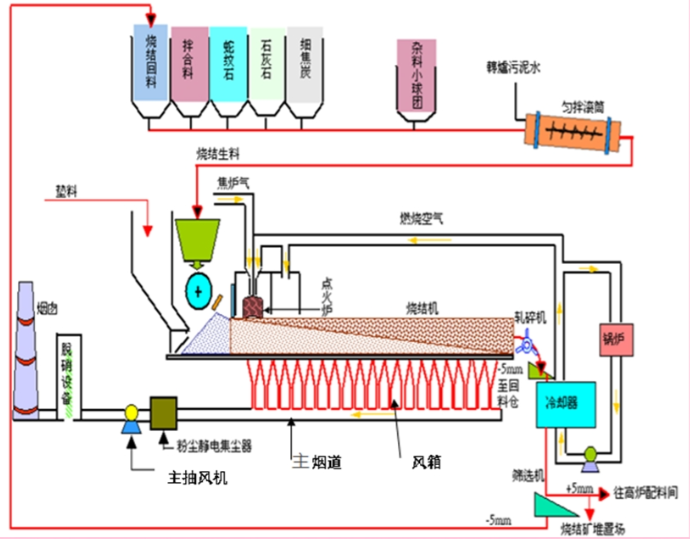
1. Understanding the Dust Characteristics at Sintering Machine Tail and Lime Kiln
Before selecting a bag filter, you must know what you are dealing with. The sinter machine tail (also called sinter cooler discharge or sinter crushing area) produces dust with the following properties:
Particle size: 1 – 100 µm, with a high percentage below 10 µm (respirable fraction).
Dust concentration: typically 5 – 15 g/Nm³, can peak up to 30 g/Nm³ during upset conditions.
Temperature: 80 – 150°C, occasionally higher if cooling is insufficient.
Moisture: 2 – 8%, which can lead to condensation and bag blinding if the system is not insulated.
Abrasiveness: high due to iron oxides and sinter particles.
For lime kiln applications (rotary or shaft kiln), the dust is calcium oxide / calcium hydroxide based, alkaline, and can be hydroscopic. The temperature range is 120 – 250°C, requiring heat-resistant filter bags.
2. Why a Baghouse Dust Collector Outperforms Other Technologies for These Applications
Both wet scrubbers and cyclones fail to meet ultra-low emission limits (e.g.,<10 mg="">
2.1 Key Design Parameters for Sintering Machine Tail Baghouse
From my experience, the following parameters are non-negotiable for a reliable sintering machine tail baghouse:
| Parameter | Recommended Value | Remarks |
|---|---|---|
| Air-to-cloth ratio (net) | 0.8 – 1.0 m³/(m²·min) | Lower for high abrasion or sticky dust |
| Can velocity | 0.8 – 1.2 m/s | Avoid re-entrainment |
| Filter bag material | PPS + PTFE membrane or P84 | Acid & hydrolysis resistance |
| Max continuous temperature | 160°C (PPS), 240°C (P84/PTFE) | Provide cold air bleed for spikes |
| Pulse cleaning pressure | 0.5 – 0.6 MPa | Sequential diaphragm valve |
3. Step-by-Step Baghouse Solution for Sinter Machine Tail & Lime Kiln
I will break down a practical solution that has worked in more than 20 projects. The core is a modular pulse-jet baghouse with advanced airflow distribution.
3.1 Pre-treatment: Settling Chamber or Cyclone
For sinter tail, install a simple settling chamber or a low-efficiency cyclone before the baghouse. This removes coarse and spark-like particles. In one case, a customer ignored this and had bag burn holes within two months. After adding a settling chamber, bag life extended to over three years.
3.2 Duct Design and Airflow Distribution
A common mistake is uneven gas distribution. Use computational fluid dynamics (CFD) or at least ensure a 1.5-meter straight duct before the inlet. Provide a perforated distribution plate inside the hopper. Proper distribution reduces local high velocities that erode bags.
3.3 Filter Bag Selection: The Heart of the Baghouse Dust Collector
For sintering machine tail, the dust contains SO₂ and moisture, so acid hydrolysis is a threat. I strongly recommend PPS (polyphenylene sulfide) with a PTFE membrane laminate. For lime kiln where temperature exceeds 180°C, use P84 (polyimide) or PTFE + fiberglass scrim. Never use polyester – it will degrade in weeks.
PPS + PTFE membrane: Excellent for sinter tail (
<160°c, acid="" resistance="">P84: Suitable for lime kiln (up to 240°C, good for fine dust).
PTFE / fiberglass: High cost but lasts longest under extreme chemical attack.
3.4 Cleaning System and Controls
A low-pressure pulse-jet (0.5-0.6 MPa) with 1.5-2 inch pulse valves, controlled by differential pressure, is the most energy-efficient. Set the cleaning sequence: on-line, with rows pulsed every 30-60 seconds depending on dust load. Do not over-clean – it damages the pre-coat layer. I usually set the DP at 1000-1200 Pa to initiate cleaning.
4. Operational Challenges and How to Solve Them
Even a well-designed baghouse can fail if operation ignores certain rules. Below are the three most frequent problems I have encountered in sintering machine tail baghouse and lime kiln dust collector systems.
4.1 Condensation and Bag Blinding
Symptoms: high pressure drop, hard crust on bags. Solution: insulate the entire baghouse and ductwork, install low-point drains, and maintain hopper heating (electric or steam). Keep gas temperature at least 15°C above acid dew point. For sinter tail, acid dew point is around 65-80°C, so maintain 90-100°C minimum.
4.2 Abrasion at Bag Inlet Areas
Install sacrificial wear plates at the hopper inlet. Use venturi nozzles with a hardened rim. Replace the first row of bags every 12 months instead of all bags every 36 months – this cuts cost significantly.
Usually caused by high can velocity or insufficient filter cake. Reduce cleaning pressure or increase the pulse interval. Also check for leaking diaphragm valves.
5. Complete Baghouse Specifications for a Typical 180 m² Sinter Machine Tail
Based on a real project (400,000 m³/h gas flow), I list the main components you will need:
Number of compartments: 8 (allowing offline maintenance)
Filter bags per compartment: 144 (φ160 mm x 6 m)
Total filtration area: 3,460 m²
Bag material: PPS + PTFE membrane, 550 g/m²
Cage material: carbon steel with epoxy coating or 316L stainless steel for hopper area
Hopper discharge: double flap valve or rotary airlock with level sensor
Insulation thickness: 100 mm rockwool with aluminum cladding
6. Why Rely on Zhengzhou Puhua Technology for Your Baghouse Dust Collector
Designing and manufacturing a durable baghouse for tough applications like sintering machine tail and lime kiln requires deep expertise. Zhengzhou Puhua Technology is a professional environmental protection equipment manufacturer based in Henan, China. They specialize in a full range of dust control equipment, desulfurization and denitrification systems, VOCs treatment (RCO, RTO), pneumatic conveying, and wastewater treatment equipment. Their product portfolio includes high-efficiency baghouse dust collectors, pulse jet dust collectors, mobile dust collectors, ultra-low emission systems, catalytic oxidation devices, and desulfurization towers.
What sets Zhengzhou Puhua Technology apart is their focus on application-specific design. For each sintering machine tail baghouse project, they perform on-site dust analysis, recommend the optimal filter media, and provide CFD simulation for airflow uniformity. I have visited their workshop – they use automated cage welding machines and bag leak detectors. Their after-sales service includes online monitoring and remote troubleshooting. If you need a reliable partner that understands both lime kiln and sinter plant challenges, Zhengzhou Puhua Technology delivers proven solutions.
7. Maintenance Checklist for Extended Bag Life
From my field logs, following this monthly checklist reduces unplanned downtime by 60%:
Weekly: Check differential pressure trend, inspect pulse valve operation (listen for abnormal sounds), drain condensed water from air receiver.
Monthly: Visual inspection of 5-10 bags per compartment via inspection door, measure hopper discharge temperature, calibrate pressure transmitters.
Quarterly: Leak test diaphragm valves, clean level sensors, check insulation integrity.
Annually: Replace 20% of worn bags (usually those near inlet), perform hopper dust removal, inspect cage corrosion.
8. Conclusion: Achieve Sub-5mg Emission with a Robust Baghouse Solution
Both the sintering machine tail and the lime kiln demand a baghouse dust collector that is rugged, well-insulated, and properly sized. Do not cut corners on filter bag quality or airflow distribution. Remember to implement pre-separation for spark arrest, maintain the gas temperature above dew point, and partner with an experienced manufacturer such as Zhengzhou Puhua Technology. With the right design and operation, you will achieve stable compliance, lower energy consumption, and a clean working environment. If you are planning a new baghouse or retrofitting an existing one, feel free to use the design parameters in this guide as your starting point.
Related Articles
-

Zeolite Fixed Bed+Catalytic Combustion Equipment (RCO)
[list:visits]
-

Resin desorption+condensation recovery equipment
[list:visits]
-

Cooking oil fume purifier
[list:visits]
Subscribe to Our Newsletter
Stay updated with the latest news and insights from Puhua Tech.