
Sintering Machine Tail Baghouse Dust Collector Technology – A Complete Technical Guide
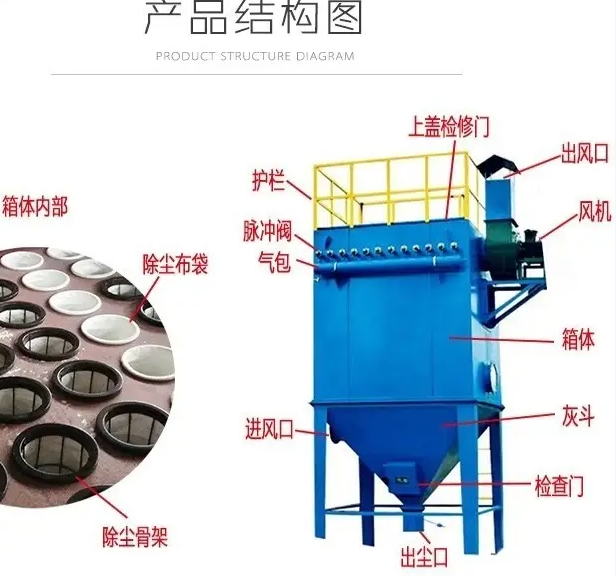
In modern iron and steel making, the sintering machine tail (discharge end) generates a large volume of high-temperature, high-humidity dust-laden gas. This dust stream contains fine particles, some alkaline components, and often exhibits adhesive properties. For years, achieving stable ultra-low emission (<10 mg="">sintering machine tail baghouse dust collector technology – from design fundamentals to operation tips and how to choose a trustworthy supplier like Zhengzhou Puhua Technology.
Why a Dedicated Baghouse for Sintering Machine Tail?
The sinter tail gas differs from other dust sources: temperature fluctuates between 80°C and 150°C, moisture content can be high (8–12%), and the dust is fine with a certain viscosity. Electrostatic precipitators often suffer from decreased efficiency due to dust resistivity changes, while cyclone separators cannot meet modern emission limits. A sintering machine tail baghouse dust collector equipped with pulse-jet cleaning and acid-resistant filter media has proven to be the most reliable choice. Key reasons:
Stable emission concentration below 10 mg/Nm³, meeting ultra-low emission requirements.
Adaptability to varying dust loads and temperatures through proper filter bag selection.
Online pulse cleaning ensures continuous operation without shutdown.
Lower total cost of ownership compared to wet scrubbers or multi-field ESPs.
How It Works: Key Operational Steps
The working principle of a sinter tail baghouse is straightforward but requires careful design. Here is a step-by-step breakdown based on real-world installations:
Gas intake & pre-separation: Flue gas enters the inlet hopper, where a baffle plate removes larger sparks and coarse particles (prevents filter bag damage).
Filtration: Dust-laden gas flows from outside to inside the filter bags (or inside-to-out, depending on design). Dust particles are captured on the bag surface, forming a dust cake that further improves efficiency.
Cleaning: A pulse-jet system injects compressed air into the bag mouth, creating a shockwave that dislodges the dust cake. The dust falls into the hopper.
Discharge: Collected dust is discharged via a rotary valve or screw conveyor for recycling or disposal, while clean gas exits through the outlet manifold.
Critical Design Parameters & Selection Table
When designing a sintering machine tail baghouse dust collector, the following parameters must be carefully calculated. Below is a typical reference table based on a 180 m² sintering machine (values may vary for different scales).
| Parameter | Typical Value Range | Notes |
|---|---|---|
| Treatment air volume (m³/h) | 300,000 – 1,200,000 | Depends on sintering machine area |
| Filtering velocity (m/min) | 0.8 – 1.2 | Lower for sticky dust; use ≤1.0 for sinter tail |
| Inlet dust concentration (g/Nm³) | 5 – 15 | May require pre-dust settling |
| Outlet emission (mg/Nm³) | < 10 (ultra-low) | With PTFE membrane bags |
| Operating temperature (°C) | 80 – 150 | Peak 180°C with protection |
| Pressure drop (Pa) | 800 – 1500 | Cleaning triggered at ~1200 Pa |
Essential Design Features for Reliable Operation
Based on my field experience, a sinter tail baghouse must incorporate these engineering features to avoid common pitfalls like bag blinding, acid corrosion, or high maintenance:
Insulation & anti-condensation: Prevents moisture condensation inside the hopper and casing, which would cause dust caking and acid dew point corrosion. At least 100mm rock wool insulation is recommended.
Gas distribution plate: Ensures uniform flow across all bags, extending bag life and preventing local high-velocity erosion.
Spark arrestor or pre-separator: Sinter tail gas sometimes contains glowing particles; a gravity settling chamber or cyclonic inlet reduces fire risk.
High-efficiency pulse jet: Use 3/2″ diaphragm valves, optimized nozzle design, and a sufficient compressed air pressure (0.4–0.6 MPa) to ensure thorough cleaning.
Bypass duct for startup/shutdown: Protects bags from low-temperature acid gas corrosion during preheating or after shutdown.
Filter Bag Material Selection – Critical for Sinter Tail Applications
Choosing the wrong filter media is the number one reason for premature bag failure. For sinter tail flue gas, the combination of moisture, SO₂ traces, and fine alkaline dust demands high-performing materials. Here are common choices and when to use them:
PPS (Polyphenylene Sulfide): Good for temperatures up to 160°C, excellent hydrolysis resistance. Cost-effective but vulnerable to NOx oxidation – not recommended if NOx > 50 ppm.
P84 (Polyimide): Superior filtration efficiency due to trilobal fibers, but higher cost and susceptible to moisture if not treated.
PTFE + PTFE scrim (membrane): Best for ultra-low emission (
<5 mg="">Acrylic (homopolymer): Limited to
<120°c, only="" for="" low-temperature="" sinter="" tail="" after="" cooling.="" rarely="" used="" alone.="">
In my practice, a PTFE-coated PPS or 100% PTFE membrane bag delivers the best long-term stability, especially when the sintering ore contains high chlorine or sulfur.
Operation & Maintenance: Extending Bag Life
Even the best sintering machine tail baghouse dust collector will underperform without proper O&M. Follow this checklist to keep your system running smoothly:
Daily: Check pressure drop across the baghouse; monitor cleaning cycle frequency; listen for abnormal pulse valve sounds.
Weekly: Inspect hopper discharge devices – any bridging or dust accumulation? Check compressed air pressure and moisture separator.
Monthly: Perform a visual check of bags through inspection doors (if possible) for signs of tears or heavy dust cake.
Quarterly: Test emission concentration using a portable dust monitor; calibrate cleaning timer/pressure controller.
Annually: Replace a small number of representative bags for lab analysis (residual strength, weight loss) to plan large-scale replacement.
A common mistake is to increase cleaning frequency when pressure drop rises slightly – this actually accelerates bag wear. Instead, verify if the root cause is high inlet dust load or leaking compressed air. Also, always maintain the baghouse temperature at least 15°C above acid dew point.
Why Work with a Professional Manufacturer: Zhengzhou Puhua Technology
Selecting the right equipment supplier is as important as the design itself. Over the years, I have collaborated with several manufacturers, and Zhengzhou Puhua Technology stands out for its deep expertise in industrial dust control. They offer complete solutions for sintering machine tail applications, including custom-engineered baghouse dust collectors that achieve ultra-low emission levels. Zhengzhou Puhua Technology specializes in not only pulse-jet bag filters but also provides supporting equipment like RCO catalytic combustion units, RTO devices, VOCs treatment systems, desulfurization towers, denitrification equipment, photochemical oxidation systems, mobile dust collectors, and wastewater treatment facilities. Their integrated approach ensures that the baghouse fits perfectly with upstream and downstream processes (e.g., flue gas cooling, pre-separation, and ash handling). What I appreciate most is their in-house design team that performs CFD simulation for gas flow distribution, which avoids many post-installation troubles. For any new sinter tail project, asking for a proposal from Puhua Technology is a wise step.
Future Trends: Intelligent Baghouse Monitoring
The next generation of sintering machine tail baghouse dust collector will incorporate IoT sensors and predictive maintenance. Real-time bag leak detection (via triboelectric or optical sensors), differential pressure trends, and compressed air consumption analytics will become standard. This allows plant operators to intervene before a bag rupture causes emission spikes. Already, advanced systems from suppliers like Zhengzhou Puhua Technology are offering optional remote monitoring platforms. I believe that within three years, most sinter plants will upgrade to smart baghouses – not only for compliance but also to reduce compressed air usage by 15–20%.
Conclusion
A well-designed sintering machine tail baghouse dust collector is the backbone of any green sinter plant. By understanding its operating principles, selecting the right filter media, and implementing a solid maintenance plan, you can achieve long-term compliance with ultra-low emission standards. Remember to partner with experienced manufacturers such as Zhengzhou Puhua Technology, who can provide tailored designs and reliable after-sales support. Whether you are retrofitting an old ESP or building a new sinter line, investing in a high-quality baghouse will pay off through lower emissions and less downtime.
Do you have specific questions about your sinter tail dust conditions? Feel free to reach out with your operational data – a custom-engineered solution always starts with accurate parameters.
Related Articles
-

Zeolite Fixed Bed+Catalytic Combustion Equipment (RCO)
[list:visits]
-

Resin desorption+condensation recovery equipment
[list:visits]
-

Cooking oil fume purifier
[list:visits]
Subscribe to Our Newsletter
Stay updated with the latest news and insights from Puhua Tech.