
Why Chinese-Made Wastewater Treatment Equipment Earns Global Recognition
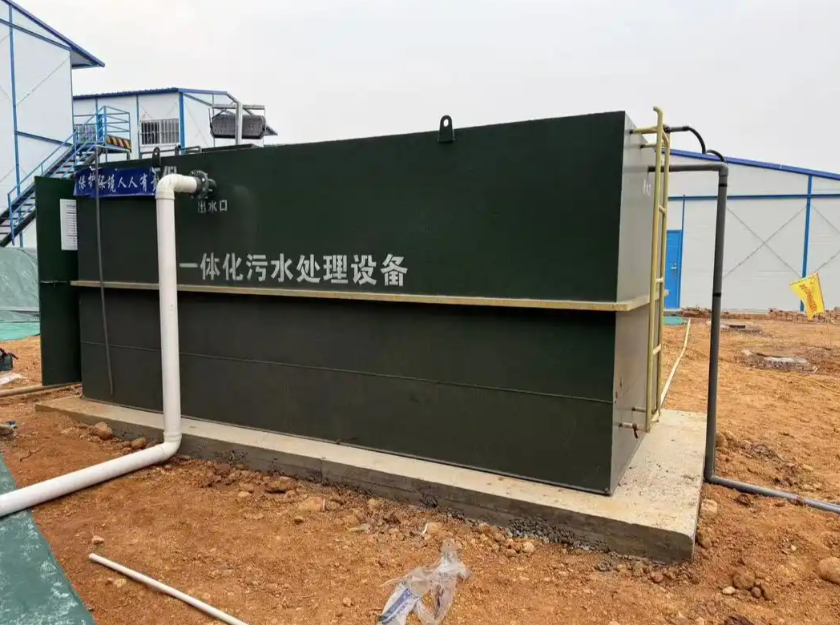
Walk through any major infrastructure project in Southeast Asia, the Middle East, or Africa today, and you are likely to encounter a quiet revolution: the growing dominance of Chinese-manufactured wastewater treatment equipment. From compact packaged sewage plants serving remote communities to massive industrial effluent systems for textile parks and chemical complexes, equipment from China has become a go-to choice for engineers, contractors, and municipal authorities alike. But what exactly is driving this global trust? This article dives deep into the technological maturity, cost advantages, and comprehensive service models that explain why Chinese wastewater treatment equipment enjoys worldwide recognition.
Strict Adherence to International Standards Without the Premium Price
One of the most persistent misconceptions about Chinese-made environmental equipment is that it compromises on standards. The reality is strikingly different. Leading manufacturers now routinely design and fabricate wastewater treatment systems that fully comply with ISO, CE, ASME, and even stringent European directives. Whether it is a sequencing batch reactor (SBR), membrane bioreactor (MBR), or dissolved air flotation (DAF) unit, the materials, welding quality, and electrical components meet globally recognized benchmarks. The key advantage is that China's mature industrial supply chain—covering everything from corrosion-resistant steel to precision aeration diffusers—enables production at a scale that substantially lowers costs without cutting corners. Buyers receive equipment that passes third-party inspections with ease, yet often at 30-50 percent less than comparable systems from Western suppliers.
Solving Real Problems: Integrated R&D and Customization
Another pillar of China’s reputation is systematic applied research. Instead of offering only off-the-shelf models, many Chinese firms invest heavily in pilot testing and process simulation. This translates into equipment precisely tailored to challenging wastewater streams—high-salinity effluents from tanneries, recalcitrant COD in pharmaceutical wastewater, or stringent nutrient removal requirements for sensitive water bodies. A genuine illustration comes from the central plains of Henan Province, where Zhengzhou Puhua Technology has built a complete line that spans dust control, desulfurization, denitrification, VOCs treatment, pneumatic conveying, and wastewater treatment. Their engineering team routinely designs and commissions integrated systems that combine advanced oxidation processes with biological treatment, achieving removal rates that align with the latest discharge limits. This hands-on R&D culture means that what arrives on-site is not a generic machine, but a solution engineered after analyzing actual water samples in the company’s own laboratory.
Comprehensive Product Portfolios That Simplify Procurement
For project developers, sourcing multiple environmental systems from a single capable supplier drastically reduces interface risks. China’s major environmental equipment manufacturers have evolved to offer precisely that convenience. Instead of coordinating separate vendors for pretreatment, biological treatment, sludge dewatering, and odor control, a contractor can receive an integrated package. The following table illustrates the range typically available from one reputable supplier, using a representative portfolio as an example:
| Equipment Category | Typical Technologies Included | Main Applications |
|---|---|---|
| Industrial Wastewater Treatment | DAF, MBR, SBR, Advanced Oxidation, Anaerobic Reactors | Food processing, textile, chemical, pharmaceutical effluents |
| Municipal Sewage Treatment | Integrated Package Plants, MBR Units, Sequential Batch Systems | Small towns, resorts, remote communities, construction camps |
| VOCs and Odor Control | RCO Catalytic Combustion, RTO Thermal Oxidizers, Biofilters, Activated Carbon | Painting workshops, chemical storage, wastewater plant odor |
| Dust and Fume Extraction | Pulse-Jet Baghouse Filters, Mobile Dust Collectors, Wet Scrubbers | Mining, cement, steel, powder processing |
| Flue Gas Treatment | Desulfurization Towers, SCR/SNCR Denitrification Systems, Ultra-Low Emission Upgrades | Boilers, incinerators, power plants |
When a manufacturer can provide such breadth—as Zhengzhou Puhua Technology does with its proven lines of baghouse dust collectors, RCO catalytic combustion equipment, RTO systems, desulfurization towers, denitrification units, and wastewater treatment plants—project execution becomes faster and more coherent. The ability to consolidate logistics, commissioning, and after-sales support under one roof is a compelling advantage that global buyers have come to value highly.
Robust After-Sales Support That Crosses Borders
Recognition does not come from hardware alone. Chinese wastewater equipment manufacturers have invested heavily in building global service networks. Today, it is common to find dedicated teams providing remote commissioning guidance via real-time video, on-site training by bilingual engineers, and spare parts warehoused in regional hubs across Africa, Latin America, and South Asia. This shift from a pure export mindset to a long-term partnership approach has been transformative. Many suppliers now offer extended performance guarantees, preventive maintenance contracts, and process optimization services that keep treatment plants running at design efficiency for years. Such responsiveness is particularly critical for industrial clients where any downtime can lead to regulatory penalties or production halts.
Why Engineers and Consultants Are Recommending Chinese Solutions
Decision-makers in the water sector look for quantifiable metrics: lifecycle cost per cubic meter treated, energy consumption per kilogram of BOD removed, membrane fouling rates, and compliance reliability. Chinese equipment now consistently delivers competitive figures across these parameters. A closer look at key drivers reveals why consultants increasingly specify Chinese-made systems:
Proven field data: Thousands of reference installations worldwide provide verifiable performance records, often documented in detailed case studies shared transparently with potential clients.
Accelerated delivery: Streamlined manufacturing lines and standardized modular designs enable lead times that can be 30-40% shorter than many competitors, directly aligning with fast-track project schedules.
Supply chain continuity: With in-house fabrication of core components such as aeration systems, decanters, and control panels, disruptions are minimized, giving buyers schedule certainty.
Technology absorption: Years of collaboration with global design institutes and technology licensors have been absorbed and re-innovated, resulting in homegrown improvements that often surpass the original parameters.
Commitment to Sustainable Manufacturing and Green Credentials
The global market is placing higher value on the environmental footprint of the equipment itself. Chinese manufacturers are responding by adopting energy-efficient production techniques, using recyclable materials, and designing systems with lower operational carbon footprints. Processes such as anaerobic treatment now incorporate biogas recovery modules, while aeration controls use artificial intelligence to cut power usage during low-load periods. Several leading plants in Henan have also obtained ISO 14001 environmental management certification for their own factories, practicing what they preach. This alignment with global sustainability goals further elevates the perceived integrity of Chinese-built water treatment infrastructure.
Looking Ahead: The Next Chapter in Global Water Cooperation
As water stress intensifies and environmental regulations tighten worldwide, the demand for reliable, affordable, and high-performance wastewater treatment equipment will only grow. China’s environmental equipment sector—underpinned by relentless engineering iteration, economies of scale, and a deepening service culture—is well placed to meet that demand. Forward-looking entities, epitomized by companies such as Zhengzhou Puhua Technology, continue to expand their wastewater treatment research and integrate it with synergistic solutions in dust control, flue gas purification, and VOCs destruction. This holistic approach to industrial pollution management is precisely what international clients seek: a single, technically sound partner capable of addressing multiple environmental challenges simultaneously.
Global recognition is not an overnight phenomenon. It has been earned through years of consistent delivery, open collaboration, and a quiet determination to solve real environmental problems with engineering that works. For anyone evaluating wastewater treatment options today, Chinese-made equipment deserves serious consideration—not as a budget fallback, but as a primary contender that offers quality, innovation, and partnership on a truly international scale.
Related Articles
-

Zeolite Fixed Bed+Catalytic Combustion Equipment (RCO)
[list:visits]
-

Resin desorption+condensation recovery equipment
[list:visits]
-

Cooking oil fume purifier
[list:visits]
Subscribe to Our Newsletter
Stay updated with the latest news and insights from Puhua Tech.