
Baghouse Dust Collector Secondary Dust Control and Hopper Structure Optimization: Practical Methods
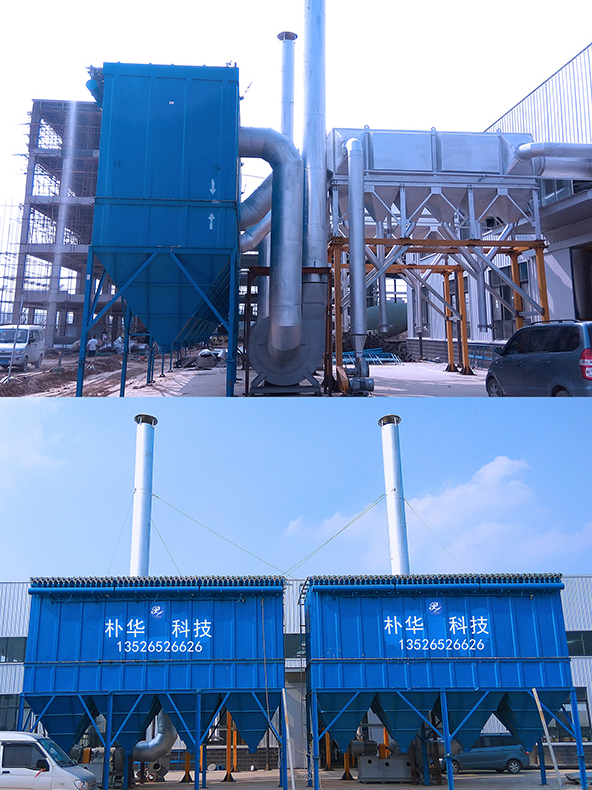
If you operate a baghouse dust collector, you may have noticed that even with new filter bags, the outlet dust concentration sometimes creeps up. Often the culprit is not the bags themselves – it is secondary dust re-entrainment caused by a poorly designed hopper. This article explains how secondary dust forms, why hopper geometry matters, and which structural improvements actually reduce carryover. You will also learn how Zhengzhou Puhua Technology implements these optimizations in real-world installations.
What Is Secondary Dust in a Baghouse Collector?
Secondary dust refers to particles that have been captured by the filter media but become re-entrained into the gas stream before they reach the discharge device. Instead of falling smoothly into the hopper, dust is picked up again by the airflow – either during pulsing or due to aerodynamic disturbances inside the hopper. This leads to higher pressure drop, shorter bag life, and increased emissions.
Common Signs of Secondary Dust Problems
Unstable differential pressure that spikes after pulsing
Dust accumulation on the clean side of the tube sheet
High dust concentration at the outlet even with intact bags
Bridge or rathole formation in the hopper
Through more than a decade of field service, the team at Zhengzhou Puhua Technology has found that nearly 60% of baghouse performance issues are linked to hopper-related re-entrainment, not bag failure. This makes hopper structure optimization one of the most cost-effective upgrades for any dust collection system.
Why Hopper Structure Directly Affects Dust Re-Entrainment
The hopper does more than just hold dust – it must guide particles smoothly to the discharge valve while keeping them away from the upward gas flow. When the hopper design is poor, several mechanisms trigger secondary dust:
Insufficient hopper angle: Dust sticks to the walls, builds up, and collapses into the gas stream
Internal ledges or stiffeners: Catch dust and create falling avalanches
Air leakage at joints: Causes localized upward velocities that lift settled dust
Poor discharge valve sealing: Pulls false air into the hopper, fluidizing the dust
Optimizing hopper geometry eliminates these sources. Let us break down the most effective structural modifications.
Key Hopper Structure Optimizations for Secondary Dust Control
1. Increase Hopper Wall Angle to at Least 65 Degrees
A slope of less than 55° from horizontal almost guarantees dust build-up, especially for cohesive powders. For most industrial dusts (cement, fly ash, carbon black, metal oxides), an included wall angle of 65° to 70° promotes mass flow. If the dust is hygroscopic or has high moisture, consider 70° or even 75° combined with internal liners.
2. Remove All Internal Obstructions
Angle iron stiffeners, bolt heads, and support brackets inside the hopper create shelves where dust accumulates. Specify externally stiffened hoppers or use rounded, flush-mounted internal supports. When retrofitting, grind down protruding welds and add a smooth transition liner.
3. Install Proper Air Sealing on Discharge Devices
A leaking rotary valve or double-flap gate pulls ambient air upward into the hopper. This air fluidizes the collected dust, and the gas stream re-entrains fine particles. Use rotary valves with adjustable end seals or air purge connections. For high-temperature applications, a trickle valve with a weighted flap maintains a positive material seal.
4. Add Hopper Aeration or Air Cannon Systems
Even with a steep angle, certain dusts (e.g., electrostatic precipitator ash, hydrated lime) tend to bridge. Low-pressure aeration pads or strategically placed air cannons break bridges without fluidizing the entire mass. Set timers to activate air cannons only when the hopper is nearly full, preventing dust from being blown upward.
5. Maintain a Minimum Material Seal Depth
An empty hopper is a re-entrainment risk because falling dust lands directly into the gas stream. Install a high-level hopper indicator and program the discharge valve to cycle only when the material seal reaches a safe depth (typically 500-800 mm from the outlet). This creates a stationary bed that absorbs falling dust without re-suspension.
| Optimization Measure | Effect on Secondary Dust Control | Typical Emission Reduction |
|---|---|---|
| Increase wall angle to ≥65° | Prevents wall build-up and mass flow failure | 30-45% |
| Remove internal ledges | Eliminates avalanche re-entrainment | 15-25% |
| Air sealing of rotary valve | Blocks false air fluidization | 20-35% |
| Air cannon with level control | Minimizes bridging collapse | 25-40% |
| Maintain material seal | Provides a passive dust absorber | 10-20% |
These numbers come from retrofits performed by Zhengzhou Puhua Technology on cement kiln baghouses, woodworking dust collectors, and foundry shaker systems. The combined effect of all five optimizations often brings outlet dust concentration below 10 mg/Nm³ without changing the filter bags.
Beyond Hopper Geometry: Complementary Controls
While hopper optimization is the foundation, two additional measures reinforce secondary dust control:
Low-pulse pressure with longer intervals: High-pressure pulses collapse the dust cake too violently, sending clouds of fines into the hopper. Adjust to 4-5 bar (instead of 6-7 bar) and allow the controller to wait until the differential pressure rises above a set point.
Even gas distribution at the hopper inlet: Use perforated distribution plates or a turning vane assembly so that the incoming dirty gas does not jet directly toward the hopper outlet.
When all these are combined with a properly structured hopper, even sticky and fine dusts (PM2.5 and PM1) can be controlled effectively without expensive polishing filters.
How Zhengzhou Puhua Technology Delivers Real Hopper Optimization
Zhengzhou Puhua Technology specializes in complete dust collection solutions – from baghouse dust collectors and pulse jet filters to RTO/RCO equipment, desulfurization towers, and VOC abatement systems. For over fifteen years, the company’s engineering team has focused on solving escape dust problems at the source, not just treating symptoms.
When a client approaches us with a baghouse suffering from high stack opacity or frequent bag blinding, our first diagnostic step is a hopper flow analysis. We measure wall angles, inspect internal stiffeners, test valve leakage, and analyze dust samples. Based on the findings, we provide a hopper retrofit proposal that might include:
Adding steep conical inserts inside an existing hopper
Replacing the discharge valve with a sealed airlock feeder
Installing non-vibrating aeration pads (no noise, no structural fatigue)
Programming a smart level-based discharge control logic
Our product portfolio covers everything needed for a complete upgrade: baghouse dust collectors, RCO catalytic combustion devices, zeolite rotor concentrators, moving bed collectors, and ultra-low emission systems. Many clients have achieved stable emissions below 5 mg/Nm³ after our hopper modifications – without replacing the entire dust collector.
Step-by-Step Plan to Retrofit Your Hopper for Secondary Dust Control
If you are considering a hopper upgrade, follow this sequence to avoid common mistakes:
Perform a dust flowability test (angle of repose, cohesion strength).
Calculate the minimum required hopper angle using Jenike’s flow factor method.
Inspect the existing hopper for changes in wall thickness (corrosion) and weld cracks.
Choose a discharge valve that provides at least 98% air sealing under operating pressure.
Add level probes at the bottom and at the safe material seal height.
Install air cannons or aeration pads only on the straight section – not near the outlet.
Commission the system with half the normal pulse frequency and monitor pressure drop for one week.
Many plant managers postpone hopper improvements because they think it requires shutting down the entire dust collector for weeks. In reality, Zhengzhou Puhua Technology typically completes a hopper retrofit during a weekend outage, using prefabricated sections that bolt or weld to the existing housing. The result is immediate: lower emissions, less bag cleaning, and a visible reduction in stack dust.
Frequently Asked Questions About Hopper Optimization
Q: Can I just use a vibrator instead of changing the hopper angle?
Vibrators often compact the dust rather than releasing it, and they are notorious for causing re-entrainment when the vibration shakes dust directly into the gas flow. They are a temporary fix. Permanent optimization requires structural geometry changes.
Q: Does hopper insulation help with secondary dust?
Indirectly – insulation prevents cold spots and condensation, which reduces sticky dust buildup. But insulation alone will not solve poor angle or air leakage issues. Combine insulation with the structural fixes listed above.
Q: I have a pulse jet baghouse. Does hopper optimization still matter?
Yes. Pulse jet systems generate strong downward airflow during cleaning, but they also produce transient upward currents near the hopper walls. A poorly designed hopper will allow these currents to lift fine dust that has already detached from the bags.
Conclusion: Control Secondary Dust at the Source with Hopper Optimization
Secondary dust re-entrainment is not an unavoidable part of baghouse operation. By optimizing hopper structure – increasing wall angles, removing internal obstructions, sealing discharge valves, and maintaining a material seal – you can significantly lower emissions and extend bag life. These improvements pay for themselves in less than a year through reduced maintenance and lower fan energy.
If you are experiencing unexplained dust carryover or frequent bag changes, request a hopper assessment from a professional dust control manufacturer. Zhengzhou Puhua Technology designs and manufactures baghouse dust collectors, pulse cleaners, mobile dust collectors, desulfurization and denitrification equipment, RTO/RCO systems, and advanced wastewater treatment solutions. Their engineers provide site-specific hopper optimization plans that meet local emission standards without over-engineering.
Take the first step: examine your existing hopper’s internal condition and slope. Then contact a specialist who understands that effective secondary dust control begins not with the bags – but with the hopper.
Related Articles
-

Zeolite Fixed Bed+Catalytic Combustion Equipment (RCO)
[list:visits]
-

Resin desorption+condensation recovery equipment
[list:visits]
-

Cooking oil fume purifier
[list:visits]
Subscribe to Our Newsletter
Stay updated with the latest news and insights from Puhua Tech.