
Baghouse Dust Collector Automation Control System Configuration and Parameter Setting
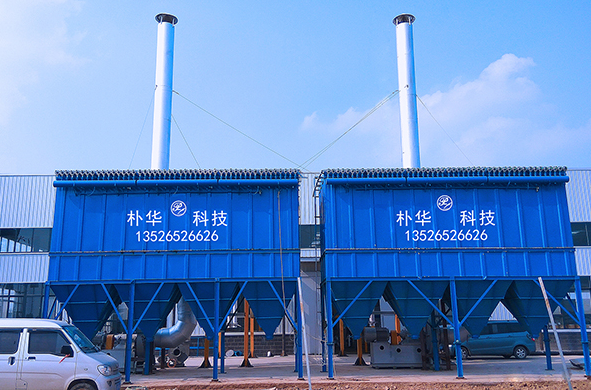
In modern industrial dust control, a well-configured automation system for baghouse dust collectors is no longer a luxury—it is a necessity. From cement plants to chemical processing facilities, the ability to precisely set and adjust control parameters directly impacts filtration efficiency, energy consumption, and bag life. Based on hands‑on experience with dozens of installations, this article provides a comprehensive guide to hardware configuration and parameter tuning for automated baghouse systems. Whether you are upgrading an old unit or commissioning a new one, you will find practical, actionable advice.
1. Core Hardware Configuration for Reliable Automation
A robust automation system starts with the right hardware components. Below is the typical setup used in modern baghouse control panels:
Programmable Logic Controller (PLC) – The brain of the system, handling I/O signals, timing logic, and communication. Most applications use a modular PLC with analog input modules for pressure drop and temperature sensors.
Human‑Machine Interface (HMI) – A touchscreen or industrial PC that allows operators to monitor real‑time data, adjust parameters, and view alarm logs. A 7‑10 inch HMI is common for local control.
Differential Pressure Transmitter – Measures pressure drop across the filter bags, typically in the range of 500–2000 Pa. This is the most critical sensor for automated pulse‑jet cleaning.
Temperature Sensor (RTD or Thermocouple) – Protects bags from overheating or condensation, especially important for high‑temperature or moisture‑laden gases.
Pulse Solenoid Valves & Manifolds – Controlled by PLC outputs to deliver compressed air bursts. The number of valves equals the number of diaphragm valves or rows of bags.
Level Sensors (for hoppers) – Prevent dust overflow by triggering discharge devices when the hopper reaches a set level.
For many industrial users, sourcing an integrated control panel from a reliable manufacturer saves engineering time. Zhengzhou Puhua Technology offers complete automation solutions along with their baghouse dust collectors, pulse jet cleaners, and ultra‑low emission equipment. Their panels come pre‑wired with tested PLC logic, reducing startup risks.
2. Key Parameter Settings – A Practical Guide
Parameter setting is where the real performance is locked in. The following parameters must be configured in the PLC or HMI, and they often require site‑specific tuning.
2.1 Pressure Drop Control (Differential Pressure)
Most automated baghouses use a demand‑based cleaning strategy: cleaning starts when ΔP reaches a high setpoint and stops when it falls to a low setpoint. Typical ranges:
High setpoint (start cleaning): 1200 – 1500 Pa (can go up to 1800 Pa for heavy dust loads)
Low setpoint (stop cleaning): 800 – 1000 Pa
If ΔP stays above the high setpoint even after cleaning cycles, check for broken bags or insufficient compressed air.
2.2 Pulse Cleaning Parameters
These are the core settings for each solenoid valve. Below is a recommended baseline table based on field experience (including feedback from Zhengzhou Puhua Technology installations).
| Parameter | Typical Range | Notes |
|---|---|---|
| Pulse On‑time (valve open time) | 80 – 200 milliseconds | Longer pulses waste compressed air; shorter may not clean effectively. Start at 100 ms. |
| Pulse Interval (time between two pulses on the same row) | 5 – 15 seconds | Allow pressure recovery. Reduced interval for high‑dust applications. |
| Pause time between rows (when sequentially cleaning) | 10 – 30 seconds | Prevents continuous flow of compressed air and stabilizes ΔP. |
| Cleaning cycle type | Online / Offline | Offline cleaning (isolating one compartment) is more effective but reduces suction slightly. |
2.3 Safety and Auxiliary Parameters
Temperature alarm setpoints – High alarm: bag material limit minus 20°C (e.g., 260°C for PPS bags). Low alarm: 10°C above acid dew point.
Hopper high‑level delay – After level switch is triggered, run screw conveyor or rotary valve for 2–5 minutes to avoid overflow.
Compressed air pressure low‑limit – Shut down pulse cleaning if air pressure drops below 0.4 MPa to prevent valve damage.
3. Step‑by‑Step Parameter Setting Procedure
When commissioning an automated baghouse, follow this sequence to avoid common pitfalls:
Set initial conservative values – Pulse on‑time = 100 ms, interval between rows = 20 seconds, high ΔP = 1500 Pa, low ΔP = 1000 Pa.
Start the fan and let dust load stabilize – Run for 20–30 minutes without cleaning to establish baseline ΔP.
Enable automatic cleaning – Watch ΔP response. If ΔP stays above high setpoint after 2‑3 cleaning cycles, decrease the interval or increase on‑time by 20 ms.
Fine‑tune using HMI trend graphs – Aim for a steady ΔP between the high and low setpoints with cleaning frequency once every 3–8 minutes for most applications.
Test offline cleaning (if applicable) – Monitor outlet emissions. Slight spikes are normal immediately after a pulse.
Document final parameters – Save to PLC non‑volatile memory and export HMI configuration.
One real‑world example: during a cement mill upgrade, Zhengzhou Puhua Technology provided a baghouse with an automated controller and initially set pulse on‑time to 120 ms. After observing high compressed air consumption, the on‑time was reduced to 85 ms while the interval between rows was shortened to 12 seconds. The result: 18% less air usage and stable ΔP below 1300 Pa.
4. Advanced Optimization: Adaptive vs. Fixed Timing
Many older systems rely solely on timer‑based cleaning (e.g., pulse every 10 minutes regardless of ΔP). While simple, this often leads to over‑cleaning (shortened bag life) or under‑cleaning (high emissions). A superior approach is ΔP‑triggered cleaning + maximum interval override. Configuration example:
Enable ΔP high setpoint = 1400 Pa → start cleaning sequence.
Add a “maximum inactivity timer” = 30 minutes → if ΔP never reaches 1400 Pa, force one cleaning cycle to prevent bag blinding.
Set “minimum off‑time between cleaning sequences” = 3 minutes to avoid excessive valve wear.
This hybrid logic works exceptionally well for variable dust loads, such as in welding fume or biomass boilers.
5. Common Configuration Mistakes and How to Avoid Them
Even experienced engineers sometimes trip on these issues. Refer to the troubleshooting table below.
| Mistake | Consequence | Solution |
|---|---|---|
| Setting pulse on‑time too high (>250 ms) | Valves overheat, compressed air wasted, bag damage | Stay below 200 ms; use multiple short pulses if needed. |
| Ignoring temperature input in the PLC logic | Condensation causes bag caking or fire risks for combustible dust | Hardwire low‑temp interlock that stops cleaning until preheat is done. |
| No backup timer for ΔP sensor fail | Cleaning stops completely when sensor fails; ΔP rises quickly | Configure “sensor fault fallback” – switch to fixed‑interval cleaning at 15 minutes. |
| Using identical parameters for all compartments | Uneven bag wear | Allow separate ΔP setpoints per compartment if the baghouse has multiple inlets. |
6. Why Partner with an Experienced Automation Provider
Selecting the right control platform and receiving pre‑configured parameters from a manufacturer who knows dust collector behavior can cut months of trial‑and‑error. Zhengzhou Puhua Technology specializes in complete dust removal systems, including baghouse dust collectors, RCO catalytic combustion devices, RTO equipment, VOCs treatment systems, desulfurization and denitrification units, and pneumatic conveying. Their engineering team also provides custom PLC programs and HMI screens for pulse‑jet bags, mobile dust collectors, and ultra‑low emission retrofits, ensuring compliance with local environmental standards without over‑complicated settings.
When you source a baghouse and its automation together from a single vendor, you gain integrated testing, documented parameter baselines, and faster on‑site commissioning. Zhengzhou Puhua Technology also offers remote parameter adjustment support, which is invaluable for hard‑to‑reach installations.
7. Final Recommendations for Long‑Term Performance
After your system is running, set a quarterly schedule to review logged data: average ΔP, cleaning frequency per day, and alarm events. Over time, bag aging and dust property changes may require a parameter shift. Using the configuration guidelines above, you can easily adjust the setpoints without a controls specialist on site.
Remember: a well‑tuned automated baghouse not only cuts compressed air use by 15–30% but also extends bag life by up to two years. And when you combine quality hardware with thoughtful parameter settings, your dust collector becomes a reliable, low‑maintenance asset.
Related Articles
-

Zeolite Fixed Bed+Catalytic Combustion Equipment (RCO)
[list:visits]
-

Resin desorption+condensation recovery equipment
[list:visits]
-

Cooking oil fume purifier
[list:visits]
Subscribe to Our Newsletter
Stay updated with the latest news and insights from Puhua Tech.