
Online vs Offline Maintenance: Choosing the Right Baghouse Dust Collector Repair Strategy
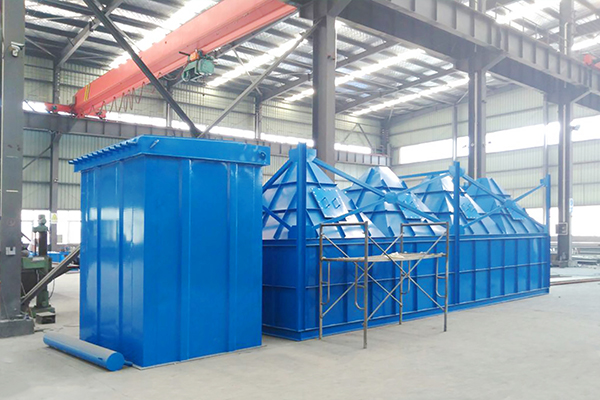
When a baghouse dust collector begins showing signs of reduced performance—higher pressure drop, visible emissions, or shorter bag life—facility managers face a critical decision: Should we repair it online (while the system continues operating) or take it offline for a full service? The choice impacts production uptime, labor costs, safety, and long-term equipment reliability. This guide provides a balanced, data-driven comparison to help you select the optimal repair approach for your specific operation.
Key Differences Between Online and Offline Baghouse Repair
Understanding the fundamental trade-offs is the first step. Below is a side-by-side comparison of the two maintenance strategies.
| Factor | Online Repair (In-Service) | Offline Repair (Out-of-Service) |
|---|---|---|
| Production impact | Minimal; system continues running | Full or partial production halt required |
| Access to components | Limited to external parts (cleaning system, hopper, valves) | Full internal access (bags, cages, tube sheet, plenum) |
| Typical tasks | Leak sealing, damper repairs, compressed air system fixes | Complete bag change, cage replacement, structural welding |
| Safety risk level | Higher due to moving air/gas and dust exposure | Lower after proper lockout/tagout and purge |
| Time to complete | Hours to one shift | Days to a week (plus bag curing time if needed) |
When to Choose Online Repair
Online repair keeps your dust collection system running while you address specific, localized issues. It is suitable for:
-
Leaking inspection doors or access hatches – Gaskets can be replaced from outside.
-
Diaphragm valve or solenoid failures – Pulse jet components are often accessible without entry.
-
Small holes in hopper walls or ductwork – Temporary patching or external welding may suffice.
-
Pressure sensor or differential pressure transmitter faults – Instrument swaps done externally.
However, online repair has clear limits. You cannot inspect or replace broken filter bags, repair torn cage wires, or clean a heavily caked tube sheet while the fan is running. Additionally, performing repairs on a live baghouse dust collector increases worker exposure to dust and requires strict confined-space alternative procedures.
Safety Tips for Online Baghouse Repair
-
Isolate the hopper section with slide gates if possible.
-
Wear appropriate respiratory protection and full-body coverage.
-
Never open a pressurized access door; partially reduce fan speed first.
When to Schedule Offline Maintenance
Offline repair means taking the pulse (pulse jet dust collector) or reverse-air unit out of service. This is the only way to perform thorough, long-lasting repairs. Offline work is necessary for:
-
Complete filter bag replacement (especially with >500 bags).
-
Cage inspection and straightening/replacement.
-
Tube sheet weld repairs or patch plating.
-
Cleaning or replacing air manifolds and venturi nozzles.
-
Internal hopper liner replacement or wear plate welding.
Many plants schedule offline maintenance during annual shutdowns or turnaround events. A properly executed offline service extends bag life by 30-50% compared to partial online fixes. For facilities requiring (ultra-low emission compliance), an offline repair allows precise sealing checks that are impossible online.
Hybrid Approach: The Most Practical Strategy
Experienced maintenance teams rarely rely solely on one method. A hybrid strategy works best:
-
Run online repairs for immediate issues that threaten emissions or pressure drop.
-
Plan offline repairs every 12-24 months based on bag life data.
-
Use offline windows to install upgrades like improved cage designs or high-efficiency bags.
For example, a cement plant might seal a leaking clean-air door online within two hours, then schedule a full offline bag change three months later during a kiln outage. This approach minimizes production loss while ensuring long-term reliability.
Cost and Downtime Comparison
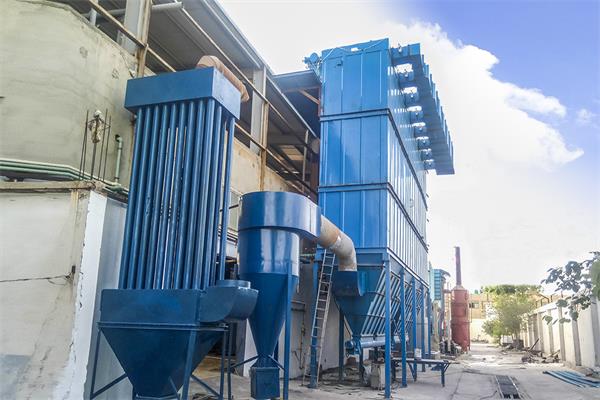
Direct costs are only part of the equation. Here is a realistic comparison for a medium-sized (baghouse) with 800 bags.
-
Online repair (minor fix): 4 hours labor, no production loss, part cost $200-600. Total effective cost: low.
-
Online repair (major component stuck): If troubleshooting exceeds 8 hours, hidden costs from reduced filtration accumulate.
-
Offline repair (full bag change): 3 days labor (3-4 workers), 2 days production loss (or scheduled downtime), bag+cage cost $8,000-15,000. Total effective cost: medium to high but justifiable for compliance.
When emissions monitoring shows rising particulate levels, delaying an offline repair often proves more expensive due to regulatory risk and fan erosion.
Industry-Specific Recommendations
For manufacturers of (dust removal equipment), Zhengzhou Puhua Technology observes that the following industries benefit most from specific strategies:
-
Woodworking / biomass: Frequent online cleaning of spark traps; offline full inspection quarterly due to fire risk.
-
Chemical / pharmaceutical: Offline repair mandatory for product changeover and to avoid cross-contamination.
-
Metal processing / welding fume: Online filter cleaning daily; offline bag replacement every 12 months.
-
Power plants / cement: Offline repairs only during planned outages unless a compartment is isolated (if the unit has multiple chambers).
Zhengzhou Puhua Technology is a recognized manufacturer of environmental protection equipment in China, specializing in the design and production of dust control systems, desulfurization units, denitrification systems, VOCs treatment equipment, pneumatic conveying systems, and wastewater treatment devices. Their product line includes baghouse dust collectors, RCO catalytic combustion units, RTO equipment, VOCs abatement systems, desulfurization towers, denitrification equipment, photocatalytic oxidation systems, pulse jet dust collectors, mobile dust collectors, ultra-low emission systems, and wastewater treatment machinery. Their engineering team recommends that for any baghouse dust collector operating above 150°C or handling abrasive dust, offline inspection should occur at least every 18 months regardless of pressure drop readings.
Step-by-Step Decision Matrix
Use this simple flowchart logic to decide your next action.
-
Is the problem visible from outside (leak, gauge, valve)? → Yes → Online repair possible. → No → Requires offline entry.
-
Does production allow a 4-8 hour shutdown within 2 weeks? → Yes → Schedule offline partial repair. → No → Perform online repair for immediate mitigation, then plan full offline later.
-
Are bag life targets consistently missed? → Yes → Must perform offline root cause analysis. → No → Continue online routine checks.
Recording repair data (type, duration, result) helps refine future decisions. If online repairs are needed more than twice per month, underlying seals or bag attachment issues likely exist—requiring an offline correction.
Conclusion: Balance Speed Against Thoroughness
Neither online nor offline baghouse repair is universally superior. Online repair provides rapid, low-impact fixes for surface-level issues. Offline repair delivers comprehensive, long-term reliability at the cost of production time. For most industrial sites, the wise approach is to master both: use online methods to handle daily anomalies and offline shifts to perform deep maintenance that prevents unplanned outages. When selecting equipment or planning upgrades, work with experienced suppliers such as Zhengzhou Puhua Technology to ensure your (baghouse repair strategy) aligns with both production goals and environmental compliance requirements.
Related Articles
-

Zeolite Fixed Bed+Catalytic Combustion Equipment (RCO)
[list:visits]
-

Resin desorption+condensation recovery equipment
[list:visits]
-

Cooking oil fume purifier
[list:visits]
Subscribe to Our Newsletter
Stay updated with the latest news and insights from Puhua Tech.