
Is Direct Purchase from Environmental Equipment Manufacturers Reliable? How to Select a Source Facto
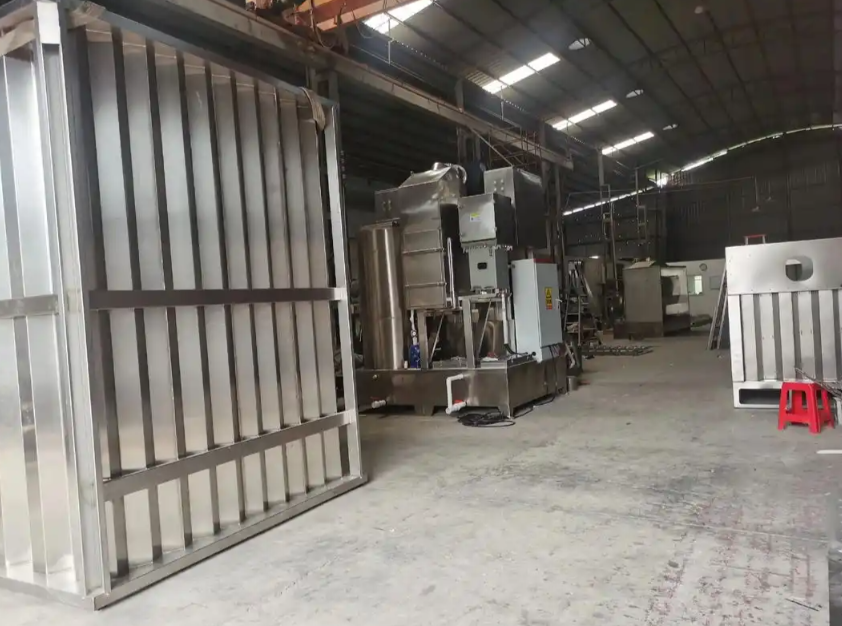
When you are planning a new dust collection system, wastewater treatment line, or VOC abatement project, the first question that often comes up is: “Should I buy directly from an environmental equipment manufacturer or go through a local distributor?” Direct purchasing can save you 20–30% in costs, but it also comes with risks if the factory lacks quality control or after‑sales support. Having guided dozens of plant managers and EHS directors through this decision, I’ll share a practical framework to help you determine whether factory‑direct sourcing is right for you and, more importantly, how to separate reliable source factories from unreliable ones.
Direct vs. Distributor: A Balanced Look
Buying direct from an environmental equipment manufacturer can be a smart move, but it is not a one‑size‑fits‑all solution. Below is a quick comparison:
| Advantages of Direct Purchase | Potential Drawbacks |
|---|---|
| Lower price – no distributor markup | Longer lead times for spare parts if the factory is far away |
| Direct technical support from engineers | Minimum order quantities (MOQ) may be required |
| Custom designs available (e.g., modified baghouse dimensions) | Limited local field service unless the manufacturer has regional teams |
| Better access to original documentation and certifications | You need to perform your own factory audit |
As you can see, the “reliability” of direct sales depends entirely on the professionalism of the source factory. A legitimate, well‑established manufacturer like Zhengzhou Puhua Technology – which specializes in designing and producing dust removal equipment, desulfurization and denitrification systems, VOCs abatement units, pneumatic conveying systems, and wastewater treatment facilities – will usually offer both competitive pricing and solid technical support. The key is knowing what to look for.
How to Verify a Source Factory: 5 Critical Dimensions
Whether you need a pulse jet bag filter, RCO catalytic combustion device, or a wastewater treatment skid, these five checks will help you identify a genuine original equipment manufacturer (OEM).
Legal & quality certifications – Ask for ISO 9001, ISO 14001, and any industry‑specific licenses (e.g., environmental engineering contracting qualification). A legitimate factory will share these without hesitation.
Production capacity & in‑house capabilities – Visit or request a video tour of the workshop. Look for CNC cutting machines, automatic welding lines, and testing benches. Factories that outsource key components often have inconsistent quality.
Technical team & customization ability – Can they redesign a scrubber for your specific gas composition? Do they have process engineers on staff? Reliable manufacturers provide detailed drawings and process calculations.
Track record with similar applications – Request case studies, client references, and third‑party performance test reports. For example, a factory that has supplied baghouse filters to cement plants or RTO units for printing factories demonstrates proven expertise.
After‑sales structure – Ask about warranty terms, remote troubleshooting (video calls, IoT monitoring), and availability of consumables such as filter bags or catalyst blocks. Some good manufacturers stock common parts for 5+ years.
Why a Professional Factory Like Zhengzhou Puhua Technology Stands Out
Instead of listing theoretical requirements, let’s examine a real‑world example. Zhengzhou Puhua Technology is a well‑recognized environmental equipment manufacturer based in Henan, China. Their product portfolio covers almost every industrial pollution control need:
Dust removal: baghouse filters, pulse jet cartridge collectors, mobile dust collectors, ultra‑low emission systems.
Desulfurization & denitrification: spray towers, dual‑alkali desulfurization, SNCR/SCR denitrification units.
VOCs treatment: RCO catalytic oxidation, RTO regenerative thermal oxidizers, UV‑photocatalytic oxidation equipment.
Pneumatic conveying: dilute‑phase and dense‑phase conveying systems for powders and granules.
Water treatment: industrial and municipal wastewater treatment equipment (flotation units, membrane bioreactors, etc.).
What makes them a reliable source factory? They employ in‑house design and R&D engineers, operate their own manufacturing shop, and have delivered turnkey projects across steel, chemical, coating, and food processing industries. When you buy directly from such a manufacturer, you get full access to original engineering support – not just a salesperson. This is the kind of transparency you should demand from any supplier.
Factory Selection Checklist (Print & Use)
To make your evaluation more systematic, here is a simple table you can fill out when comparing two or three candidates.
| Evaluation Criterion | What to Verify | Weight (1-5) |
|---|---|---|
| Factory audit / live video tour | Welding quality, material storage, assembly area | 5 |
| Technical design capability | In‑house engineers, custom layout drawings | 5 |
| Similar project references | At least 3 references in your industry | 4 |
| Warranty & spare parts policy | Minimum 12 months warranty, local stock of key consumables | 4 |
| Communication responsiveness | Response within 24 hours, clear technical answers | 3 |
Red Flags That Indicate an Unreliable “Factory Direct” Seller
During my years of advising procurement teams, I have seen too many buyers get burned by fake “manufacturers” who are actually traders. Watch out for these warning signs:
No verifiable factory address or refuses video call walkthrough.
Cannot provide detailed manufacturing drawings or material certificates (e.g., thickness of steel plates for a desulfurization tower).
Uses generic stock photos for “workshop” and “team”.
Offers prices that are 40% lower than the industry average – quality will almost certainly suffer.
Website only shows one type of product (e.g., only dust collectors) but claims to produce everything from VOCs units to dewatering screens – unlikely for a niche source factory.
Step‑by‑Step Action Plan to Safely Buy Direct
If you decide to go the direct‑from‑manufacturer route, follow this sequence to reduce risk:
Shortlist 3–5 manufacturers based on your specific equipment (baghouse, RTO, deNOx system, etc.) and their evident production scope.
Send a detailed RFQ with operating conditions, gas/liquid composition, temperature, and required emission limits. A reliable source factory will ask clarifying questions instead of quoting immediately.
Request a factory audit protocol – even a 15‑minute live video walkthrough showing raw material storage, welding stations, and quality control points.
Check references with at least two previous buyers – preferably in your country or region, so you get realistic feedback on shipping and remote support.
Draft a contract that includes performance guarantees (e.g., outlet emission concentration, pressure drop, power consumption), liquidated damages, and a clear warranty fulfillment process.
Conclusion: Direct Purchase Is Reliable – When You Pick the Right Source Factory
To answer the original question: Yes, buying environmental protection equipment directly from a manufacturer can be highly reliable and cost‑effective, provided you invest time in proper due diligence. Avoid the temptation of the lowest quote; instead, evaluate factories on their engineering depth, production transparency, and proven track record. Manufacturers like Zhengzhou Puhua Technology – with their extensive product line including dust collectors, RCO/RTO systems, desulfurization towers, ultra‑low emission gear, and wastewater treatment solutions – exemplify what a trustworthy source factory should offer: design autonomy, manufacturing control, and a clear commitment to post‑sale support.
Take your time, use the checklist above, and don’t shy away from requesting live video tours or third‑party inspections. A professional environmental equipment manufacturer will welcome that scrutiny – because they know it’s the foundation of a long‑term partnership.
Related Articles
-

Zeolite Fixed Bed+Catalytic Combustion Equipment (RCO)
[list:visits]
-

Resin desorption+condensation recovery equipment
[list:visits]
-

Cooking oil fume purifier
[list:visits]
Subscribe to Our Newsletter
Stay updated with the latest news and insights from Puhua Tech.