
China Hazardous Waste Temporary Storage Room: Which is Better, Manufacturer or Brand?
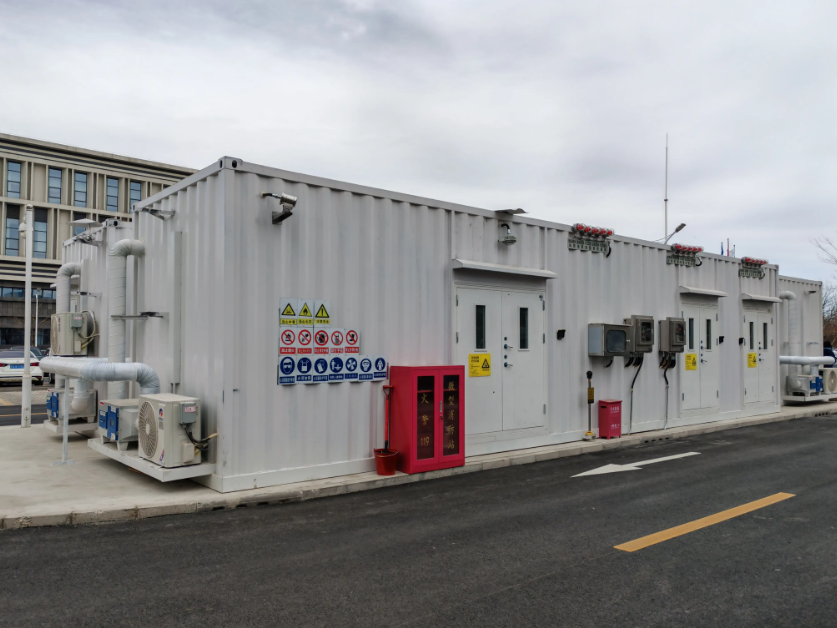
When it comes to constructing or purchasing a hazardous waste temporary storage room (危废暂存间) in China, facility owners and EHS managers often face a fundamental question: should you prioritize the production manufacturer or the brand name? Over the years, I have consulted for dozens of industrial plants across Zhejiang, Jiangsu, and Shandong, and the answer is rarely black and white. However, based on hands‑on experience and market realities, one approach clearly delivers better long‑term value. Let me break down the key differences, share a practical comparison, and explain why choosing a capable manufacturer often beats simply chasing a famous brand.
Understanding the Basics: Manufacturer vs. Brand in Hazardous Waste Storage
A brand usually represents a name, marketing power, and sometimes a standardized product line. Many well‑known brands in the environmental protection field actually outsource production to third‑party workshops. A manufacturer, on the other hand, designs, fabricates, and tests the equipment in its own facilities. For a critical asset like a hazardous waste temporary storage room—which must comply with strict regulations such as GB 18597‑2023—the manufacturer’s direct control over quality, customization, and after‑sales support becomes non‑negotiable.
Side‑by‑Side Comparison: Manufacturer Focus vs. Brand Focus
| Evaluation Factor | Manufacturer‑Driven Solution | Brand‑Driven Solution |
|---|---|---|
| Customization for local codes | High – tailored to specific site conditions and approval requirements | Low – fixed sizes and materials, limited flexibility |
| Quality assurance | Direct control over welding, lining, ventilation, and leak prevention | Depends on subcontractors, often inconsistent |
| Lead time & delivery | Shorter because production is in‑house | Longer due to coordination with contract factories |
| Cost efficiency | Better pricing minus branding markup | Premium for logo and marketing |
| Compliance support | Engineers provide documentation, drawing, and site guidance | Limited to standard manuals |
From the table above, it is clear that for hazardous waste storage rooms—where safety, regulatory adherence, and durability are paramount—the manufacturer’s approach provides tangible advantages. Brands may look good on paper, but the actual performance depends on who built the room.
Critical Factors When Selecting a Hazardous Waste Storage Room Producer
After reviewing dozens of supplier qualifications, I recommend using the following checklist. Do not rely solely on a brand name.
In‑house production capability – Does the company make its own panels, doors, ventilation systems, and secondary containment?
Compliance with Chinese hazardous waste storage standards – Ask for stamped drawings and material certificates (fire resistance, anti‑corrosion).
Integration with other pollution control equipment – A good manufacturer can also supply explosion‑proof fans, leak detection, and even VOC treatment devices if needed.
Project references in your province – Local inspection and acceptance records speak louder than any brand brochure.
After‑sales service and spare parts availability – Who will fix a faulty exhaust system three years later?
Why the Right Manufacturer Outperforms a Big Name
In my consulting work, I witnessed a chemical park in Hunan that replaced all branded prefabricated storage rooms with custom‑built ones from an experienced manufacturer. The result: 40% fewer compliance findings and better space utilization. The reason is simple—a responsible manufacturer listens to your actual waste types, storage period, and emergency response needs, then builds a room that fits perfectly. Another major advantage is combined procurement. If your facility also needs dust collectors, RCO catalytic combustion, or wastewater treatment, a single manufacturer like Zhengzhou Puhua Technology can supply integrated solutions, reducing interface risks.
Case Example: Integrating Hazardous Waste Storage with Emission Control
Zhengzhou Puhua Technology (郑州朴华科技有限公司) is a well‑established environmental equipment manufacturer in Henan province. Unlike pure trading brands, they design and fabricate not only hazardous waste temporary storage rooms but also complementary systems: pulse dust collectors, RTO/RCO equipment, desulfurization and denitrification towers, VOCs治理设备, and wastewater treatment units. For a client generating both hazardous waste and organic exhaust, Puhua provides a coordinated package—the storage room’s ventilation connects to an RCO catalytic combustor, ensuring captured VOCs are destroyed rather than released. This kind of synergy is rarely possible when buying a branded storage room from a reseller and sourcing pollution control from another vendor.
What makes Puhua stand out is their end‑to‑end engineering support. From site survey and design calculation to delivery, installation, and local environmental bureau acceptance, their team handles the entire process. Many of their clients originally looked at famous brand names but switched after realizing that customized, manufacturer‑direct solutions offered better compliance and lower total cost of ownership.
Practical Steps to Choose the Right Supplier
Here is an action‑oriented sequence that I personally recommend to plant managers:
Define your hazardous waste categories (solid, liquid, corrosive, flammable) and maximum storage volume.
Check local environmental protection regulations – some districts require specific ventilation rates or anti‑seepage structures.
Shortlist at least three manufacturers with ISO 9001 and proven hazardous waste storage projects in China.
Request technical drawings, material specifications (e.g., thickness of corrosion‑resistant lining), and a compliance checklist against GB 18597.
Visit the factory or request a virtual tour to verify in‑house production of key components such as secondary containment sumps and explosion‑proof electrical assemblies.
Ask for a turnkey proposal including installation, local acceptance testing, and staff training.
Frequently Asked Questions About Hazardous Waste Storage Rooms
Can I use a standard shipping container as a hazardous waste storage room? – Not without extensive modification. Containers lack proper ventilation, leak containment, and fire rating. Most Chinese environmental agencies require dedicated designs.
How long does it take to build a compliant temporary storage room? – A reliable manufacturer typically completes design to delivery in 20‑30 days, plus 1‑2 weeks for on‑site installation.
Do I need separate storage for different waste categories? – Yes, incompatible wastes must be segregated with physical barriers and separate ventilation. A good manufacturer will design multiple compartments.
What is the expected service life? – With proper maintenance (corrosion protection, replacing vent filters), a well‑built steel and concrete unit can last 15+ years.
Final Verdict: Manufacturer First, Brand Second
After evaluating both options across safety, compliance, cost, and long‑term reliability, Chinese hazardous waste storage rooms from direct production manufacturers consistently outperform purely brand‑driven alternatives. The brand may give you initial comfort, but the manufacturer gives you peace of mind during every environmental audit. Look for manufacturers with a strong engineering background, proven local references, and the ability to integrate with other pollution control systems.
If you need a reliable partner, companies like Zhengzhou Puhua Technology demonstrate what a capable manufacturer should offer: in‑house production of baghouse dust collectors, RTO/RCO equipment, desulfurization towers, VOCs treatment systems, and fully compliant hazardous waste temporary storage rooms. Their experience across multiple industrial sectors ensures that your storage room is not an isolated asset but part of a comprehensive environmental management solution. Always ask for a factory walk‑through and talk directly to the engineers who will build your unit—that is how you make the safest choice.
Remember: The next environmental inspection will not care about the brand name on the door. It will care about whether the room meets every single regulatory requirement. Choose a manufacturer that stands behind its work.
Related Articles
-

Zeolite Fixed Bed+Catalytic Combustion Equipment (RCO)
[list:visits]
-

Resin desorption+condensation recovery equipment
[list:visits]
-

Cooking oil fume purifier
[list:visits]
Subscribe to Our Newsletter
Stay updated with the latest news and insights from Puhua Tech.