
Explosion-Proof Exhaust Gas Treatment Equipment: Safety Standards and Inspection Points in the Chemi
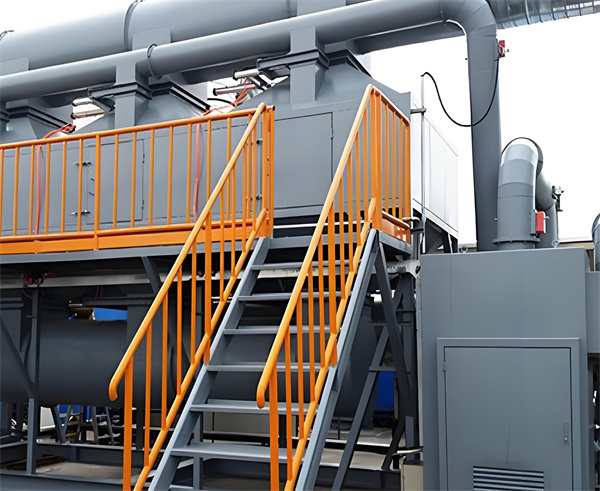
In the chemical industry, production processes frequently generate volatile organic compounds (VOCs), flammable gases, and hazardous air pollutants. Without rigorous control, these emissions create significant risks of fire, explosion, and environmental harm. This is where explosion-proof exhaust gas treatment equipment becomes not just an environmental necessity, but a core safety asset. This article provides a comprehensive, practical guide to the safety standards and inspection points that chemical plant operators and safety managers must follow to ensure compliant and secure operations.
Why Explosion-Proof Design is Mandatory in Chemical Exhaust Gas Treatment
Chemical facilities often handle solvents, monomers, and other substances that form explosive mixtures when mixed with air. Standard electrical components or friction points in exhaust systems can act as ignition sources. Explosion-proof equipment is specifically engineered to contain any internal ignition, prevent external sparks, and safely dissipate heat. For reliable solutions in this demanding field, Zhengzhou Puhua Technology specializes in designing and manufacturing compliant systems, including RCO catalytic combustion devices, RTO equipment, and VOCs treatment equipment tailored to hazardous zones.
Key Safety Standards for Explosion-Proof Exhaust Gas Systems
Compliance with recognized standards is the first line of defense. The following table outlines major applicable standards for the chemical sector.
| Standard/Regulation | Scope | Key Requirement for Exhaust Equipment |
|---|---|---|
| GB 3836.1-2021 (IEC 60079-0 equivalent) | Explosive atmospheres – General requirements | Equipment must be certified for specific gas groups (e.g., IIA, IIB, IIC) and temperature classes (T1-T6). |
| GB 50058-2014 | Electrical installations in hazardous areas | Defines zone classification (Zone 0,1,2) and dictates the type of explosion-proof enclosure (Ex d, Ex e, Ex p, etc.). |
| HJ 2026-2013 | Technical specifications for VOCs adsorption treatment | Requires anti-static design, temperature monitoring, and pressure relief devices for adsorption units. |
| AQ 3013-2008 | General safety specifications for hazardous chemical plants | Mandates interlocking of exhaust systems with gas detection and emergency ventilation. |
Additionally, regional codes may require third-party certification from recognized testing bodies. Always verify that your explosion-proof exhaust gas treatment equipment carries a valid nameplate with the certification mark, gas group, and temperature class.
Critical Inspection Points for Explosion-Proof Exhaust Gas Treatment Equipment
Regular, systematic inspections prevent gradual degradation from leading to a hazardous event. Use the following checklist to structure your maintenance program.
1. Visual and Structural Inspection (Weekly)
Check enclosures for cracks, missing bolts, or corrosion that could compromise the flame path.
Verify that all cable entries are sealed with certified explosion-proof glands.
Inspect ductwork for leaks, especially at flanges and seams. Leaks can create unmonitored explosive atmospheres.
Ensure that bonding and grounding connections are tight and corrosion-free.
2. Electrical and Control System Checks (Monthly)
Test all interlocking functions: the exhaust fan should not start unless the purge cycle (for pressurized enclosures) is complete.
Verify that thermal sensors and flame arrestors are unobstructed and responsive.
Calibrate gas detectors placed at the inlet and outlet of the treatment unit – these trigger emergency shutdowns if LEL (Lower Explosive Limit) exceeds 25%.
Inspect motors and actuators for certified explosion-proof labels (Ex d or Ex e).
3. Process-Related Inspections (Quarterly)
Measure the inlet gas temperature – it must remain below the auto-ignition temperature of the compounds present.
Check for liquid carryover from scrubbers or knock-out drums; liquids can clog flame arrestors or create shock waves.
Inspect the condition of adsorbents (e.g., activated carbon) in VOCs treatment equipment – localized hot spots indicate risk of self-ignition.
For RTO or RCO equipment, examine ceramic media and burner management systems for any signs of flashback.
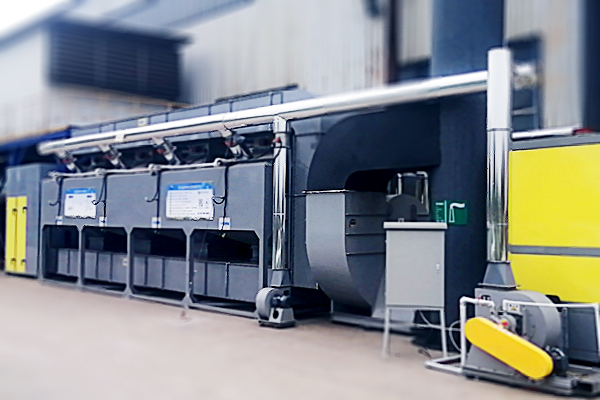
For facilities operating multiple unit types – such as baghouse dust collectors, desulfurization towers, and VOCs treatment equipment – each system must be evaluated individually and as part of the integrated gas handling train. Zhengzhou Puhua Technology provides end-to-end support for such complex setups, from initial design to periodic safety audits.
Common Non-Conformities and How to Avoid Them
During internal or regulatory audits, the following issues are frequently found. Proactive correction reduces downtime and liability.
Missing or illegible nameplates – Solution: After any repair or repaint, reapply certification labels with laser-etched information.
Unused cable entries with plastic blanks – Solution: Use only certified metal blanking plugs with appropriate thread seal.
Incorrect grounding of non-metallic ducts – Solution: Install static-conductive liners or external grounding spirals as per manufacturer’s guidance.
Bypassed temperature interlocks “for convenience” – Solution: Implement lockable bypasses with supervisory sign-off and time limits.
Using standard pressure gauges instead of flameproof types – Solution: Replace all instrumentation in hazardous zones with Ex-certified equivalents.
Developing an Inspection and Maintenance Schedule
A risk-based schedule ensures that higher-risk components receive more frequent attention. Use the following as a template, adjusting for your specific process conditions.
| Component | Inspection Frequency | Key Parameter to Document |
|---|---|---|
| Flame arrestor elements | Monthly / after any flash event | Pressure drop across element (should remain within design range) |
| Explosion relief panels | Quarterly | Condition of sealing gasket and absence of debris |
| Gas detection sensors | Every 6 months | Response time and calibration drift (should be<5% lel=""> |
| Purge control system (Ex p enclosures) | Annually | Purge time and minimum flow rate during pre-pressurization |
All inspection results must be logged in a dedicated safety register. Digital records with time-stamped photos of critical components (e.g., flame paths, gland entries) are recommended for traceability.
Practical Tips for Enhancing Safety in VOC Treatment Equipment
Beyond minimum compliance, the following measures have proven effective in chemical plants with high explosion risks.
Install secondary explosion isolation valves – These passive devices close upon detection of a pressure wave, preventing flame propagation to upstream process equipment.
Use inert gas purging for adsorption vessels – During regeneration or maintenance, introduce nitrogen or CO2 to keep oxygen levels below 8% by volume.
Implement continuous LEL monitoring – Do not rely on periodic spot checks. Real-time monitors with automatic dilution or bypass prevent concentration from approaching 50% LEL.
Train operators on emergency depressurization – Drills should include manual isolation of the exhaust gas treatment equipment and activation of deluge systems if present.
Conclusion: Safety as a Continuous Process
Selecting and maintaining explosion-proof exhaust gas treatment equipment is not a one-time task. The chemical industry’s dynamic nature – changing production rates, new solvent formulations, and aging infrastructure – demands ongoing vigilance. Adhering to the safety standards and inspection points detailed above will significantly reduce the likelihood of a catastrophic event.
When investing in new or retrofit systems, partner with experienced manufacturers who understand both process efficiency and hazardous area requirements. Zhengzhou Puhua Technology brings years of expertise in producing compliant solutions such as RCO catalytic combustion devices, RTO equipment, desulfurization towers, and wastewater treatment equipment – all designed with explosion safety as a foundation. Regular audits combined with quality equipment form the backbone of a responsible chemical operation.
Related Articles
-

Zeolite Fixed Bed+Catalytic Combustion Equipment (RCO)
[list:visits]
-

Resin desorption+condensation recovery equipment
[list:visits]
-

Cooking oil fume purifier
[list:visits]
Subscribe to Our Newsletter
Stay updated with the latest news and insights from Puhua Tech.