
How to Develop a Scientific Maintenance Plan for VOCs Waste Gas Treatment Equipment
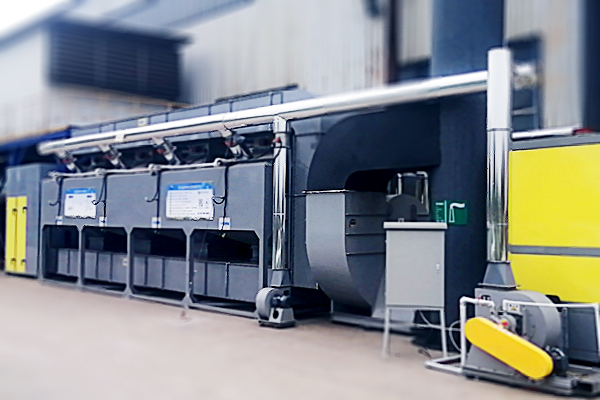
For enterprises in industries such as chemicals, coatings, printing, and pharmaceuticals, VOCs waste gas treatment equipment is a core asset for achieving compliant emissions. However, many businesses focus heavily on the initial selection and installation of VOCs waste gas treatment equipment but neglect systematic maintenance. This oversight often leads to reduced removal efficiency, higher energy consumption, and unexpected downtime. Developing a scientific, data-driven maintenance plan is not just about preventing failures—it is about ensuring long-term stability, safety, and cost-effectiveness.
This guide provides a practical, step-by-step framework to build a maintenance plan tailored to your specific system. Whether you operate a regenerative thermal oxidizer (RTO), a catalytic combustion unit, or an adsorption-concentration system, these principles apply broadly while allowing for technology-specific adjustments. We will cover everything from daily inspections to seasonal overhauls, supported by real-world scheduling logic and key performance indicators.
Why a Scientific Maintenance Plan Matters for VOCs Abatement Systems
Unplanned shutdowns of VOCs abatement systems can result in production stoppages, regulatory fines, and environmental penalties. A well-structured maintenance plan delivers three critical benefits:
-
Compliance assurance: Consistent destruction or removal efficiency (typically >95% for most regulated compounds).
-
Operational cost control: Preventive actions reduce energy waste and extend component life.
-
Safety management: Prevents risks such as solvent accumulation, thermal runaway, or fire hazards.
Industry data indicates that reactive maintenance (fixing after failure) costs three to five times more than a scheduled preventive approach over a five-year equipment lifespan. A scientific plan transforms maintenance from a cost center into a value-protecting activity.
Core Components of a Scientific Maintenance Plan for VOCs Treatment Equipment
A robust plan integrates equipment manufacturer recommendations, operational data trends, and site-specific conditions. Below are the essential modules you must include.
1. Baseline Inventory and Criticality Ranking
Start by listing all VOCs treatment assets. For each unit, document model, installation date, warranty status, and original performance specs. Then rank them by criticality:
| Criticality Level | Description | Example Components |
|---|---|---|
| High | Failure stops production or causes regulatory breach | Main blower, combustion chamber, control system, primary adsorber beds |
| Medium | Failure degrades efficiency but process continues | Pre-filters, temperature sensors, pressure switches, duct dampers |
| Low | Failure does not immediately affect compliance | Insulation cladding, access doors, secondary gauges |
Assign maintenance frequency based on this ranking. High-criticality items often need weekly or daily visual checks, while low-criticality ones may be quarterly.
2. Daily and Weekly Operator Checks
Frontline operators play a key role in early anomaly detection. Create a simple checklist that takes no more than 15 minutes per shift:
-
Record inlet and outlet temperature (for thermal/catalytic units).
-
Monitor differential pressure across filters and adsorber beds.
-
Listen for unusual vibrations or noise from fans and motors.
-
Check for condensation or leaks around ductwork and flanges.
-
Verify control panel readings against physical gauges.
These daily logs form the foundation of predictive analytics. When data shows a gradual increase in pressure drop, it signals filter clogging or bed channeling before efficiency drops.
3. Monthly Preventive Tasks
Monthly maintenance should involve minor cleaning, calibration, and component inspection. Typical tasks include:
-
Clean or replace pre-filters (frequency depends on dust loading).
-
Calibrate VOC sensors and temperature transmitters.
-
Inspect burner assemblies for soot or corrosion.
-
Check belt tension and lubrication on rotating equipment.
-
Test safety interlocks and emergency stop circuits.
Document all findings and compare with previous months to identify degradation trends. For VOCs waste gas treatment equipment using activated carbon, monthly sampling of outlet concentration helps determine breakthrough timing.
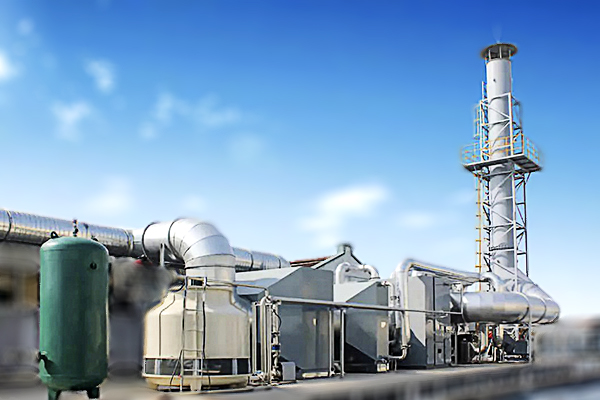
4. Quarterly and Semi-Annual Deep Maintenance
Every three to six months, schedule a partial shutdown for more invasive checks. This is the time to:
-
Inspect heat exchanger surfaces for fouling or scaling.
-
Measure rotor seal leakage in concentrator systems.
-
Take thermal images of electrical panels and motor windings.
-
Verify damper operation and actuator torque.
-
Check catalyst bed activity (for RCO or catalytic oxidizers) using a simple propane conversion test.
For facilities with heavy VOC loading, semi-annual inspection of the combustion chamber refractory lining is recommended. Small cracks can be repaired before they propagate and cause heat loss or casing damage.
5. Annual Overhaul and Performance Validation
Once a year, conduct a comprehensive audit and overhaul. This typically requires a two-to-three-day planned outage. Key activities include:
-
Full internal inspection of the reaction chamber, ductwork, and stack.
-
Replacement of worn bearings, seals, and gaskets.
-
Complete cleaning of all sensor ports and sampling lines.
-
Stack testing by a certified laboratory to validate destruction/removal efficiency (DRE).
-
Update of maintenance records and spare parts inventory.
The annual performance validation is also an opportunity to reassess whether the original design still matches current production conditions. Changes in solvent type, flow rate, or operating hours may require retrofits or parameter adjustments.
Data-Driven Scheduling: Moving from Fixed Intervals to Condition-Based Maintenance
While calendar-based schedules are easy to implement, they are not always optimal. A scientific plan evolves into condition-based maintenance (CBM) using real-time data from sensors and historical patterns. For example:
-
Instead of replacing filters every month, replace them when differential pressure reaches 1.5 times clean pressure drop.
-
Instead of quarterly catalyst inspection, monitor temperature rise across the catalyst bed continuously—a declining delta indicates deactivation.
-
Instead of annual blower bearing replacement, use vibration analysis to schedule replacement only when velocity exceeds 4.5 mm/s.
Implementing CBM requires an investment in basic condition monitoring tools (vibration pens, thermal guns, pressure transmitters) but typically pays back within six months through reduced consumables and extended equipment life.
Building the Maintenance Plan Document: A Template Structure
Your final maintenance plan should be a living document, stored near the equipment and accessible to all shift teams. Include the following sections:
-
Equipment overview and process flow diagram.
-
Safety procedures for maintenance (lockout/tagout, purging, gas monitoring).
-
Daily/weekly checklists with sign-off rows.
-
Monthly task tables with estimated durations.
-
Quarterly and annual scope of work.
-
Spare parts list with reorder points and suppliers.
-
Emergency response protocol for common failures (e.g., high temperature alarm, fan trip).
-
Log sheets for recording all actions and observations.
Distribute this plan to maintenance technicians, production supervisors, and EHS personnel. Review and update it every six months based on failure records and operational changes.

Common Mistakes to Avoid in VOCs Equipment Maintenance
Even experienced teams sometimes fall into these traps:
-
Overlooking pre-treatment devices: Neglecting particulate filters or moisture knockout drums accelerates damage to downstream adsorbers or catalysts.
-
Using incompatible cleaning agents: Some solvents can degrade zeolite rotors or poison noble metal catalysts. Always consult the manufacturer.
-
Ignoring low-load periods: During reduced production, VOCs concentration may fall below the auto-thermal threshold, leading to incomplete combustion and condensate formation. Adjust purge cycles accordingly.
-
Delaying bearing lubrication: This simple task, when skipped, is a leading cause of blower and fan failures.
Integrating Maintenance with Overall Environmental Management
A truly scientific approach connects maintenance records with compliance reporting. Your maintenance logs should directly feed into:
-
Monthly emissions reports to local environmental agencies.
-
Energy consumption analysis (e.g., kWh per kg of VOC removed).
-
Asset life cycle cost models.
When maintenance is documented consistently, you can demonstrate due diligence during regulatory inspections. Many enforcement actions arise not from a single high emission event but from a pattern of neglected maintenance revealed through incomplete logs.
Expert Support for Your VOCs Treatment System
Designing and executing a scientific maintenance plan requires deep knowledge of both the equipment and the specific waste gas characteristics. Zhengzhou Puhua Technology specializes in the design, research, and production of environmental protection equipment, including complete VOCs waste gas treatment equipment lines, RCO catalytic combustion devices, RTO equipment, adsorption-concentration systems, as well as dust removal equipment (baghouse filters, pulse dust collectors), desulfurization and denitrification towers, pneumatic conveying systems, and wastewater treatment solutions. Their technical team can help you develop a customized maintenance schedule, provide remote monitoring options, and supply genuine spare parts to ensure your system runs at peak efficiency. For facilities seeking to upgrade or replace aging components, Zhengzhou Puhua Technology offers engineering support from audit through commissioning.
Remember that even the best VOCs waste gas treatment equipment will underperform without disciplined, data-informed maintenance. Start by implementing the daily checklist this week, then build out the monthly and quarterly modules over the next two months. Track key metrics such as uptime percentage, average pressure drop, and energy per cubic meter treated. With consistent execution, you will see lower operating costs, fewer surprises, and sustained compliance.
For further guidance, refer to the equipment manual and consult with your system provider. Maintenance is not an expense—it is an investment in reliability and environmental responsibility.
Related Articles
-

Zeolite Fixed Bed+Catalytic Combustion Equipment (RCO)
[list:visits]
-

Resin desorption+condensation recovery equipment
[list:visits]
-

Cooking oil fume purifier
[list:visits]
Subscribe to Our Newsletter
Stay updated with the latest news and insights from Puhua Tech.