
The Impact of Equipment Depreciation and Catalyst Replacement Costs on Total Waste Gas Treatment Exp
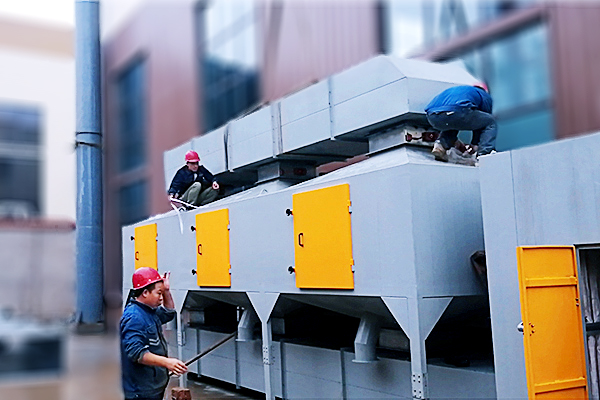
When budgeting for an industrial waste gas treatment system, most plant managers focus heavily on upfront capital expenditure. However, two of the largest long-term cost drivers are frequently underestimated: equipment depreciation and periodic catalyst replacement. Understanding these factors is essential for accurate total cost of ownership (TCO) calculations and for selecting a system that remains economically viable over its entire lifespan.
This article breaks down how depreciation schedules and catalyst change-outs influence your waste gas treatment total cost, and provides actionable strategies to optimize both. We will also highlight how reliable engineering from manufacturers like Zhengzhou Puhua Technology helps reduce these hidden expenses.
1. Why Equipment Depreciation Matters in Waste Gas Treatment
Depreciation is not merely an accounting concept—it directly impacts your annual profit and loss statements. For waste gas treatment assets such as RCO catalytic combustion units, RTO regenerative oxidizers, or adsorption-concentration systems, standard depreciation periods typically range from 5 to 15 years. A shorter depreciation period increases annual expenses but reduces taxable income; a longer period spreads costs out but may leave you with outdated, less efficient equipment.
Straight-line depreciation – Equal annual charges, simple to forecast.
Accelerated depreciation – Higher upfront deductions, beneficial for cash flow in early years.
To minimize the impact of equipment depreciation cost on your total expenditure, select durable machinery with a long useful life. High-quality RCO catalytic combustion devices and VOCs treatment equipment from established suppliers often provide 20% longer operational life compared to lower-grade alternatives.
2. Catalyst Replacement Cost: The Recurring Variable You Cannot Ignore
Catalysts are the heart of any RCO or catalytic oxidation system. Over time, they lose activity due to thermal degradation, poisoning from halogens or sulfur compounds, and physical abrasion. The catalyst replacement cost is often the single largest operating expense after energy consumption.
| System Type | Typical Catalyst Life (hours) | Replacement Cost (as % of initial system) |
|---|---|---|
| RCO (honeycomb) | 20,000 – 30,000 | 15% – 25% |
| RTO (no catalyst) | N/A (no catalyst) | 0% |
| Catalytic oxidizer (pellet) | 15,000 – 20,000 | 10% – 20% |
For a medium-sized chemical plant operating 8,000 hours per year, catalyst replacement may be required every 2.5 to 3.5 years. Proper pre-treatment of exhaust gas—removing particulates and catalyst poisons—can extend catalyst life by up to 40%. Zhengzhou Puhua Technology specializes in designing pre-filtration and Desulfurization and denitrification equipment that protect catalysts, thereby lowering long-term catalyst replacement cost.
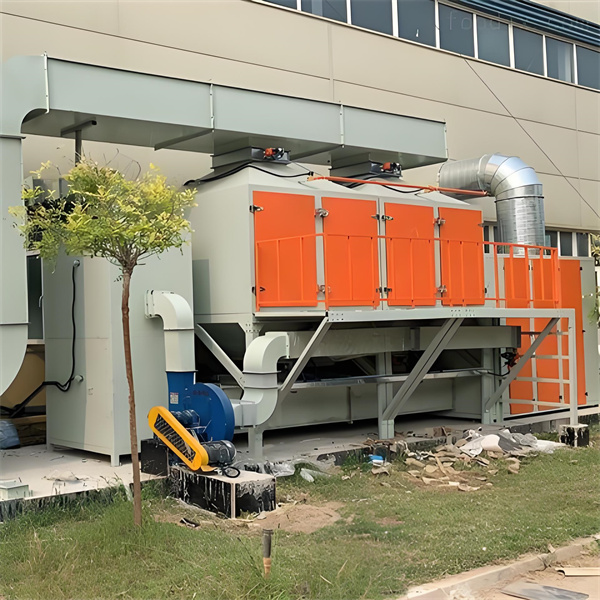
3. How Depreciation and Catalyst Costs Drive the Waste Gas Treatment Total Cost
The sum of depreciation and catalyst expenses often accounts for 20% to 35% of the waste gas treatment total cost over a 10-year horizon, second only to energy and maintenance. The table below illustrates a typical comparison:
| Cost Component | Year 1 | Year 5 | Year 10 | 10-Year Total |
|---|---|---|---|---|
| Depreciation (linear, 10 years) | $12,000 | $12,000 | $12,000 | $120,000 |
| Catalyst replacement (every 3 years) | $0 | $18,000 | $18,000 | $36,000 |
| Other O&M (energy, labor, etc.) | $25,000 | $28,000 | $31,000 | $280,000 |
| Total annualized cost | $37,000 | $58,000 | $61,000 | $436,000 |
From this example, you can see that ignoring catalyst replacement cost would lead to serious budget shortfalls by Year 3. Therefore, when comparing quotes for VOCs organic waste gas treatment equipment, always ask for a 10-year TCO projection that includes scheduled catalyst changes and estimated salvage value at end-of-life.
4. Strategies to Reduce Equipment Depreciation and Catalyst Expenses
Proactive management can significantly lower both cost drivers. Here are proven methods:
4.1 Choose Modular, Upgrade-Friendly Designs
Systems that allow individual module replacement avoid full depreciation of the entire asset when only one section fails. Zhengzhou Puhua Technology offers RCO catalytic combustion equipment with replaceable heat exchange modules and catalyst cassettes, extending useful life and reducing effective depreciation.
4.2 Implement Real-Time Catalyst Monitoring
Instead of changing catalysts on a fixed schedule, use pressure drop and conversion efficiency sensors to optimize change-out timing. This can reduce total catalyst consumption by 15-20%.
4.3 Pair with Efficient Pre-Treatment Devices
Installing a Baghouse dust collector or Pulse jet dust collector upstream of your catalytic unit removes dust that would otherwise blind the catalyst. Similarly, Desulfurization tower and Denitrification equipment reduce acid gas poisoning. These investments lower the waste gas treatment total cost by prolonging catalyst life.
Use Mobile dust collector for intermittent process streams.
Combine UV photo-oxidation unit with low-temperature catalysts to reduce thermal stress.
Apply Ultra-low emission equipment for strict regulatory compliance while maintaining catalyst health.
5. Why Partnering with a Reliable Manufacturer Lowers TCO
Engineering quality directly affects both equipment depreciation and catalyst replacement frequency. A poorly designed RTO may suffer from thermal stress cracking, forcing early retirement; an undersized catalytic bed causes rapid catalyst deactivation.
Zhengzhou Puhua Technology has extensive experience in designing and manufacturing durable pollution control solutions, including dust control equipment, RTO equipment, RCO catalytic combustion equipment, VOCs treatment equipment, desulfurization towers, denitrification equipment, photocatalytic oxidation equipment, pulse jet dust collectors, mobile dust collectors, ultra-low emission equipment, wastewater treatment equipment, and pneumatic conveying equipment. Their systems are engineered for easy maintenance and catalyst access, which reduces downtime and extends asset life. For example, a chemical plant using their integrated RCO catalytic combustion devices reported a 30% reduction in annual depreciation and catalyst expenses compared to their previous system.
6. Final Checklist: Optimizing Your Waste Gas Treatment Total Cost
Before finalizing any purchase, verify these items with your supplier or internal finance team:
Has the supplier provided a 10-year TCO estimate including depreciation and 2-3 catalyst change cycles?
Is the catalyst designed to tolerate your specific exhaust composition (e.g., chlorine, sulfur, siloxanes)?
Does the system include a Baghouse dust collector or other pre-filter to protect the catalyst?
Can you use a longer depreciation period (e.g., 12-15 years) if the equipment qualifies for better durability standards?
Does the manufacturer offer catalyst recycling or buy-back programs?
By proactively managing equipment depreciation cost and catalyst replacement cost, you can reduce your waste gas treatment total cost by 15-25% over a decade. Always prioritize robust engineering and vendor transparency over lowest initial price. With the right system design and operational practices, industrial emission control becomes a sustainable, cost-effective process rather than a financial burden.
About the author: Industry specialist with 12 years of experience in air pollution control systems. For tailored advice on reducing your waste gas treatment total cost, consult with the engineering team at Zhengzhou Puhua Technology – a trusted provider of high-performance VOCs organic waste gas treatment equipment, dust collectors, and advanced oxidation systems.
Related Articles
-

Zeolite Fixed Bed+Catalytic Combustion Equipment (RCO)
[list:visits]
-

Resin desorption+condensation recovery equipment
[list:visits]
-

Cooking oil fume purifier
[list:visits]
Subscribe to Our Newsletter
Stay updated with the latest news and insights from Puhua Tech.