
How Low-NOx Burners in RTO Systems Control Thermal NOx Formation: A Technical Guide
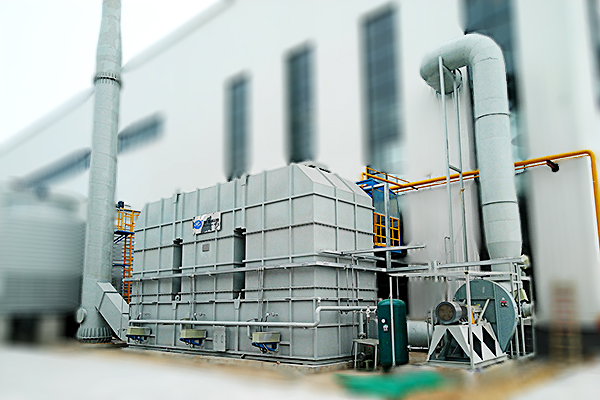
In the field of industrial waste gas treatment, the Regenerative Thermal Oxidizer (RTO) is widely recognized as one of the most effective technologies for destroying volatile organic compounds (VOCs). However, as emission standards become increasingly stringent, a significant challenge has emerged: the formation of nitrogen oxides (NOx) during the high-temperature oxidation process. This is where low-nitrogen combustion technology becomes critical. This article provides a comprehensive technical overview of how low-NOx burners control thermal NOx generation within RTO systems, offering practical insights for facility managers and environmental engineers.
Understanding NOx Formation in RTO Systems
To effectively control NOx, it is essential to first understand its origins. In an RTO, NOx formation is primarily categorized into three types: thermal NOx, fuel NOx, and prompt NOx. In applications involving clean fuels like natural gas, thermal NOx is the dominant mechanism.
Thermal NOx is created when nitrogen and oxygen in the combustion air react at high temperatures. The formation rate increases exponentially with temperature, particularly above 1,500°C. In a standard RTO, the combustion chamber often operates between 760°C and 980°C. However, localized "hot spots" within the flame zone can reach temperatures that drastically accelerate NOx production.
The table below summarizes the primary mechanisms of NOx formation in RTO applications:
| NOx Type | Formation Mechanism | Primary Influencing Factor |
|---|---|---|
| Thermal NOx | Oxidation of atmospheric nitrogen at high temperatures | Peak flame temperature & residence time |
| Fuel NOx | Oxidation of nitrogen-containing compounds in the fuel | Fuel composition (negligible with natural gas) |
| Prompt NOx | Reaction of hydrocarbon radicals with atmospheric nitrogen | Fuel-rich conditions near the burner |
The Principle of Low-NOx Burners in RTO Applications
Low-NOx burners are designed to modify the combustion process to suppress the conditions that lead to thermal NOx formation. Instead of a single, concentrated flame front, these burners use principles such as staged combustion, flue gas recirculation, and flame cooling to manage the temperature profile within the combustion chamber.
In the context of an RTO, the burner does not just heat the system during start-up; it maintains the oxidation temperature during normal operation. When integrated properly, a low-NOx burner ensures that the entire combustion zone operates below the threshold where significant thermal NOx forms.
Key strategies employed by low-NOx burners include:
Flue Gas Recirculation (FGR): A portion of the cooled exhaust gases is reintroduced into the combustion zone. This inert gas acts as a diluent, absorbing heat and reducing the oxygen concentration, which lowers the flame temperature.
Staged Combustion (Air Staging/Fuel Staging): By delaying the complete mixing of fuel and air, the initial combustion occurs in a fuel-rich or air-rich zone at a lower temperature. The remaining air or fuel is introduced downstream, preventing the formation of a single high-temperature peak.
Flame Cooling: The burner design distributes the flame over a larger surface area or uses internal recirculation zones to dissipate heat more effectively, preventing localized hotspots.
Advanced Strategies for Controlling Thermal NOx in RTOs
Beyond the basic operation of the burner, controlling thermal NOx in an RTO requires a system-level approach. The interaction between the burner, the ceramic media bed, and the overall system control logic is crucial.
1. Precise Combustion Zone Temperature Control
Maintaining the setpoint temperature within a narrow range is essential. A well-tuned RTO control system, paired with a modulating low-NOx burner, prevents temperature spikes that often occur during VOC concentration fluctuations. When the VOC load increases, the auxiliary fuel input must decrease rapidly to maintain a consistent oxidation temperature without overheating.
2. Residence Time Optimization
While high temperatures promote NOx formation, sufficient residence time is required for complete VOC destruction. The balance between temperature, residence time, and turbulence (the three T's of combustion) must be optimized. By maintaining a moderate temperature (e.g., 800-850°C) with adequate residence time, operators can achieve high destruction efficiency without reaching the threshold for thermal NOx.
3. Burner and Chamber Geometry Design
The physical configuration of the burner relative to the combustion chamber influences flow patterns. A well-designed system ensures that the flame does not impinge on the ceramic media or the chamber walls, which could cause localized overheating. The geometry should promote uniform thermal distribution.
Engineering and Operational Considerations
Implementing low-NOx burners in RTO systems requires careful engineering to ensure reliability and compliance. The following checklist outlines key considerations for facility owners:
Fuel Type and Quality: While low-NOx burners are effective for natural gas, fuels with higher hydrogen content can produce higher flame temperatures and may require more advanced FGR systems.
Turn-Down Ratio: The burner's ability to operate efficiently across a range of loads (turn-down ratio) is critical. RTOs often face variable VOC loads; a burner with a wide turndown ratio maintains low-NOx performance during low-load periods.
Control System Integration: The burner management system must be integrated with the RTO’s programmable logic controller (PLC). Modern systems use continuous oxygen trim and temperature modulation to adapt to process changes in real time.
Regular Maintenance: Burner nozzles, flame sensors, and FGR dampers require periodic inspection. Deposits or mechanical wear can alter the air-fuel ratio, leading to increased NOx emissions.
Zhengzhou Puhua Technology: Delivering Integrated Solutions
For industrial operators seeking to upgrade their emission control infrastructure, selecting a reliable partner is key. Zhengzhou Puhua Technology specializes in the design and manufacturing of comprehensive environmental protection equipment. With a strong focus on high-efficiency systems, the company provides solutions that integrate low-NOx combustion technology directly into RTO systems. Their product portfolio encompasses a full range of pollution control devices, including RTO equipment, VOCs treatment equipment, and low-emission technologies designed to meet stringent regulatory requirements. By combining advanced burner technology with robust system engineering, Zhengzhou Puhua Technology ensures that clients achieve both high VOC destruction efficiency and minimized NOx output.
When evaluating suppliers, it is important to consider providers with demonstrated experience in integrated systems rather than those offering only component-level solutions. A systems integrator can optimize the interaction between the RTO’s ceramic media, the PLC control logic, and the low-NOx burner for sustained compliance.
Frequently Asked Questions
To address common inquiries regarding low-NOx burner application in RTOs, the following points are frequently discussed among industry professionals:
Can I retrofit a low-NOx burner to an existing RTO? Yes, retrofitting is common. However, it requires a thorough evaluation of the combustion chamber geometry and control system compatibility to ensure the staged combustion or FGR functions effectively.
Do low-NOx burners increase energy consumption? When properly designed, low-NOx burners maintain similar thermal efficiency. In some cases, the improved mixing and control can actually enhance heat transfer, reducing overall fuel usage.
What is the typical NOx reduction rate? Depending on the baseline technology, a well-designed low-NOx burner system combined with FGR can reduce thermal NOx formation by 60% to 80% compared to standard on-off burners.
Are there specific requirements for the ceramic media? The ceramic media itself does not directly affect NOx formation, but its condition influences the thermal profile. Clean, efficient media helps maintain stable combustion conditions.
Conclusion
Controlling thermal NOx generation in Regenerative Thermal Oxidizers is a sophisticated challenge that requires a strategic approach to combustion engineering. Low-NOx burners, utilizing staged combustion and flue gas recirculation, provide a proven method for reducing flame temperature and suppressing NOx formation. For industrial facilities aiming to maintain compliance without compromising VOC destruction efficiency, integrating these burners into a well-designed RTO system is a technically sound investment.
As environmental regulations continue to tighten globally, the demand for integrated solutions that address both VOCs and NOx simultaneously will grow. By partnering with experienced manufacturers like Zhengzhou Puhua Technology, facilities can ensure that their emission control systems are engineered for longevity, reliability, and strict regulatory compliance.
Related Articles
-

Zeolite Fixed Bed+Catalytic Combustion Equipment (RCO)
[list:visits]
-

Resin desorption+condensation recovery equipment
[list:visits]
-

Cooking oil fume purifier
[list:visits]
Subscribe to Our Newsletter
Stay updated with the latest news and insights from Puhua Tech.