
How to Design Buffer and Premix Systems for Working Conditions with High Fluctuations in Exhaust Gas
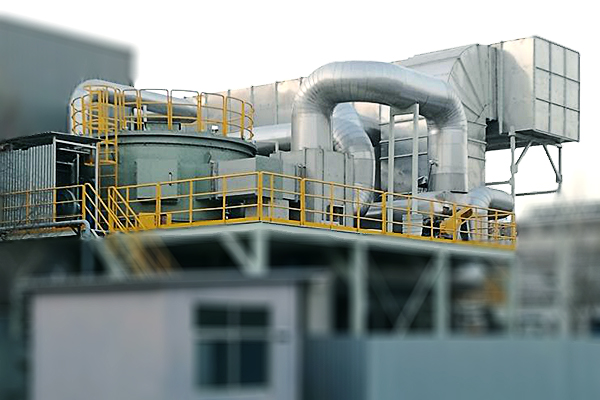
In industrial waste gas treatment, especially in volatile organic compounds (VOCs) abatement and combustion processes, the stability of the inlet gas concentration is a cornerstone for the stable and efficient operation of the entire system. However, many production processes—such as batch coating, pharmaceutical fermentation, or intermittent printing—inevitably produce exhaust gases with drastic concentration fluctuations. These fluctuations can range from near-zero concentrations to explosive limits within minutes. Directly feeding such unstable gases into downstream equipment like RTOs or catalytic oxidizers poses significant safety risks and operational instability. This article provides a comprehensive guide on designing effective buffer and premix systems to tackle these challenges.
Understanding the Challenge of Fluctuating Exhaust Gas
Exhaust gas with high concentration volatility is a common headache for environmental engineering. When the concentration spikes, it can cause the downstream treatment equipment to overheat, potentially damaging the thermal oxidizer or catalyst. Conversely, when concentrations drop too low, auxiliary fuel consumption increases dramatically to maintain the required operating temperature, leading to higher operational costs. More critically, concentration spikes that approach or exceed 25% of the lower explosive limit (LEL) represent a severe explosion hazard. A well-designed buffer and premix system is not just an accessory; it is a safety and performance necessity.
Core Design Principles for Buffer and Premix Systems
An effective system addresses both volume buffering to absorb flow shocks and concentration homogenization to smooth out chemical composition peaks and valleys. The design must integrate three core components: a buffer tank, a dynamic premixing device, and a precise control logic. For over a decade, Zhengzhou Puhua Technology has specialized in the research and development of comprehensive environmental protection solutions. Drawing from our extensive experience in providing RCO catalytic combustion equipment, RTO equipment, and VOCs treatment equipment, we emphasize that the pretreatment stage—specifically the buffer and premix system—is critical for ensuring the longevity and safety of the entire waste gas treatment train.
1. Strategic Sizing of the Buffer Tank
The buffer tank is the physical space where flow and concentration equalization occurs. Its sizing is not arbitrary; it depends on the peak duration of the production process. For processes with high-frequency, short-duration fluctuations, a tank with a volume of 3-5 times the pipeline volume may suffice. For batch processes with long intermittent periods, a larger tank holding 15-30 minutes of average exhaust flow is necessary. The table below outlines key sizing considerations.
| Design Parameter | Description | Recommended Approach |
|---|---|---|
| Volume Calculation | Based on maximum instantaneous flow and the longest duration of high-concentration emission. | V = Q_max × t_peak, where t_peak is the duration of the peak flow event. |
| Internal Structure | Incorporates baffle plates and internal distribution manifolds to prevent short-circuiting. | Use a top inlet and bottom outlet with horizontal baffles to promote laminar mixing and prevent direct channeling. |
| Safety Provisions | Essential for handling explosive environments. | Integrate explosion vents, flame arresters at the inlet and outlet, and LEL monitoring sensors. |
2. Dynamic Premix Mechanism
Simply having a large tank is often insufficient if the gas stratifies. A dynamic premix system ensures that the gas entering the downstream treatment is homogeneous. Common and effective methods include:
Static Mixers: Installed in the pipeline after the buffer tank, these use fixed geometric elements to split, rearrange, and recombine the gas stream, creating turbulence that promotes mixing.
Recirculation Loops: A portion of the gas from the buffer tank’s outlet is recirculated back to the inlet using a dedicated fan. This creates a continuous mixing cycle that effectively averages the concentration over time.
Injection Nozzles: For systems requiring rapid dilution, fresh air or inert gas (like nitrogen) can be injected through a series of nozzles positioned at the inlet of the buffer tank to immediately lower high-concentration peaks to safer levels.
3. Advanced Control and Monitoring Systems
Manual control cannot respond quickly enough to sudden concentration spikes. An automated control system is the brain of the operation. The system should integrate the following sensors and logic:
Continuous LEL Monitoring: Installed at the tank outlet to provide real-time data to the PLC. If the LEL exceeds a preset threshold (typically 25%), the system triggers an alarm and initiates safety protocols like emergency dilution or system bypass.
Feed-Forward Control: The control system uses data from upstream production schedules to anticipate fluctuations. For example, knowing when a coating machine will start a new batch allows the system to preemptively adjust damper positions.
Pressure Balancing: Maintains a slight negative pressure throughout the system to prevent fugitive emissions, which is critical for worker safety and regulatory compliance.
Synergistic Integration with Downstream Equipment
The ultimate goal of a buffer and premix system is to create the ideal "food" for your core treatment equipment. Whether you are using a RCO catalytic combustion device or a thermal RTO device, a stable and homogeneous feed translates to higher destruction removal efficiency (DRE) and lower energy consumption. Zhengzhou Puhua Technology excels in providing integrated solutions, ensuring that our VOCs organic waste gas treatment equipment is paired with optimally designed pretreatment systems. Our approach ensures that the entire system—from the buffer tank to the final discharge—operates in harmony, maximizing safety and minimizing operational costs.
Conclusion
Designing a buffer and premix system for high-fluctuation exhaust gas is a complex but essential engineering task. It requires a holistic approach that combines mechanical engineering, process chemistry, and safety control logic. By carefully sizing the buffer tank, incorporating effective mixing strategies, and implementing a robust control system, you can transform an unstable, hazardous gas stream into a steady, safe, and treatable flow. This not only protects your primary treatment equipment but also ensures consistent compliance with environmental regulations. For facilities facing these challenges, consulting with an experienced manufacturer like Zhengzhou Puhua Technology, a recognized leader in producing high-quality dust removal equipment, desulfurization and denitrification equipment, and VOCs treatment equipment, is a valuable step toward a reliable and safe solution.
Related Articles
-

Zeolite Fixed Bed+Catalytic Combustion Equipment (RCO)
[list:visits]
-

Resin desorption+condensation recovery equipment
[list:visits]
-

Cooking oil fume purifier
[list:visits]
Subscribe to Our Newsletter
Stay updated with the latest news and insights from Puhua Tech.