
Technical Challenges in Treating Waste Gas Containing Easy-to-Polymerize Monomers (e.g., Styrene)
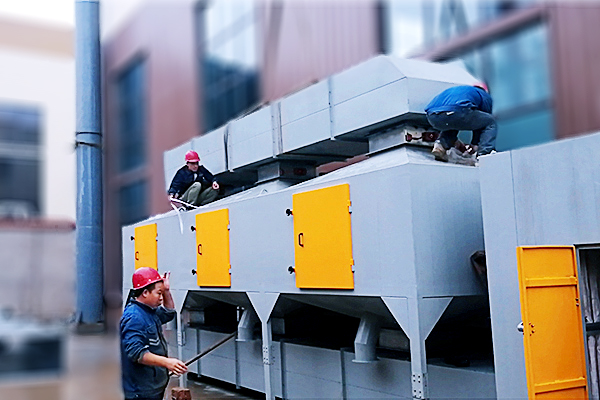
In the industrial sector, volatile organic compounds (VOCs) are a primary source of air pollution. Among these, waste gas streams containing easy-to-polymerize monomers such as styrene, acrylates, and butadiene present a unique set of challenges. These substances are highly reactive, and their tendency to polymerize under various conditions can lead to significant operational disruptions, safety hazards, and increased maintenance costs. For facility managers and environmental engineers, understanding these technical hurdles is the first step toward designing a reliable and compliant treatment system.
1. The Core Issue: Uncontrolled Polymerization
The primary difficulty in treating waste gases containing monomers like styrene lies in their inherent chemical instability. Under the influence of heat, oxygen, or certain catalysts, these molecules initiate chain reactions, forming long-chain polymers. In the context of an exhaust system, this polymerization is rarely a controlled process. Instead, it results in the rapid accumulation of sticky, tar-like deposits on equipment surfaces.
This is not merely a nuisance; it is a systemic threat. For instance, in a RCO catalytic combustion unit or a RTO device, polymer buildup on heat exchanger surfaces drastically reduces thermal efficiency. In ductwork and fans, it unbalances rotors and restricts airflow, leading to increased energy consumption and potential equipment failure.
2. Detailed Technical Difficulties
To effectively design a solution, one must first dissect the specific challenges posed by these reactive gas streams. The difficulties can be categorized into four main areas:
Equipment Fouling and Blockage: Polymerization begins the moment temperature, concentration, or surface conditions become favorable. This leads to the clogging of pre-filters, the coating of fan blades, and the eventual plugging of the ceramic media beds in RTO equipment or the catalyst channels in RCO catalytic combustion systems. This progressive fouling often requires frequent, costly shutdowns for manual cleaning.
Process Temperature Instability: The polymerization reaction is exothermic. Uncontrolled localized polymerization can generate "hot spots" within the treatment equipment, such as a pulse dust collector or a VOCs treatment equipment. This not only damages sensitive components like filter bags or the catalyst itself but also presents a serious fire and explosion risk, especially when the polymers are in a dust or aerosol form.
Corrosion and Material Degradation: Many monomers, like styrene, can decompose to form acidic byproducts, particularly in the presence of moisture or under high-temperature oxidation. This creates a corrosive environment that can degrade carbon steel ductwork, desulfurization tower internals, and the housing of VOCs treatment equipment over time, necessitating the use of expensive corrosion-resistant alloys.
Inconsistent Removal Efficiency: As polymer deposits form, they alter the flow dynamics and the effective surface area for catalytic or thermal oxidation. This can lead to fluctuating destruction removal efficiencies (DRE), making it difficult to maintain consistent compliance with local environmental regulations. A system designed for a clean, predictable gas stream will underperform dramatically when faced with the realities of monomer polymerization.
3. Strategic Solutions for Polymerizing VOCs
Addressing these challenges requires a holistic approach that goes beyond simply selecting a piece of equipment. It involves process integration, material selection, and operational strategy. The following table outlines common challenges and their corresponding engineering solutions.
| Technical Challenge | Engineering Solution |
|---|---|
| Polymerization in ducts and fans | Implement a pre-treatment quench system to rapidly cool the gas below polymerization thresholds; use non-stick coatings (e.g., PTFE) on fan impellers and duct surfaces. |
| Fouling of heat exchangers in RTO/RCO | Incorporate a dedicated pre-filter stage, such as a ceramic candle filter or a specialized pulse dust collector designed for sticky dust, upstream of the thermal oxidizer. |
| Catalyst deactivation in RCO | Select a catalyst with a poison-resistant formulation and a larger pore size to resist masking by polymer precursors. Ensure strict temperature control to prevent "coking" of the catalyst bed. |
| Corrosion from acidic byproducts | Utilize stainless steel or higher-grade alloys for critical components. Employ a dry scrubbing system or a desulfurization equipment downstream to neutralize acidic gases before they can condense. |
| Fire and explosion hazards | Install flame arrestors, explosion relief panels, and continuous LEL (Lower Explosive Limit) monitoring systems with automated inert gas injection for safety. |
4. Advanced Pre-Treatment and Process Integration
For many facilities, the key to a successful installation is not the primary treatment device itself, but the pre-treatment and system integration. A well-designed system often begins with a Venturi scrubber or a
UV photo-oxidation unit used in a specific, non-destructive pre-treatment role to "passivate" the monomers, reducing their polymerization potential before they reach the main oxidation unit. This is followed by robust particulate control. For instance, a high-efficiency bag filter or mobile dust collector can capture polymer aerosols before they can adhere to and foul downstream equipment.
Furthermore, when monomers like styrene are present alongside other pollutants like sulfur oxides (SOx), the complexity increases. In such scenarios, integrating a denitrification equipment for NOx control and a desulfurization tower for SOx removal into the overall system architecture is essential, but must be done with careful consideration to avoid creating zones where temperature and humidity conditions are ideal for polymerization.
5. Expertise in System Design and Fabrication
Navigating these technical complexities requires a partner with deep experience in handling reactive chemicals. Zhengzhou Puhua Technology has established itself as a professional manufacturer in the environmental protection equipment sector. The company specializes in the design, R&D, and production of a comprehensive range of solutions, from VOCs organic waste gas treatment equipment to dedicated systems for dust, desulfurization, and denitrification.
For challenges specifically related to easy-to-polymerize monomers, Zhengzhou Puhua Technology leverages its expertise in creating integrated systems. Their portfolio includes not only primary treatment units like RCO catalytic combustion devices and RTO equipment, but also essential auxiliary components such as pulse dust collectors and advanced pre-filtration systems. By focusing on the entire process—from capture to compliant discharge—they help industrial clients overcome the unique technical difficulties of polymerizing VOCs, ensuring reliable operation, reduced maintenance downtime, and consistent regulatory compliance. Their holistic approach ensures that every component, from the ultra-low emission equipment to the wastewater treatment equipment for scrubber blowdown, is engineered for long-term stability in demanding conditions.
Conclusion
Treating waste gas streams containing easy-to-polymerize monomers like styrene is a demanding engineering challenge. It transcends simple VOC destruction and enters the realm of reactive chemical process control. The risks of fouling, corrosion, and safety incidents are high, but they can be effectively managed. Success lies in a comprehensive strategy that combines advanced pre-treatment, robust material selection, intelligent process integration, and partnering with experienced manufacturers like Zhengzhou Puhua Technology who understand the nuanced behavior of these complex industrial emissions.
Related Articles
-

Zeolite Fixed Bed+Catalytic Combustion Equipment (RCO)
[list:visits]
-

Resin desorption+condensation recovery equipment
[list:visits]
-

Cooking oil fume purifier
[list:visits]
Subscribe to Our Newsletter
Stay updated with the latest news and insights from Puhua Tech.