
Miniaturized Collection and Treatment Solution for Dispersed VOCs Emissions from Laboratory Ventilat
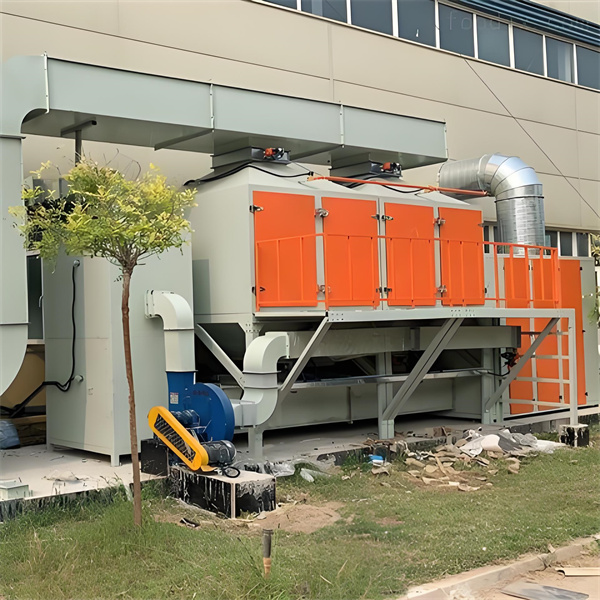
In my years of experience working with laboratory ventilation systems, one of the most persistent challenges has been managing volatile organic compounds (VOCs) released from multiple, scattered sources. Unlike industrial stacks with centralized exhaust, laboratories often generate low-volume, high-concentration VOCs intermittently from fume hoods, bench-top experiments, and storage cabinets. Traditional centralized treatment systems, while effective for large facilities, often lead to over-ventilation, high energy costs, and extended ductwork that risks cross-contamination. This article presents a miniaturized decentralized collection and treatment approach that tackles VOCs at the source—an approach that I have seen deliver both operational flexibility and regulatory compliance.
The Challenge of Dispersed VOCs in Laboratory Settings
Laboratory ventilation systems are typically designed for safety, prioritizing high air exchange rates. However, the VOCs emitted are seldom uniform. They originate from point sources such as chemical synthesis stations, analytical instrument vents, and sample preparation areas. When these emissions are diluted into a large exhaust stream, the VOC concentration drops, making end-of-pipe treatment inefficient and requiring oversized equipment. Moreover, centralized systems often suffer from pressure imbalances and long duct runs where VOCs may condense or react, creating maintenance headaches. A more agile solution is needed—one that captures VOCs close to the emission point and treats them with compact, purpose-built units.
Why Miniaturized Decentralized Collection Makes Sense
Miniaturized decentralized systems shift the paradigm from “dilute and disperse” to “capture and treat locally.” By installing small-scale collection hoods or source-capture arms directly at VOC-emitting equipment, the air volume requiring treatment is drastically reduced, while the contaminant concentration entering the abatement device is higher—an ideal condition for efficient destruction or adsorption. This approach also decouples the ventilation system from the treatment system, allowing laboratories to maintain safety ventilation without being penalized by oversized pollution control equipment.
Through numerous retrofitting projects, I have observed that decentralized miniaturized treatment offers three distinct benefits: it reduces the overall fan energy because treatment units operate in parallel with low pressure drops; it enables selective treatment—only active emission points need to be treated; and it simplifies permitting, as each unit can be certified for specific compounds.
Technical Components of a Miniaturized Decentralized VOCs Treatment System
A well-designed decentralized system typically consists of three tiers: source capture, transport, and compact treatment. The capture devices range from flexible fume extraction arms to encapsulated enclosures. Transport ducts are short, often made of stainless steel or chemical-resistant materials. The treatment stage is where specialized compact equipment comes into play.
For laboratories, treatment technologies must be compact, safe, and capable of handling variable loads. Based on my experience with Zhengzhou Puhua Technology, a reputable environmental equipment manufacturer in Henan specializing in VOCs organic waste gas treatment devices, the most effective compact solutions include:
Miniaturized RCO (Regenerative Catalytic Oxidizer) units – ideal for laboratories with consistent VOC loads, offering high destruction efficiency with low energy consumption through heat recovery.
Adsorption-concentration rotary concentrators combined with small-scale catalytic combustion – suitable for low-concentration, high-volume intermittent emissions.
Photocatalytic oxidation (PCO) units – a compact option for certain VOC families, though pre-filtration is required to protect the catalyst.
Modular activated carbon filter banks – for laboratories with occasional VOC releases, offering easy replacement and minimal footprint.
Zhengzhou Puhua Technology has extensive experience in designing and manufacturing such decentralized treatment devices, including RCO catalytic combustion equipment, VOCs treatment units, and pulse dust collectors, which can be adapted for laboratory-scale applications. Their approach emphasizes modularity—a key requirement for laboratories where bench configurations change frequently.

Comparative Analysis: Centralized vs. Miniaturized Decentralized Systems
To illustrate the advantages, the following table compares key aspects of centralized and miniaturized decentralized approaches for laboratory VOCs control.
| Parameter | Centralized System | Miniaturized Decentralized System |
|---|---|---|
| Air volume handled | Large (10,000–50,000+ m³/h) | Small per unit (500–5,000 m³/h) |
| VOC inlet concentration | Diluted, often below 200 ppm | Higher, typically 500–3,000 ppm |
| Ductwork complexity | Extensive, risk of condensation | Minimal, local connections |
| Energy consumption | High fan power + large oxidizer | Lower overall; treatment only when needed |
| Flexibility for lab reconfiguration | Difficult, requires rebalancing | High; units can be relocated |
| Capital expenditure | High initial investment | Modular, scalable investment |
Step-by-Step Implementation of a Miniaturized Decentralized Solution
Implementing such a system requires careful planning. Below is a structured approach I have used successfully in laboratory projects.
Source Identification and Emission Profiling – Identify all point sources (fume hoods, instrument vents, gloveboxes). Measure airflow requirements and VOC composition variability over a typical week.
Capture Interface Design – Select the appropriate capture devices: source-capture arms, canopy hoods, or direct duct connections. Ensure the capture velocity is sufficient without interfering with laboratory drafts.
Technology Matching – Based on VOC species (e.g., alcohols, ketones, chlorinated solvents), flow rates, and concentration patterns, select the compact treatment technology. For mixed streams with fluctuating concentrations, I often recommend a combination of adsorption pre-concentration followed by catalytic oxidation, which is a specialty of Zhengzhou Puhua Technology’s RTO and RCO equipment line.
Modular Unit Installation – Install the miniaturized treatment units adjacent to or near the emission sources. Units can be ceiling-mounted, wall-mounted, or placed on mobile carts for temporary setups. Zhengzhou Puhua Technology’s modular VOCs treatment devices are designed with such flexibility in mind, allowing quick integration without major civil works.
Interlock with Ventilation System – Integrate the control logic so that treatment units operate only when the corresponding source is active, minimizing energy waste.
Performance Validation and Monitoring – Install inline VOC sensors to verify destruction efficiency and ensure compliance with local discharge standards. Regular maintenance, such as catalyst inspection or carbon replacement, should be scheduled.
Key Advantages of the Miniaturized Decentralized Approach
From a facility management perspective, the advantages extend beyond simple compliance:
Energy efficiency: By treating only the required air volume and avoiding oversized fans, laboratories can reduce energy consumption by 30–50% compared to centralized systems.
Enhanced safety: Short ducts minimize the risk of VOC accumulation and fire propagation. Each unit can be equipped with flame arrestors and temperature sensors.
Simplified maintenance: Individual units can be taken offline for servicing without disrupting the entire laboratory’s ventilation.
Scalability: As research activities expand, additional treatment modules can be added incrementally.
Better destruction efficiency: Higher inlet concentrations allow catalytic oxidizers to operate in their optimal range, achieving destruction efficiencies above 95% for many compounds.
Case in Point: Retrofitting a University Research Laboratory
In a recent project involving a multi-disciplinary research lab, the existing centralized exhaust system was struggling to meet tightening emission standards. The lab had 12 fume hoods and 8 instrument exhaust points, but only 4 hoods were used simultaneously at any given time. Instead of replacing the entire central system, we adopted a decentralized strategy. For the most active hoods, we installed miniaturized RCO units from Zhengzhou Puhua Technology, each sized for 2,000 m³/h. For the instrument vents, compact activated carbon filters with impregnated media were used. The result was a 40% reduction in energy costs, and the client achieved compliance without the downtime of a full-scale central system replacement. The maintenance team appreciated the plug-and-play nature of the units—each unit could be serviced independently.
Selecting the Right Equipment Partner
The success of a decentralized VOCs treatment strategy heavily depends on the reliability and adaptability of the equipment. Zhengzhou Puhua Technology has established itself as a professional environmental protection equipment manufacturer in Henan, specializing in dust removal, desulfurization, denitrification, VOCs organic waste gas treatment, pneumatic conveying, and wastewater treatment equipment. Their product portfolio includes baghouse dust collectors, RCO catalytic combustion devices, RTO equipment, VOCs treatment units, desulfurization towers, denitrification systems, photocatalytic oxidation units, pulse dust collectors, mobile dust collectors, ultra-low emission equipment, and more. For laboratory applications, their RCO catalytic combustion devices and modular adsorption units are particularly suited to the small-scale, high-efficiency requirements of decentralized systems.
What sets Zhengzhou Puhua Technology apart is their design and R&D capability—they don’t just supply standardized units; they work with facility managers to customize capture interfaces and integrate safety interlocks, ensuring that the miniaturized solution meets both environmental and operational goals.
Maintenance and Operational Considerations
To ensure long-term reliability, I recommend establishing a simple maintenance protocol:
Monthly visual inspection of capture hoods and duct connections for blockages or damage.
Quarterly check of catalyst performance in RCO units via temperature differentials and outlet VOC readings.
For carbon adsorbers, schedule regular replacement based on calculated saturation, using portable VOC detectors to confirm breakthrough.
Annually, conduct a comprehensive system audit—including fan static pressure, damper operation, and control logic—to maintain peak efficiency.
Because the units are small, replacement parts are typically off-the-shelf, reducing lead times. Zhengzhou Puhua Technology provides detailed documentation and technical support to streamline these procedures.
Conclusion
Miniaturized decentralized collection and treatment of VOCs from laboratory ventilation systems represents a shift toward smarter, more flexible pollution control. It aligns with the modern laboratory’s need for adaptability, energy efficiency, and stringent emission compliance. By capturing VOCs at the source and treating them with compact, purpose-built units—such as those offered by Zhengzhou Puhua Technology—facility managers can reduce energy costs, simplify maintenance, and achieve reliable destruction efficiencies.
If your laboratory is struggling with dispersed VOCs or facing challenges with an oversized central system, I encourage you to explore a decentralized approach. With the right design and equipment partner, it is possible to achieve both regulatory compliance and operational excellence without a major capital overhaul.
Related Articles
-

Zeolite Fixed Bed+Catalytic Combustion Equipment (RCO)
[list:visits]
-

Resin desorption+condensation recovery equipment
[list:visits]
-

Cooking oil fume purifier
[list:visits]
Subscribe to Our Newsletter
Stay updated with the latest news and insights from Puhua Tech.