
Metallurgical Industry High-Temperature Flue Gas Management: Heat-Resistant Baghouse Filter Solution
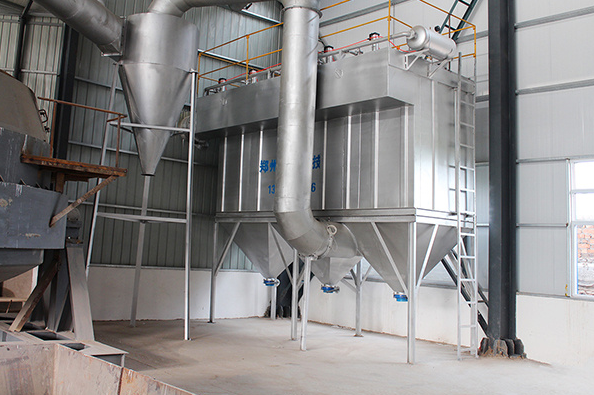
The metallurgical industry, encompassing ferrous and non-ferrous metal production, is foundational to modern infrastructure. However, processes like sintering, smelting, and converting generate massive volumes of high-temperature flue gas laden with particulates, heavy metals, and often acidic components . Managing this gas stream effectively is not merely an environmental regulatory requirement but a critical operational challenge. Failure to treat this gas can lead to severe air pollution, health hazards, and costly production downtime. This article provides a comprehensive, deep-dive exploration into one of the most effective solutions for this challenge: the high-temperature baghouse filter, with a specific focus on how advanced engineering from industry leaders like Zhengzhou Puhua Technology is setting new standards for efficiency and reliability.
Understanding the Challenge of Metallurgical Flue Gas
Before exploring solutions, it's crucial to understand the aggressive nature of metallurgical flue gas. Unlike ambient air dust collection, metallurgical off-gases present a "perfect storm" of difficult conditions:
Extreme Temperatures: Flue gas temperatures can vary wildly. While some processes like sintering produce gas in the range of 380-420°C, others, such as the cooling of lead-zinc sinter, can initially exceed 1000°C . This thermal load is destructive to standard filtration media.
Particulate Characteristics: The dust is often fine (submicron to 10 µm), abrasive, and sticky. It contains metal oxides, sulfides, and in some cases, condensable hydrocarbons .
Chemical Corrosivity: The presence of sulfur oxides (SOx) and other acidic gases can combine with water vapor to form corrosive acids, especially as the gas cools, attacking both the filter media and the baghouse structure .
Traditional dust collection methods fail under these conditions. Standard fabric filters would quickly char, blind, or disintegrate. This is where specialized high-temperature baghouse filters become indispensable.
The Core Solution: High-Temperature Baghouse Filters
A high-temperature baghouse filter is a robust air pollution control device designed to separate particulate matter from hot gas streams. The principle is similar to a standard baghouse: dirty gas passes through filter bags, which capture the dust on their surface, allowing clean air to pass through. However, the materials and design philosophies diverge significantly. Zhengzhou Puhua Technology, a premier environmental equipment manufacturer in Henan, specializes in engineering these systems for the rigorous demands of the metallurgical sector, integrating advanced pre-treatment and filtration technologies.
Key Components of a Heat-Resistant System
A typical high-temperature baghouse system from a specialist like Zhengzhou Puhua Technology comprises several critical stages:
Gas Conditioning and Pre-Cooling: Rarely can flue gas be sent directly to the filter bags. Primary cooling methods include:
Radiative Heat Exchangers: Simple, robust tubes that cool the gas through natural convection.
Dilution Air Cooling: Mixing hot gas with ambient air, though this increases the total gas volume and requires larger equipment.
Evaporative Coolers: Spraying a fine mist of water into the duct. The water absorbs heat as it evaporates, cooling the gas and conditioning it by increasing humidity, which can help with fine particle agglomeration . This brings the temperature down to a range safe for filtration (typically below 260°C).
The Filter Bags (Heart of the System): This is where material science is paramount. Standard polyester or polypropylene bags are useless here. Common high-temperature fibers include:
P-84 (Polyimide): Known for its excellent temperature resistance (up to 260°C) and unique trilobal fiber cross-section, which increases surface area for dust capture, helping to reduce pressure drop .
Fiberglass with PTFE Membrane: Offers exceptional dimensional stability and can handle continuous temperatures up to 260°C. A laminated e-PTFE (expanded Polytetrafluoroethylene) membrane provides a slick surface for superior cake release and captures submicron particles on the surface itself, leading to near-zero emissions .
PTFE (Teflon) Felt: The ultimate in chemical and thermal resistance, capable of operating up to 260°C and withstanding highly acidic environments.
The Baghouse Housing and Cleaning Mechanism: The housing is heavily insulated to prevent acid dew point corrosion. Pulse-jet cleaning, using high-pressure compressed air, is the standard. A sophisticated PLC controller, like those integrated by Zhengzhou Puhua Technology, monitors differential pressure and initiates cleaning pulses, ensuring the filter bags maintain permeability without excessive wear.
Advanced Solutions for Extreme Environments
For the most demanding applications, such as direct treatment of sintering or smelting gases without extensive pre-cooling, specialized configurations are necessary. One such solution offered by Zhengzhou Puhua Technology involves integrating a waste heat recovery system directly into the flue.
As highlighted in recent technological advancements, internal waste heat recovery involves embedding heat exchangers directly within the main flue duct . This offers dual benefits: it recovers valuable thermal energy that can be used to generate steam or pre-heat combustion air, and it simultaneously cools the flue gas to a temperature manageable for the baghouse. This integrated design is more compact and cost-effective than external heat recovery systems, reducing both capital investment and installation complexity .
| Filter Media Type | Max. Continuous Temp (°C) | Chemical Resistance | Key Advantages | Common Metallurgical Applications |
|---|---|---|---|---|
| P-84 (Polyimide) | 260 | Good (Acids) | High filtration efficiency, low emissions | Smelters, coal-fired boilers, kilns |
| Fiberglass + e-PTFE Membrane | 260 | Excellent (Acids) | Dimensional stability, superior cake release, zero emissions | Titanium dioxide processing, incinerators, high-temperature chemical processes |
| PTFE (Polytetrafluoroethylene) | 260 | Superior (All chemicals) | Inert, longest lifespan in corrosive environments | Non-ferrous smelting, waste incineration |
Integrating Multi-Pollutant Control
Modern metallurgical compliance requires more than just dust removal. The drive for ultra-low emissions means that SO₂, NOx (nitrogen oxides), and VOCs (volatile organic compounds) must also be controlled. Zhengzhou Puhua Technology excels in providing integrated systems that combine high-temperature particulate filtration with other abatement technologies.
Typical Integrated Process Flow:
Primary Dedusting: A settling chamber or cyclone removes the coarsest, heaviest particles, reducing the load on the baghouse.
Gas Cooling & Conditioning: As described above, using radiators or evaporative coolers.
High-Temperature Baghouse Filtration: Removes fine and submicron particulate matter, achieving outlet concentrations well below 10 mg/m³ . The collected dust, often rich in valuable metals like zinc and lead, can be recycled .
Dry Sorbent Injection (DSI): For acid gas control, a dry sorbent like hydrated lime or sodium bicarbonate can be injected into the ductwork upstream of the baghouse. The sorbent reacts with SO₂ and HCl, and the reaction products are captured on the filter bags as a supplemental layer. This turns the baghouse into a multi-pollutant control device.
SCR DeNOx System: For NOx control, a Selective Catalytic Reduction (SCR) system is often placed after the baghouse. However, innovative designs utilize the waste heat from the flue gas to maintain the optimal temperature for the SCR catalyst, eliminating the need for costly reheat burners .
ID Fan and Stack: The induced draft fan pulls the gas through the entire system, and the cleaned, compliant gas is released via the stack.
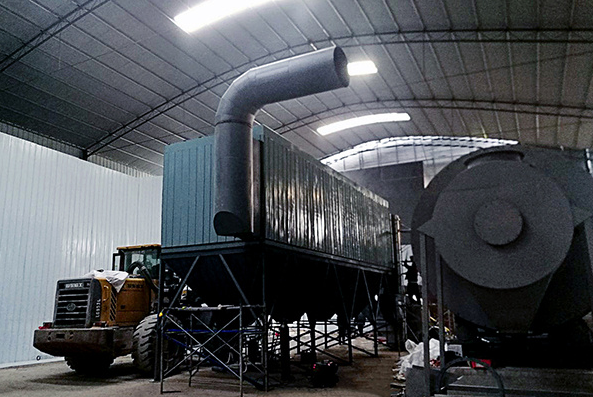
The expertise of a company like Zhengzhou Puhua Technology lies in its ability to design, fabricate, and commission these complex, multi-faceted systems. Their portfolio includes not only high-performance pulse-jet baghouse filters but also complementary technologies such as:
Desulfurization Towers (Wet & Dry): For high-efficiency SO₂ removal.
SCR and RCO/RTO Systems: For the abatement of NOx and VOCs through catalytic reduction or oxidation.
Pneumatic Conveying Systems: For the efficient, enclosed transport of captured dust for disposal or recycling.
This holistic approach ensures that a metallurgical facility can meet all its environmental compliance goals with a single, trusted partner, ensuring seamless integration and optimized performance.
Economic and Operational Benefits
Investing in a high-performance heat-resistant baghouse filter is not just an environmental cost; it is a strategic operational decision. The benefits extend far beyond compliance:
Product Recovery: The captured dust from processes like steelmaking or non-ferrous smelting is rich in valuable metals. Recycling this material back into the process or selling it to recyclers creates a direct revenue stream .
Energy Savings: By integrating waste heat recovery, the system pays for itself. The recovered heat can be used for plant heating, steam generation, or pre-heating combustion air, significantly reducing overall energy consumption. Payback periods can be as short as one year .
Extended Equipment Life: Properly designed systems with advanced anti-wear technologies and corrosion-resistant materials minimize unplanned downtime and maintenance costs. Using pleated filter elements can increase filtration area, reduce the air-to-cloth ratio, and lower the required pulsing frequency, which dramatically extends bag life and reduces compressed air usage .
Regulatory Compliance and Social License: Achieving and maintaining ultra-low emission standards (e.g.,
Conclusion
The treatment of high-temperature flue gas in the metallurgical industry is a complex but solvable engineering challenge. It demands a deep understanding of thermal dynamics, material science, and chemical processes. A reliance on outdated or undersized equipment poses significant operational, financial, and environmental risks. The modern solution lies in robust, intelligently engineered systems like the high-temperature baghouse filters and integrated gas treatment solutions provided by Zhengzhou Puhua Technology. By combining durable heat-resistant filter media with smart pre-conditioning and multi-pollutant control strategies, metallurgical plants can transform a costly waste stream into a manageable, and even valuable, asset. For any operation facing the heat of metallurgical fumes, a partnership with an experienced and comprehensive solution provider is the surest path to clean, efficient, and sustainable production.
Related Articles
-

Zeolite Fixed Bed+Catalytic Combustion Equipment (RCO)
[list:visits]
-

Resin desorption+condensation recovery equipment
[list:visits]
-

Cooking oil fume purifier
[list:visits]
Subscribe to Our Newsletter
Stay updated with the latest news and insights from Puhua Tech.