
Baghouse On-Site Anti-Corrosion and Thermal Insulation Construction Requirements
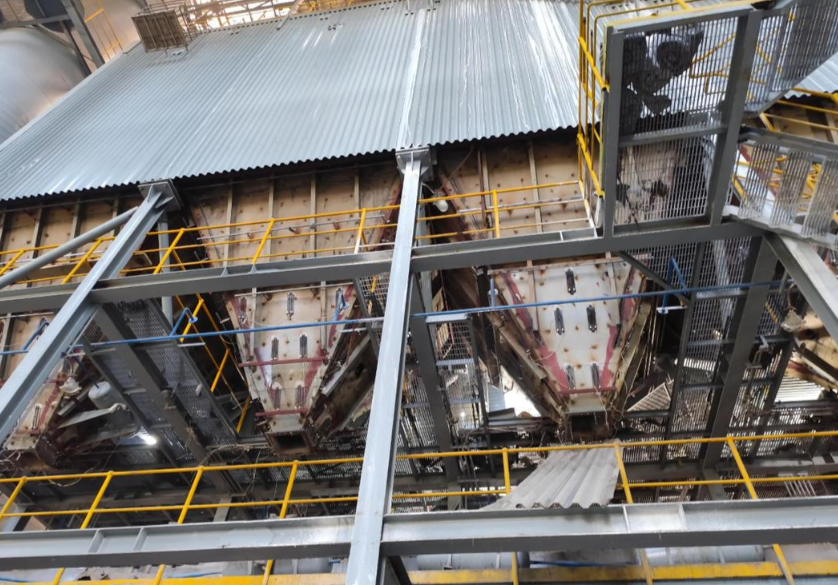
In industrial dust control, the baghouse (also known as a bag filter or fabric filter) stands as a critical sentinel, protecting our environment from harmful particulate matter . However, these robust systems face a silent, persistent enemy: corrosion. Often exacerbated by temperature fluctuations leading to condensation, corrosion is the primary cause of premature baghouse failure, resulting in costly repairs and operational downtime . This is why proper on-site anti-corrosion and thermal insulation construction is not merely an option—it is an absolute necessity for ensuring long-term equipment reliability and compliance with emission standards. This guide provides a comprehensive, step-by-step overview of the essential requirements for this specialized field.
Understanding the Corrosion Mechanism in Baghouses
To effectively protect a baghouse, one must first understand the enemy. Corrosion in these systems is rarely simple rust. It is often a chemically complex process driven by acid dew point corrosion . When flue gases containing sulfur or other compounds cool down inside the baghouse or ductwork, they can reach a temperature where sulfuric acid or other corrosive agents condense onto the metal surfaces . This acidic moisture creates a highly corrosive environment that rapidly attacks carbon steel.
The primary defense against this is twofold: maintain the gas temperature above the dew point (typically advising inlet temperatures above 150°C or 302°F) and install a robust, impermeable barrier between the acid and the steel . This barrier is established through rigorous anti-corrosion and insulation construction.
Key Requirements for On-Site Anti-Corrosion and Insulation Construction
Proper surface preparation and application are the cornerstones of a successful project. Cutting corners here leads to coating failure and recurring corrosion. Below are the critical phases of construction.
1. Surface Preparation: The Foundation of Protection
Before any coating is applied, the surface must be meticulously prepared. This is non-negotiable.
Cleaning and Blasting: All exterior surfaces of the baghouse system—including the housing, hoppers, ductwork, manifolds, and support structures—must be blast-cleaned. The industry standard is to achieve a near-white metal finish, such as SSPC-SP 6, "Commercial Blast Cleaning," which removes all visible oil, grease, dust, and mill scale .
Surface Profile: The blasting process must create a uniform anchor pattern, allowing the primer to mechanically bond to the steel. This profile depth must be verified before painting begins.
Interior Surfaces: While surfaces exposed to raw flue gas flow are often left uncoated due to high temperatures, they must be protected during shipping and storage with a rust-preventive coating . Any existing corrosion or damage must be repaired, and the casing restored to its original state .

2. Anti-Corrosion Coating Application
Once the surface is perfectly prepared, the protective coating system can be applied.
Primer Application: A high-quality primer, often specified as FS TT-P-28 or an equivalent high-performance industrial epoxy primer, should be applied immediately after blasting to prevent flash rusting .
Finish Coats: At a minimum, two finish coats of the specified paint system should be applied, achieving the required dry film thickness (DFT) . For baghouses handling highly corrosive gases, specialized lining systems may be required.
Specialized Lining Systems: In severe cases, such as in smelting operations, standard coatings fail. Advanced systems like foamed borosilicate glass blocks bonded with a flexible urethane asphalt membrane can be used . This system provides an impervious barrier against acid attack and acts as an efficient thermal barrier, completely eliminating annual replacement of corroded walls .
Galvanic Protection: To prevent galvanic corrosion, direct contact between dissimilar metals (like aluminum casing with copper) must be avoided. If attachment is necessary, the steel should be primed with zinc chromate before painting .
3. Thermal Insulation Requirements
The purpose of insulation is to maintain the internal gas temperature and prevent the outer shell from cooling to the acid dew point. The insulation system is just as critical as the coating.
Material Selection: Insulation materials must be non-hydrophilic (water-resistant) and suitable for the maximum operating temperature. Mineral wool or fiberglass mats are common, but for extreme conditions, closed-cell foamed glass block provides superior performance .
Installation: Insulation must be installed continuously and snugly against the coated surface, with absolutely no gaps. All joints should be tightly fitted to prevent thermal bridging.
Weatherproofing Jacketing: A metal jacketing (typically aluminum or galvanized steel) must be installed over the insulation. This serves multiple purposes:
Protects the insulation from physical damage and moisture ingress.
Acts as a final vapor barrier.
Provides a clean, professional finished appearance.
Sealing and Flashing: All seams, penetrations, and flashing around access doors, instrumentation ports, and support brackets must be meticulously sealed with appropriate sealants. This prevents wind washing and water intrusion, which would render the insulation useless.
4. Protection of Ancillary Equipment
The construction scope must also extend to all associated structures.
Platforms and Walkways: External floor plates, ladders, grating, stairs, platforms, walkways, cages, handrails, and kickplates must be hot-dip galvanized according to ASTM A 123 standards to withstand constant outdoor exposure .
Electrical Components: In tropical or high-humidity areas, electrical connections, terminals, and motor coils must receive specialized fungicidal and moisture-resistant treatment as per military specifications like MIL-T-152 or MIL-I-24092 to prevent failure .
Quality Control and Standards
Adherence to stringent standards is the only way to guarantee a long service life. Construction must follow established norms such as the Chinese national standard GB/T 50046-2018 "Standard for anticorrosion design of industrial constructions," which provides detailed guidelines on material selection, structural details, and protective coatings for various corrosive environments .
| Construction Phase | Key Standard/Specification | Critical Requirement |
|---|---|---|
| Surface Preparation | SSPC SP 6 / ISO 8501-1 Sa2.5 | Near-white metal blast cleaning, uniform anchor pattern. |
| Primer Application | FS TT-P-28 / Manufacturer's Spec | Immediate application to prevent flash rust, specified DFT. |
| Finish Coating | FS TT-P-28 / Manufacturer's Spec | Minimum two coats, pinhole-free finish. |
| Insulation Material | Varies (e.g., ASTM C547) | Non-combustible, appropriate K-value and temperature rating. |
| Insulation Installation | Manufacturer's Guidelines | Continuity, no gaps, staggered joints. |
| Weatherproofing | Manufacturer's Details | Water-tight seams, proper flashing, anti-condensation measures. |
Conclusion: Ensuring Long-Term Performance with the Right Partner
The battle against baghouse corrosion is won or lost during the on-site construction phase. Meticulous surface preparation, precise application of high-performance coatings, and a perfectly executed thermal insulation system are the only guarantees against premature failure. These requirements are not just technical formalities; they are essential investments in the longevity and efficiency of your air pollution control system.
Choosing an experienced partner for this critical work is paramount. Zhengzhou Puhua Technology is a leading manufacturer of environmental protection equipment in Henan, specializing in the design, R&D, and production of a comprehensive range of pollution control solutions. Our expertise spans across dust collection (including pulse baghouse filters and mobile dust collectors), desulfurization and denitrification systems (scrubbers, denitrification equipment), and VOC abatement technologies (RCO, RTO, photocatalysis). We understand the harsh conditions your baghouse operates under. Our on-site construction teams follow strict protocols, utilizing advanced materials and techniques to ensure your equipment meets the requirements for ultra-low emissions and delivers decades of reliable service. Trust Zhengzhou Puhua Technology to provide not just the equipment, but the complete solution for your corrosion and insulation challenges.
Related Articles
-

Zeolite Fixed Bed+Catalytic Combustion Equipment (RCO)
[list:visits]
-

Resin desorption+condensation recovery equipment
[list:visits]
-

Cooking oil fume purifier
[list:visits]
Subscribe to Our Newsletter
Stay updated with the latest news and insights from Puhua Tech.