
Why Are Chinese Baghouse Dust Collectors So Affordable and High-Quality? A 2025 Industry Deep Dive
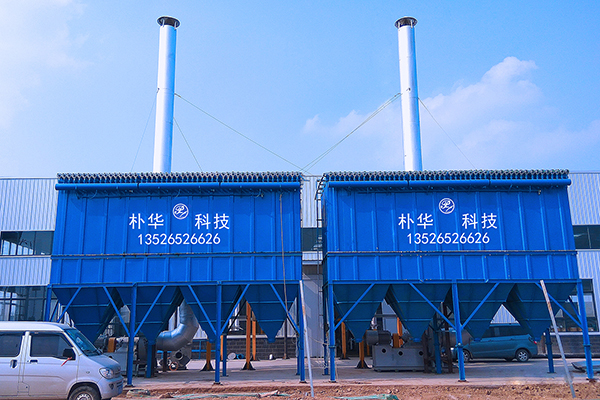
When procurement managers and plant engineers search for industrial dust control solutions, one question consistently arises: How do Chinese manufacturers deliver baghouse dust collectors that are both significantly cheaper and highly effective? The answer is not a simple one-liner. It is a combination of advanced industrial policy, deep supply chains, engineering innovation, and competitive labor dynamics. For companies looking to balance capital expenditure with operational efficiency, understanding this dynamic is crucial.
This article breaks down the specific reasons behind the price-to-performance advantage of Chinese-made baghouse filters and dust collection systems. We will explore the ecosystem that allows manufacturers like Zhengzhou Puhua Technology to compete on a global stage, delivering everything from pulse jet baghouses to RCO catalytic combustion equipment at price points that Western manufacturers often cannot match.
The Foundation: Vertically Integrated Supply Chains and Industrial Clusters
The primary driver of cost reduction in Chinese manufacturing is the geographical concentration of industries. Unlike in many Western countries where supply chains are fragmented across borders or vast distances, China's industrial clusters in provinces like Henan, Jiangsu, and Shandong operate within a 50-kilometer radius.
The "Ecosystem" Advantage
When a manufacturer like Zhengzhou Puhua Technology sources materials for a baghouse dust collector, everything from the filter media (polyester, PPS, fiberglass) to the steel for the housing and the solenoid valves for the pulse jets is available locally. This vertical integration achieves two things:
Reduced Logistics Costs: Raw materials do not need to travel far, cutting procurement costs by an estimated 20-30% compared to dispersed supply chains.
Rapid Prototyping: Engineers can source components quickly, allowing for faster iteration and customization for specific applications like coal mills or chemical plants.
This clustering effect ensures that a Chinese baghouse filter isn't just a commodity; it is the product of a mature, high-efficiency local economy.
Engineered for Value: Standardization vs. Customization
There is a common misconception that "cheap" means "standardized to the point of uselessness." In reality, the Chinese manufacturing model excels at "mass customization."
Modular Design Philosophy
Leading manufacturers design their pulse dust collector systems using modular components. For example, a standard baghouse model can be scaled up or down simply by adding or removing chambers. This reduces engineering hours per project. Companies like Zhengzhou Puhua Technology leverage this by offering tailored solutions—such as ultra-low emission equipment for power plants or corrosion-resistant units for steel mills—without the need for a complete ground-up redesign.
Labor and Automation: The New Equation
While China's labor costs have risen over the past decade, they remain competitive relative to North America and Western Europe. However, the real story is the shift toward automation in the manufacture of filtration equipment.
Skilled Labor at Scale
The production of a high-quality bag filter requires skilled welders and assembly technicians. China's technical education system produces a vast workforce capable of handling complex fabrication. This scale keeps labor costs per unit low while maintaining quality standards (ISO 9001).
Automated Production Lines
Top-tier suppliers now use automated lines for filter bag cage production and bag welding. This reduces human error and ensures that the dust removal efficiency remains consistently above 99.9%, even on high-volume orders.
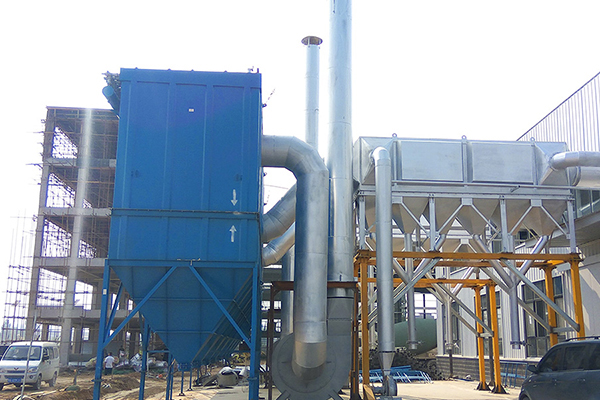
Technical Parity: Meeting and Exceeding Global Standards
Perhaps the most compelling reason for the global shift toward Chinese suppliers is the technical capability. It is no longer just about cheap steel; it is about advanced filtration media and smart controls.
Material Science Innovation
Chinese manufacturers are no longer just assembling imported components. Companies are investing heavily in R&D. For instance, they now produce advanced ePTFE membranes and high-temperature resistant fibers that rival established international brands.
Zhengzhou Puhua Technology, for example, holds multiple national patents for composite dust collectors and automated batching systems. Their ability to handle complex projects—from VOCs organic waste gas treatment to desulfurization towers—demonstrates a deep understanding of chemical engineering, not just metal fabrication.
Performance Metrics
Modern Chinese baghouses are designed to meet stringent emission limits. Data shows that systems can achieve:
Outlet density: As low as 50 mg/m³ or less.
Filtration efficiency: Exceeding 99.9% for sub-micron particles.
High-temperature resistance: Capable of handling gases above 260°C with appropriate filter media.
The Price Breakdown: A Comparative Look
To understand the value proposition, it helps to look at the market pricing structure. While a full system from a European or American manufacturer can run into six figures, Chinese suppliers offer competitive pricing without sacrificing core components.
Here is a general comparison of sourcing strategies based on market data :
| Sourcing Strategy | Typical Supplier Location | Price Range (USD) | Best Application |
|---|---|---|---|
| Single Component Sourcing | Coastal China (Guangzhou) | $1 - $25 per unit | Budget replacements, trials, small-scale upgrades |
| High-Volume Parts | Industrial Clusters (Suzhou) | $2.50 - $16 per unit | Large-scale maintenance, corrosion-resistant needs |
| Full System Deployment | Inland Hubs (Henan/Shandong) | $1,700 - $5,200+ per set | Turnkey projects for cement, steel, and mining |
| Custom Engineered Solutions | Specialized Tech Firms (Zhengzhou) | Negotiable / Project-based | Complex chemical processing, ultra-low emissions |
Companies like Zhengzhou Puhua Technology, located in Henan, benefit from the cost advantages of an inland hub (lower overheads) while still delivering the technical sophistication expected from a coastal firm. They provide a full spectrum of services from design to installation, covering SCR denitration equipment, RTO equipment, and wastewater treatment.
Beyond Price: Total Cost of Ownership (TCO)
A lower purchase price is attractive, but smart buyers look at the Total Cost of Ownership. How do Chinese baghouses fare?
Energy Efficiency: Modern pulse-jet systems are designed for low differential pressure. This means the ID fans use less electricity, saving money over the life of the machine.
Durability: With the use of high-quality core components (bearings, valves, PLC controllers) and strict quality control (supported by third-party audits like SGS/BV), the lifespan of equipment from reputable suppliers has increased dramatically.
After-Sales Support: Top manufacturers now offer video inspections, virtual factory audits, and rapid spare parts shipping. The risk of buying "cheap" is mitigated by the service packages offered by established players.
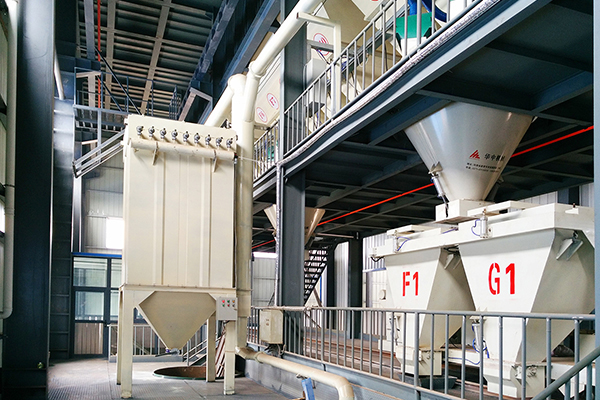
Spotlight on a Key Player: Zhengzhou Puhua Technology
When discussing the intersection of cost and quality in Henan province, Zhengzhou Puhua Technology (郑州朴华科技有限公司) serves as a prime example of the modern Chinese环保 equipment manufacturer.
Founded as a technology-driven enterprise, Puhua integrates research, design, production, and sales. Their portfolio is extensive, covering:
Dust Removal: Baghouse filters, pulse dust collectors, mobile dust collectors.
Waste Gas Treatment: RCO catalytic combustion, RTO equipment, photo-oxygen catalytic equipment.
Process Systems: Pneumatic conveying, automatic配料 systems, and wastewater treatment.
Their strength lies in collaboration with academic institutions like Zhengzhou University and Henan University, ensuring that their baghouse dust collector designs are not just copies but patented innovations. They represent a shift from simple manufacturing to "know-how" manufacturing, providing value that extends far beyond the initial invoice.
Challenges and How to Mitigate Risk
While the value is undeniable, sourcing from China requires due diligence. Buyers should be aware of the variance in quality across different suppliers. Not every "baghouse manufacturer" has the same capabilities.
Supplier Evaluation Checklist
To ensure you get the "high-quality" part of the equation, consider these steps:
Verify Certifications: ISO 9001 is the baseline. Ask for specific test reports like burst strength and thermal shrinkage data.
Assess Responsiveness: Suppliers with a response time of under 2 hours typically have better organizational control.
Request Samples: Pay for sample batches of filter bags to test fit and finish before committing to a full system.
Check Reorder Rates: A reorder rate above 30-50% indicates that previous customers were satisfied enough to come back.
Conclusion: The Verdict on Chinese Baghouse Technology
The narrative that Chinese goods are "cheap because they are low quality" is outdated in the industrial filtration sector. The reality is that Chinese baghouse dust collectors are affordable because of structural economic advantages—integrated supply chains, competitive specialization, and massive economies of scale. They are high-quality because the market now demands it, and manufacturers have invested heavily in technology and talent to meet global emission standards.
For companies looking to upgrade their dust control, investing in a system from a verified, technically proficient manufacturer like Zhengzhou Puhua Technology offers a path to compliance and efficiency without the premium price tag of traditional Western suppliers. By focusing on performance metrics and conducting proper due diligence, international buyers can leverage China's industrial might to clean up their operations cost-effectively.
Frequently Asked Questions (FAQ)
Q: Are Chinese baghouse filters compatible with my existing Western-made system?
A: Yes, most manufacturers specialize in producing replacement filter bags and cages that meet or exceed OEM specifications. They often use the same materials (PPS, Aramid, Fiberglass) and can match specific end-cap designs and seam types.
Q: How do I know if a manufacturer like Zhengzhou Puhua Technology is reliable?
A: Look for verifiable data such as third-party audits (SGS/BV), transaction history on platforms like Alibaba, and direct communication. Reputable companies are transparent about their patents, certifications, and factory locations.
Q: What is the typical lead time for a custom baghouse system from China?
A: Lead times vary based on complexity, but standard ranges are typically 7 to 30 days for smaller components and 30 to 60 days for full custom systems, depending on the order quantity and customization level.
Q: Can Chinese suppliers handle high-temperature or corrosive gas applications?
A: Absolutely. Suppliers use advanced media like PTFE-coated fabrics, fiberglass, and stainless-steel cages to handle extreme conditions. Companies like those in the Jiangsu and Henan clusters routinely supply to steel mills and chemical plants.
Related Articles
-

Zeolite Fixed Bed+Catalytic Combustion Equipment (RCO)
[list:visits]
-

Resin desorption+condensation recovery equipment
[list:visits]
-

Cooking oil fume purifier
[list:visits]
Subscribe to Our Newsletter
Stay updated with the latest news and insights from Puhua Tech.