
Central Dust Collection vs. Individual Units: Which Is Better for Your Workshop?
When planning a new workshop or upgrading an existing one, few decisions impact daily operations as much as the choice of dust collection strategy. An effective system is not just about cleanliness; it is fundamental to worker health, equipment longevity, product quality, and regulatory compliance. The central question for many shop owners and facility managers is whether to invest in a centralized dust collection system or rely on individual dust collectors for each machine. This comprehensive guide will dissect both approaches, helping you determine the most efficient, cost-effective, and practical solution for your specific needs.
Choosing the right equipment is a critical investment. At Zhengzhou Puhua Technology, we understand the complexities of industrial air purification. As a seasoned manufacturer of environmental protection equipment, we design and produce a wide array of solutions, including high-efficiency pulse dust collectors, RCO catalytic combustion equipment, RTO regenerative thermal oxidizers, various VOCs治理 equipment, desulfurization towers, and denitrification equipment, as well as mobile dust collectors and ultra-low emission systems. Our goal is to provide the expertise and technology to match the perfect system to your operational reality.
Understanding Your Options: Centralized vs. Individual Systems
Before diving into a comparison, it's essential to define the two primary approaches to dust collection. Each represents a fundamentally different philosophy in capturing and containing particulate matter at the source.
What is a Central Dust Collection System?
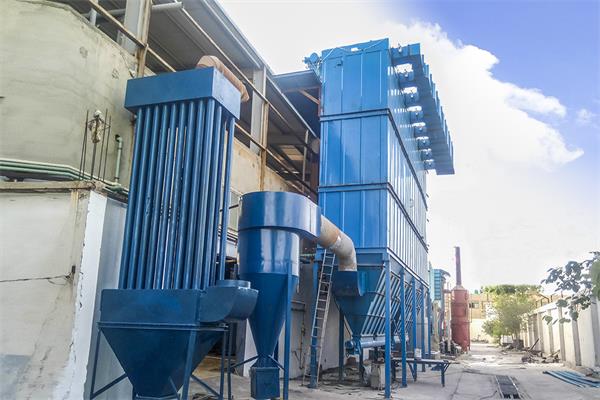
A central system is the "one-to-many" approach. It features a single, large dust collector—often a baghouse or a large cartridge collector—that is typically located remotely, either outside the building or in a dedicated mechanical room. An extensive network of ductwork connects this central unit to multiple dust-generating machines and workstations throughout the facility. When machines are running, blast gates are opened, and a powerful fan creates negative pressure to pull contaminated air through the ducts to the central collector for filtration .
What is an Individual (or Dedicated) Dust Collector?
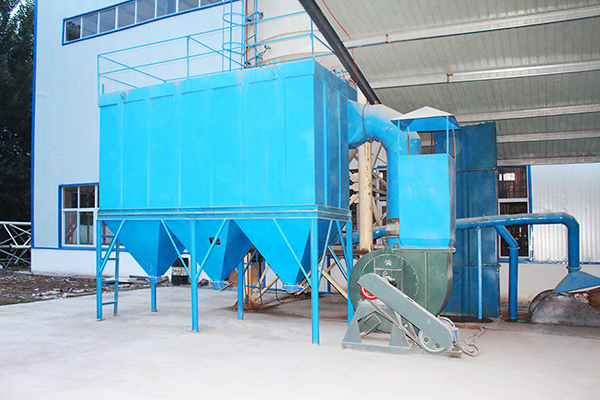
An individual or dedicated system is the "one-to-one" approach. In this strategy, each piece of equipment or small cluster of machines is served by its own standalone dust collector. These units are often placed near the machinery they serve, sometimes referred to as "source collectors." They operate independently, filtering air from just one or two points before often returning the cleaned air directly back into the workspace or venting it outside .
Head-to-Head Comparison: Key Factors to Consider
To make an informed choice, you must weigh the pros and cons of each system across several critical operational parameters. The table below provides a quick overview, followed by a detailed breakdown.
| Feature | Centralized System | Individual/Dedicated Units |
|---|---|---|
| Initial Investment | High (one large unit + extensive ductwork) | Lower to Moderate (multiple smaller units) |
| Floor Space Usage | Excellent (collector located remotely) | Poor (units take up space near each machine) |
| Installation Complexity | High, requires engineered ductwork design | Low, minimal ductwork, often plug-and-play |
| Operational Flexibility | Low; whole system runs even if only one machine is active | High; units run only when their specific machine is in use |
| Energy Efficiency | Potentially lower due to moving air through long ducts, even from idle machines | Higher, as fans are smaller and only operate when needed |
| Maintenance | Simplified (one unit to maintain) but risk of total shutdown | More complex (multiple units to check) but allows for servicing without stopping production |
| Waste Disposal | Centralized at one point, very efficient | Decentralized, requiring frequent trips to empty multiple containers |
| Material Reclamation | Mixed dust streams may prevent reuse of valuable material | Dedicated collection allows for pure material recovery and direct return to the process |
Detailed Analysis of Central Dust Collection Systems
Advantages:
The primary appeal of a central system lies in its centralized waste collection and space optimization . With the collector itself located outside or on the roof, valuable floor space inside the workshop is freed up for production. For large-scale operations running continuously, having all waste deposited in a single silo or bin dramatically simplifies disposal logistics. This "one-stop" maintenance approach—servicing a single large unit instead of a dozen small ones—can also reduce overall maintenance labor hours .
Disadvantages:
The single biggest risk of a centralized system is the "all your eggs in one basket" scenario. If the main collector fails or requires scheduled maintenance, the entire workshop may have to shut down, leading to costly production losses . Furthermore, the extensive ductwork required is not only expensive to install but also creates significant static pressure losses, often demanding larger, more energy-intensive fans to move the air . Energy is also wasted pulling air from machines that are not running, even when blast gates are closed, due to inevitable system leakage . Finally, mixing different dusts from various processes can render the collected material unrecyclable and may, in some cases, create a safety hazard if the dusts are chemically incompatible .
Detailed Analysis of Individual Dust Collector Systems
Advantages:
Individual units offer unparalleled flexibility and resilience. If one unit goes down, it only affects a single workstation, leaving the rest of the production line operational . This modularity also makes them ideal for growing shops or those with frequently changing layouts, as units can be added or moved as needed . Because they are placed close to the source, ductwork is minimal or non-existent, eliminating a major capital expense and reducing the fan power required, which leads to significant energy savings . This source-capture approach can also be highly effective for reclaiming valuable materials, as the dust stream remains pure and can often be returned directly to the process .
Disadvantages:
The most obvious downside is the consumption of valuable floor space. Each unit requires a footprint near its machine, which can clutter a busy workshop . Maintenance becomes a distributed chore; instead of one filter change or one drum to empty, there are many. This "death by a thousand cuts" can consume a surprising amount of labor time, as employees constantly monitor and empty small collection bins . The cumulative noise of multiple units running simultaneously can also be significant .
Factors to Determine the Best Fit for Your Workshop
There is no single "best" solution. The right choice depends entirely on the specific characteristics of your operation. Here are the key questions to ask yourself:
What is the scale of your operation? A small job shop with four or five machines might find individual units perfectly adequate and more affordable. A large manufacturing plant with dozens of dust sources will almost certainly benefit from the centralized disposal and space savings of a central system .
How valuable is your floor space? If every square meter is dedicated to production or storage, a central system with an outdoor collector is the clear winner .
Is production continuous or intermittent? For operations where all machines run constantly, a central system is efficient. If machines run sporadically, individual units will save significant energy by operating only when needed .
Can you tolerate downtime? If you need 100% uptime and cannot afford to shut down for maintenance, the modularity of individual units is non-negotiable .
What is the nature of your dust? Are you collecting a mix of materials (e.g., wood and plastic) or a single, valuable byproduct (e.g., grain, high-grade metal)? The latter strongly favors dedicated units for reclamation .
What is your budget horizon? While a central system has a higher initial cost, its long-term operational efficiency (in labor and disposal) might be lower. Individual units have a lower barrier to entry but can accrue higher labor costs over time .
Conclusion: Making the Right Investment with Zhengzhou Puhua Technology
Deciding between a central dust collection system and individual dust collectors is a classic trade-off between centralization and decentralization. For large-scale, high-volume operations with a stable layout and a focus on streamlined waste disposal, a well-engineered central system is often the superior long-term investment. Conversely, for smaller shops, facilities with intermittent production, or those handling valuable materials, the flexibility, energy savings, and uptime reliability of individual units present a compelling case .
Regardless of the path you choose, the most critical factor is the quality and reliability of the equipment itself. An improperly designed or poorly manufactured system will underperform, leading to health risks, regulatory fines, and operational headaches. This is where expert guidance and proven technology make all the difference.
Zhengzhou Puhua Technology is dedicated to providing advanced environmental solutions tailored to the unique challenges of modern industry. Whether your application requires a robust central baghouse for a mining operation, a compact pulse dust collector for a woodworking shop, a high-efficiency RTO for chemical processing, or comprehensive VOCs治理 equipment, our team possesses the technical expertise to design, manufacture, and install the optimal system. We serve as a comprehensive partner for all your pollution control needs, from initial assessment to final commissioning and beyond. Contact us today to ensure your workshop is equipped with a dust collection solution that protects both your workforce and your bottom line.
Related Articles
-

Zeolite Fixed Bed+Catalytic Combustion Equipment (RCO)
[list:visits]
-

Resin desorption+condensation recovery equipment
[list:visits]
-

Cooking oil fume purifier
[list:visits]
Subscribe to Our Newsletter
Stay updated with the latest news and insights from Puhua Tech.