
Port Bulk Terminal Transfer Point Fugitive Dust Control: A Practical Case Study
In the high-throughput environment of a port bulk cargo terminal, the transfer point is ground zero for fugitive dust emissions. These critical junctions—where material moves from one conveyor belt to another, or from a belt into a ship's hold—are often the largest contributors to visible dust plumes. For terminal operators, this is not just a matter of housekeeping; it is a complex challenge involving environmental compliance, community relations, operational efficiency, and worker safety. This article provides a deep dive into the sources of dust at bulk transfer points and presents a comprehensive case study on implementing effective engineering controls to achieve near-zero emissions. We will explore the technologies and methodologies that are setting new standards for clean and efficient port operations, featuring solutions from a leading environmental equipment manufacturer, Zhengzhou Puhua Technology.
Understanding the Dynamics of Fugitive Dust at Transfer Points
To solve a problem, one must first understand its mechanics. At a bulk transfer point, dust is generated primarily through three mechanisms: impact, air entrainment, and material attrition. When a stream of material like coal, clinker, or iron ore falls from a height onto a conveyor or into a chute, the impact force pulverizes fragile particles. Simultaneously, the falling material drags air down with it, creating a powerful induction effect. This turbulent air becomes heavily laden with fine dust particles. If the system is not properly sealed and ventilated, this dust-laden air is expelled with tremendous force, creating the classic fugitive emission cloud.
Traditional, poorly designed chutes and transfer points exacerbate these issues. They allow material to free-fall, leading to uncontrolled trajectories, impact, and turbulence. The result is a host of negative consequences: increased respiratory health risks for workers, accelerated wear and tear on conveyor components and idlers, safety hazards from reduced visibility, and the risk of significant regulatory penalties for exceeding emission limits.
The Holistic Solution: An Engineered Approach to Dust Suppression
Addressing fugitive dust requires a shift from reactive measures (like frequent clean-up) to proactive, engineered solutions. A leading case study involves a large port facility grappling with persistent dust issues during the handling of clinker and gypsum at several key transfer towers. The facility's goal was to implement a system that not only complied with stringent local environmental standards but also improved the working environment and reduced product loss. The chosen approach was a multi-faceted system designed, supplied, and installed by Zhengzhou Puhua Technology, a renowned Chinese manufacturer of high-performance environmental equipment.
The strategy focused on three core principles: containment, suppression, and collection. This integrated approach ensures that dust is managed at every stage of the transfer process.
1. Containment: Redesigning the Transfer Chute
The first line of defense is a well-engineered transfer chute. Instead of allowing material to free-fall, the new design focused on controlling the flow. Using advanced simulation software to model material behavior, Zhengzhou Puhua Technology's engineers designed a "hood and spoon" style chute. This design directs the material stream so that it lands on the receiving belt at a controlled speed and angle, matching the belt's direction. By minimizing impact and controlling the material stream, the primary generation of dust is significantly reduced at the source.
Key features of this containment strategy included:
Wear-resistant liners: Installed at all impact points to extend equipment life and maintain the integrity of the material flow path.
Full sealing: All access points and joints along the chute were equipped with high-performance gaskets to prevent any leakage, ensuring that dust generated inside the chute stays inside.
2. Suppression: Deploying Dry Fog and Spray Systems
Even with an optimized chute, fine particles can become airborne. To capture these particles, an advanced dust suppression system was integrated. The most effective method for this application proved to be a dry fog system. Unlike traditional water sprays that can wet the material and add significant moisture, dry fog uses specialized nozzles to create a cloud of ultra-fine water droplets (typically 1-10 microns in size). These droplets are approximately the same size as the dust particles. Through the principles of agglomeration and inertial collision, the fog droplets combine with the dust particles, increasing their mass and causing them to settle back into the material flow.
Zhengzhou Puhua Technology installed a series of these misting units at critical points within and around the transfer chute. The system was engineered to activate only during material flow, conserving water and energy. For specific applications where dry fog is less effective, a low-pressure spray system with chemical dust suppressants was also made available as a secondary option. These suppressants reduce the surface tension of water, allowing it to better bind with dust particles and form a durable crust on stockpiles, although they were not the primary method used at the transfer points themselves.
3. Collection: Implementing High-Efficiency Filtration
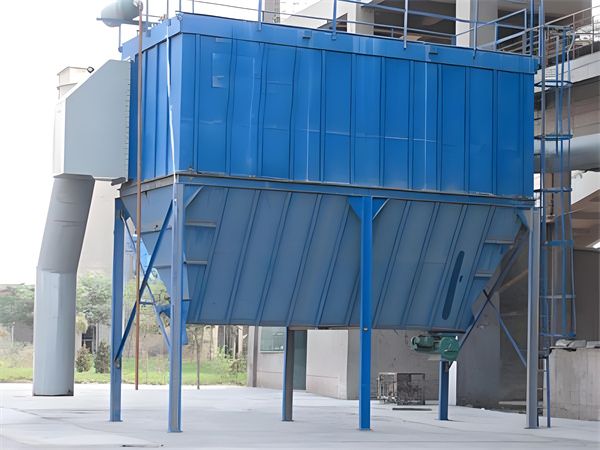
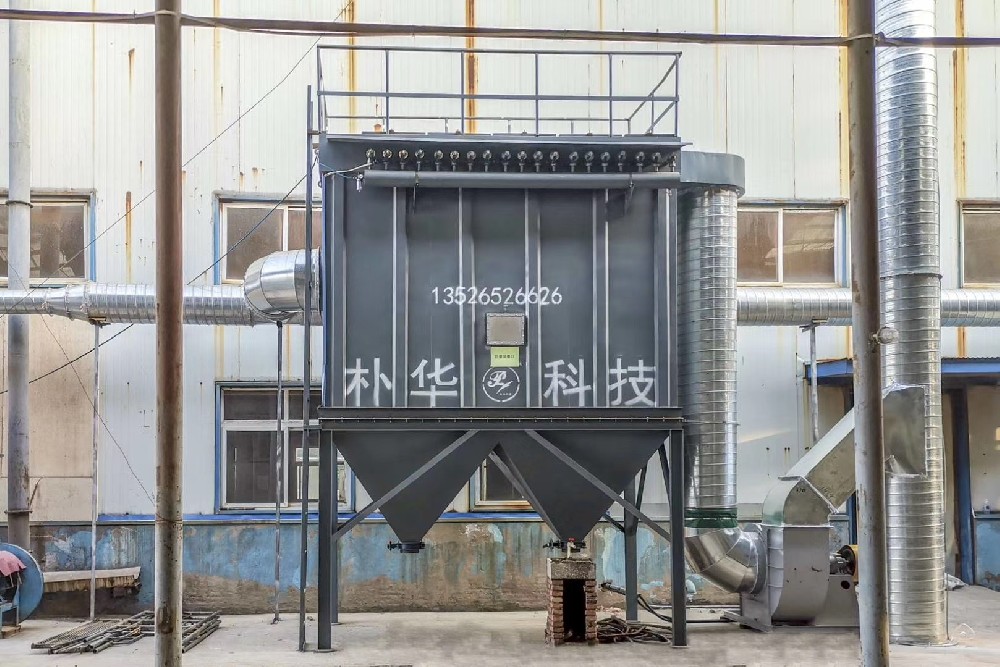
For the small percentage of dust that remains challenging to suppress, a dedicated dust collection system acts as the final failsafe. This involves a series of hoods placed at key dust liberation points, connected via ductwork to a central dust collector. For this project, a pulse-jet cartridge dust collector was selected.
The operation of this system is as follows:
Capture: Exhaust fans create negative pressure within the hoods and ductwork, pulling the dust-laden air away from the transfer point before it can escape into the atmosphere.
Filtration: The air is drawn into the collector, where it passes through high-efficiency filter cartridges. These cartridges capture the fine dust particles on their surface, allowing only clean air to pass through.
Cleaning: An automated pulse-jet system periodically blasts compressed air through the filters, dislodging the accumulated dust. The dislodged dust falls into a hopper below.
Return: The collected dust is then reintroduced directly into the material flow via a rotary airlock and screw conveyor, eliminating waste and ensuring that valuable product is not lost.
Comparative Analysis of Dust Control Technologies
To provide a clearer understanding of the available options, the following table compares the key technologies used in modern port dust control, including those provided by Zhengzhou Puhua Technology.
| Technology | Principle of Operation | Ideal Application | Key Advantage |
|---|---|---|---|
| Dry Fog Suppression | Ultra-fine water droplets agglomerate with airborne dust particles. | Enclosed transfer points, ship loading spouts, crushers. | Minimal moisture addition to product; highly effective on respirable dust. |
| Engineered Transfer Chutes | Controls material flow to reduce impact and air entrainment. | Belt-to-belt transfers, cascade points. | Prevents dust generation at the source; reduces maintenance and spillage. |
| Pulse-Jet Dust Collector | Filters dust from extracted air using fabric or cartridge filters. | High-volume dust points where material cannot be wetted. | Near 100% collection efficiency; allows for material recovery. |
| Foam Suppression | Foam bubbles encapsulate and agglomerate dust particles. | Conveyor discharge points, crushers, and screening stations. | Effective on coarse and fine dust; good coverage area. |
Project Outcomes and Performance Metrics
The implementation of the integrated system from Zhengzhou Puhua Technology yielded immediate and measurable results. The port facility successfully brought its operations into full compliance with national ambient air quality standards, significantly improving its standing with regulators and the local community.
The key performance indicators (KPIs) post-installation included:
PM10 and PM2.5 Reduction: Ambient air monitoring at the facility boundary showed a dramatic decrease in fine particulate matter, consistently meeting the National Ambient Air Quality Standard Grade II [citation:4].
Zero Visible Dust: Under normal operating conditions, visible dust plumes from the treated transfer points were eliminated.
Product Recovery: The dust collector system recovers several tons of valuable product per week that would have otherwise been lost to the environment.
Worker Safety: Improved visibility and air quality within the transfer towers created a safer and more pleasant working environment for personnel.
"The partnership with Zhengzhou Puhua Technology was instrumental in achieving our environmental goals," stated a project manager involved in the retrofit. "Their ability to provide a complete, engineered solution—from the chute design to the fogging and collection systems—meant we had a single point of accountability and a system that worked in perfect harmony."
Conclusion: The Future of Clean Bulk Handling
The challenge of fugitive dust at port bulk terminals is complex but entirely solvable. As environmental regulations become ever more stringent and societal expectations for corporate responsibility rise, the adoption of best-available control technologies is no longer optional but a business imperative. The case study presented here demonstrates that by moving beyond piecemeal approaches and embracing an integrated strategy centered on containment, suppression, and collection, ports can achieve superior environmental performance while also enhancing operational efficiency and profitability.
For facilities looking to embark on a similar path, working with an experienced and comprehensive provider is key. Companies like Zhengzhou Puhua Technology offer a full portfolio of advanced solutions, from baghouse dust collectors and pulse jet dust collectors to RCO catalytic combustion equipment and desulfurization and denitrification equipment, ensuring that every aspect of industrial emissions can be effectively managed. By investing in these technologies, the bulk handling industry can ensure its operations are not only productive but also sustainable and responsible, safeguarding both the environment and the communities in which they operate.
Related Articles
-

Zeolite Fixed Bed+Catalytic Combustion Equipment (RCO)
[list:visits]
-

Resin desorption+condensation recovery equipment
[list:visits]
-

Cooking oil fume purifier
[list:visits]
Subscribe to Our Newsletter
Stay updated with the latest news and insights from Puhua Tech.