
How to Calculate the Filter Area of a Baghouse Dust Collector: Formulas and Case Studies
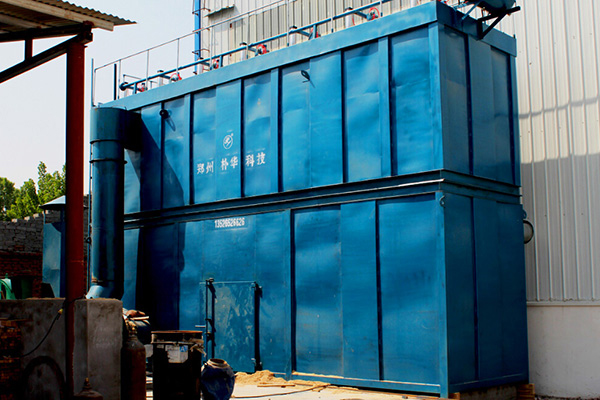
Accurately calculating the filter area of a baghouse dust collector is a fundamental step in designing efficient air pollution control systems. An incorrectly sized filter can lead to poor performance, increased energy costs, and premature filter failure. This guide provides a comprehensive, step-by-step explanation of the calculation process, complete with formulas and a practical case study, to help engineers and plant managers make informed decisions.
Why Accurate Filter Area Calculation is Critical
The filter area directly impacts several key operational factors. A larger than necessary area increases capital expenditure, while an undersized area causes high pressure drop, reduced filtration efficiency, and frequent cleaning cycles that shorten bag life. Proper calculation ensures optimal balance between collection efficiency, operational cost, and equipment longevity.
Key Parameters and the Core Formula
To calculate the required filter area, you need two primary pieces of data:
Air Volume (Q): The volume of gas to be treated, typically measured in cubic meters per hour (m³/h) or cubic feet per minute (CFM). This is often derived from process requirements.
Filtration Velocity or Air-to-Cloth Ratio (V): The speed at which gas passes through the filter media, measured in meters per minute (m/min) or feet per minute (fpm). This value depends on the dust type, concentration, and filter bag material.
The fundamental formula is straightforward:
Filter Area (A) = Air Volume (Q) / Filtration Velocity (V)
Where:
A = Filter area (m² or ft²)
Q = Air volume (m³/h or CFM) – ensure consistent units; convert if necessary (e.g., 1 m³/h ≈ 0.5886 CFM).
V = Filtration velocity (m/min or fpm).
Step-by-Step Calculation Process
Determine the Process Air Volume (Q): Measure or calculate the total gas flow rate from the source requiring dust collection.
Select an Appropriate Filtration Velocity (V): This is a critical engineering choice. For common industrial dusts like cement or wood, velocities often range from 0.8 to 1.2 m/min. For finer or sticky dust, a lower velocity (e.g., 0.5-0.8 m/min) is used. Consult material safety data sheets or industry standards.
Apply the Formula: Divide the air volume by the chosen filtration velocity to get the gross filter area.
Account for Practical Factors: Consider adding a safety margin (e.g., 5-10%) for future process changes or dust load variations. Also, factor in the area taken by bag cages and partitions, which slightly reduces effective area.
Case Study: Filter Area Calculation for a Woodworking Workshop
Let's apply the formula to a real-world scenario. A woodworking shop needs to treat exhaust air from multiple saws and sanders.
| Parameter | Value | Notes |
|---|---|---|
| Total Air Volume (Q) | 10,000 m³/h | Measured from all hoods and ducts |
| Dust Type | Wood Sawdust | Standard particulate |
| Selected Filtration Velocity (V) | 1.0 m/min | Typical value for wood dust |
| Basic Filter Area (A = Q/V) | 10,000 / 1.0 = 10,000 m² | Gross theoretical area |
| Design Safety Margin | 8% | Added for operational flexibility |
| Final Required Filter Area | 10,000 m² * 1.08 ≈ 10,800 m² | Area for equipment specification |
This result means the baghouse dust collector for this workshop should have approximately 10,800 square meters of filter cloth area. Engineers would then determine the number of filter bags needed based on individual bag dimensions.
Common Pitfalls and Expert Tips
Overestimating Filtration Velocity: Choosing a value that is too high to save on initial cost is a common error that leads to rapid pressure drop increase and bag blinding.
Ignoring Moisture and Temperature: High humidity or temperature can affect gas volume and dust properties. Always use corrected air volume values.
Forgetting about Maintenance Access: The calculated area must be physically arranged within a housing that allows for easy bag replacement and inspection.
Implementing Your Design: The Role of Professional Equipment Suppliers
While the calculation provides a theoretical foundation, successful implementation relies on high-quality equipment and professional design support. This is where partnering with an experienced manufacturer becomes invaluable. Zhengzhou Puhua Technology specializes in the engineering and manufacturing of robust air pollution control solutions. With expertise in dust collector design, they can help validate your filter area calculations and ensure the system is optimized for your specific dust characteristics and operational goals.
The company offers a comprehensive range of equipment, including baghouse dust collectors, pulse-jet cleaners, RCO catalytic combustion equipment, and VOC treatment systems. Their technical team can assist in selecting the appropriate filter media and configuring the bag layout to achieve the calculated area efficiently, ensuring reliable performance and compliance with environmental regulations.
Conclusion
Calculating the filter area of a baghouse dust collector is a precise engineering task that hinges on accurate air volume data and prudent selection of filtration velocity. By following the formula A = Q/V and considering practical adjustments, you can lay a solid foundation for an effective dust collection system. For complex applications or to ensure optimal results, consulting with specialized providers like Zhengzhou Puhua Technology can provide additional assurance, merging sound calculation with proven manufacturing and application experience.
Related Articles
-

Zeolite Fixed Bed+Catalytic Combustion Equipment (RCO)
[list:visits]
-

Resin desorption+condensation recovery equipment
[list:visits]
-

Cooking oil fume purifier
[list:visits]
Subscribe to Our Newsletter
Stay updated with the latest news and insights from Puhua Tech.