
Small Workshops vs. Large Factories: The Fundamental Differences in Dust Collector Selection
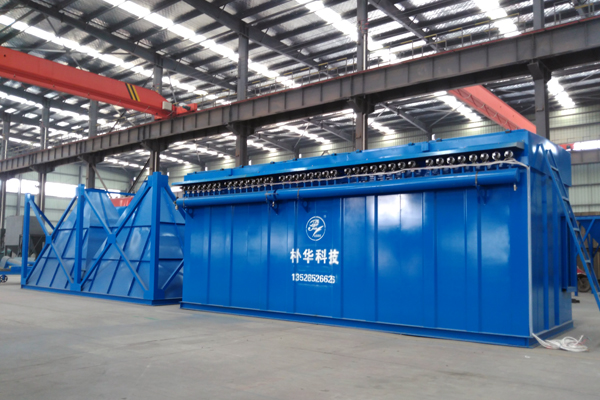
Choosing the right industrial dust collection system is a critical decision that impacts operational safety, regulatory compliance, and production efficiency. However, the selection process for a small workshop is fundamentally different from that of a large-scale manufacturing plant. A one-size-fits-all approach can lead to costly inefficiencies or complete system failure. This article delves into the core distinctions, providing a clear framework to guide businesses of all sizes toward an optimal dust control solution.
Core Differences at a Glance
The table below summarizes the primary divergences in priorities and requirements:
| Aspect | Small Workshop / Limited-Space Operation | Large Factory / Continuous Process Plant |
|---|---|---|
| Primary Driver | Space Constraints, Initial Cost, Flexibility | System Reliability, Centralized Control, Total Cost of Ownership |
| Airflow & Filtration Demand | Low to Moderate (typically under 10,000 CFM) | High to Very High (often 50,000 CFM and above) |
| System Type | Source-capture units, Modular units, Mobile dust collectors | Centralized baghouse or cartridge collector systems |
| Key Consideration | Ease of installation and relocation | System engineering, ductwork design, and automated controls |
Detailed Breakdown: Factors Guiding Your Choice
1. Space Constraints and System Footprint
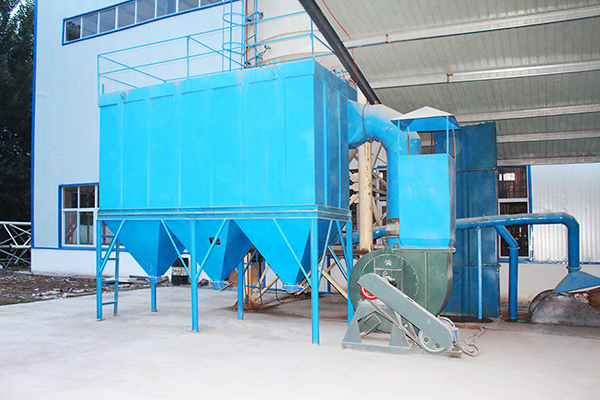
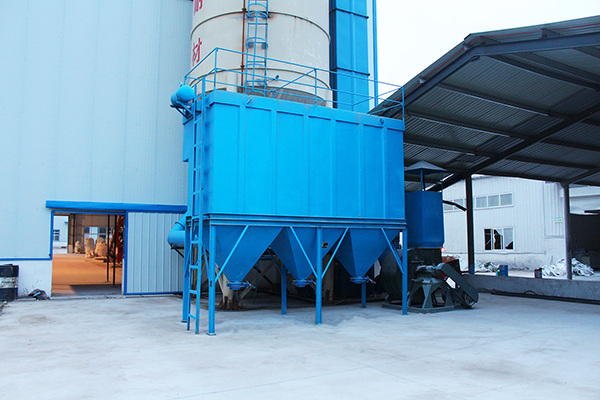
For small workshopsdust collection equipment is compact, possibly mobile, and can be placed close to the dust generation point. Modular pulse jet dust collectors or cartridge collectors are often suitable. In contrast, large factories dedicate substantial area to a centralized dust control system, which may include a large baghouse, silos, and complex ductwork running throughout the facility.
2. Airflow Volume and Filtration Efficiency
Airflow, measured in CFM (Cubic Feet per Minute), is the heart of industrial dust collection. Small operations like woodworking or metal grinding shops may only need a system handling 2,000-8,000 CFM. Large processes in cement, mining, or steel production require systems designed for tens or hundreds of thousands of CFM. Furthermore, the required filtration efficiency (e.g., for sub-micron particles in pharmaceutical applications) dictates the filter media choice, impacting both small and large system designs.
3. Operational Demands and Automation
Small Workshop: Operation is often manual or semi-automatic. The focus is on simple maintenance—easy filter access and replacement.
Large Factory: Systems must run 24/7 with minimal downtime. This necessitates:
Fully automated cleaning cycles (pulse-jet cleaning).
Advanced monitoring with pressure differential sensors.
Integration with Plant Management Systems for real-time alerts and data logging.
4. Total Cost of Ownership (TCO) vs. Initial Investment
A small business may prioritize lower upfront cost. However, considering TCO—including energy consumption, filter replacement frequency, and potential downtime—is crucial for long-term viability. For large facilities, while the capital expenditure is high, the investment is justified by protecting massive assets, ensuring continuous production, and meeting stringent emission control regulations to avoid penalties. Energy-efficient fans and optimized duct design become significant TCO factors.
Making the Right Choice: Tailored Solutions Matter
Selecting the wrong scale of equipment is a common pitfall. An undersized unit in a large plant will choke production and pose safety risks. An oversized, complex system in a small shop wastes capital and operating costs. Professional assessment is key. This is where partnering with an experienced provider like Zhengzhou Puhua Technology proves invaluable. They offer a comprehensive range of dust removal equipment, from compact mobile dust collectors ideal for job shops to engineered, high-capacity bag filter dust collectors and integrated pollution control systems for power generation or chemical processing plants.
Conclusion and Best Practices
Understanding the fundamental differences in dust collector selection between small and large operations is the first step toward a safe and efficient facility. Always start by accurately assessing your specific dust type, volume, space, and operational hours. For specialized needs, particularly in achieving low emission targets or handling explosive dusts, consult with engineering experts. Manufacturers such as Zhengzhou Puhua Technology possess the expertise to design and supply appropriate dust treatment equipment, whether it's a standard pulse bag filter or a custom VOCs treatment device and dust collection system, ensuring compliance and operational excellence for both modest workshops and extensive industrial complexes.
Related Articles
-

Zeolite Fixed Bed+Catalytic Combustion Equipment (RCO)
[list:visits]
-

Resin desorption+condensation recovery equipment
[list:visits]
-

Cooking oil fume purifier
[list:visits]
Subscribe to Our Newsletter
Stay updated with the latest news and insights from Puhua Tech.